


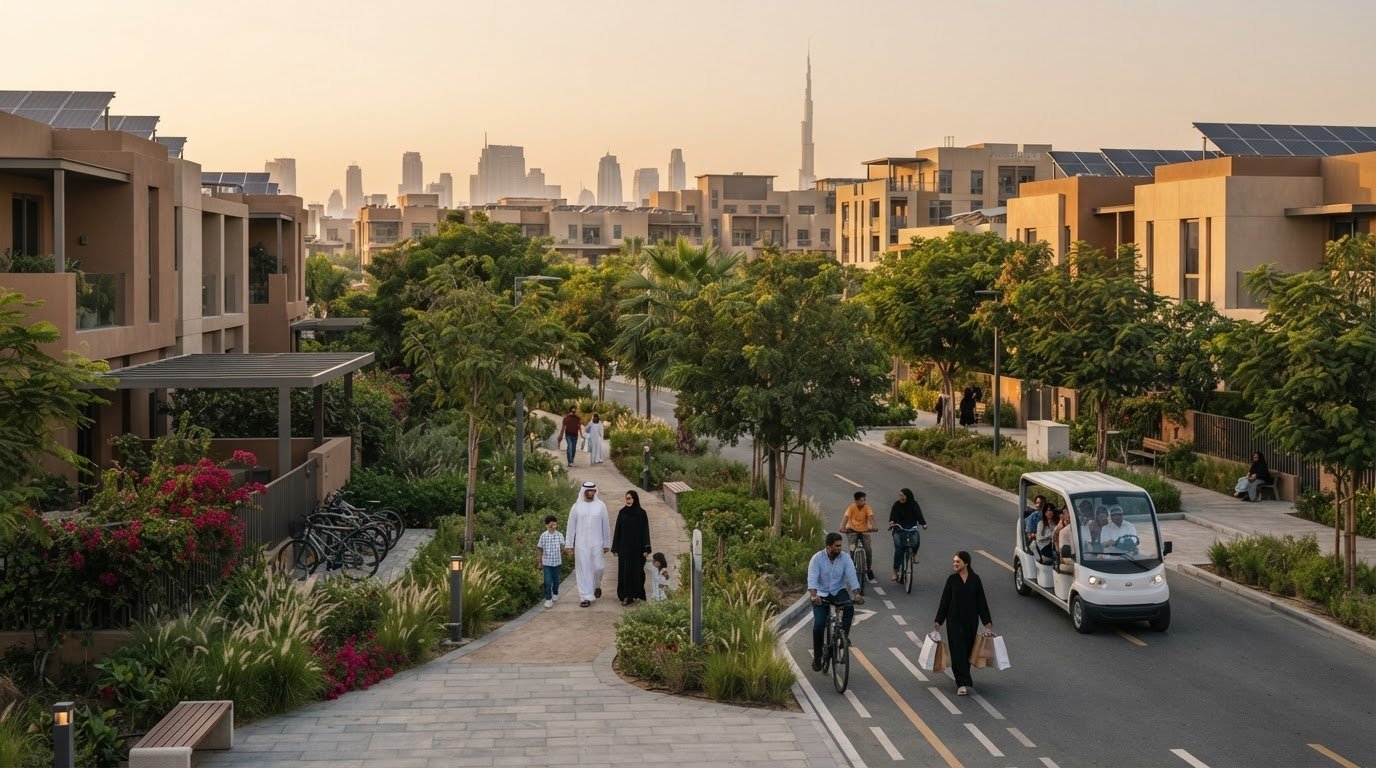
A green label doesn’t tell you how a community performs. When comparing green communities in the UAE, look for practical features and evidence, not just attractive landscaping or polished marketing. A place can look green while offering little information about energy use, water efficiency or how easy it is to get around day to day.
It’s reasonable to want environmental features alongside a home that suits your routines, budget and property priorities. This guide offers a consistent way to assess sustainability claims, compare community features and identify the questions that matter for your decision.
We’ll cover building efficiency, water-conscious design, green spaces, mobility and shared services, while keeping convenience and property fit in view. Chainex Real Estate’s property sales and investment consulting can help you compare apartments, villas, townhouses and other property options against your priorities.
Key Takeaways
- Assess sustainability across building design, resource use and everyday mobility, rather than relying on appearance or marketing language.
- Compare energy, water, landscape, mobility and community services using consistent categories. Separate documented specifications from general claims.
- When researching green communities in dubai, record the source, scope and date of each sustainability claim to make comparisons more reliable.
- Use a structured decision process to weigh environmental evidence alongside convenience, property type and your personal priorities.
- Chainex Real Estate’s property sales and investment consulting can help connect your objectives with relevant property options.
What Makes a Community Green in Dubai?
Property marketing may use “green” or “sustainable” to describe anything from planted pathways to energy-conscious building design. These phrases don’t always refer to the same features. A landscaped setting alone says little about how a place manages energy, water or daily travel. When comparing green communities in dubai, look beyond the label and ask what is designed, measured and available in practice.
A green community is a place assessed through its environmental design, use of resources and support for everyday mobility, with claims considered in context rather than treated as a universal rating. This is a practical way to compare options, not a claim that every project follows one shared standard.
Keep the scope of each claim in view. A community may have shaded paths or shared green spaces, while an individual home or building may have its own energy or water specifications. Evidence about one building shouldn’t automatically be applied to every home in the development. Similarly, community amenities don’t establish the performance of an individual property.
Which features can contribute to greener community living?
Start with features that affect environmental design and everyday routines. Landscaping, shade and accessible outdoor spaces can make walking outside more comfortable and contribute to a community’s character. Their presence is worth noting, but appearance alone doesn’t show how the landscape is maintained or how resources are used.
Energy and water efficiency are also useful areas to assess. Look for project-specific information about building design, fixtures or other measures, and note which homes or shared facilities it covers. Treat these details as evidence to evaluate, not as a guarantee of lower bills or resource use. For mobility, consider whether walking and cycling routes connect to places residents use regularly, and whether everyday services are accessible without relying on a car for every trip.
Green credentials versus green marketing
Specific, documented measures are more informative than broad descriptions such as “eco-friendly” or “sustainable.” A useful claim identifies the feature, the part of the project it applies to and its source or supporting documentation. A rendered image, general promise or attractive greenery may suggest an aspiration, but doesn’t demonstrate environmental performance by itself.
Features can differ between projects and between buildings in the same community. Read claims at their stated scope, and distinguish completed features from planned ones. That context helps you judge what applies to a particular home and lifestyle instead of assuming a community-wide label guarantees the same experience throughout.
How to Assess Green Community Features in Dubai
A consistent review makes it easier to compare green communities in dubai without treating every sustainability claim as equivalent. Assess five areas: energy, water, landscape, mobility and community services. For each, separate a specific, documented measure from a broad description or visual impression. A landscaped courtyard, for example, shows that planting is present. It doesn’t establish how efficiently water is used to maintain it.
- Energy: Look for documentation describing design measures, equipment or energy-performance figures. A figure is meaningful only when its scope, measurement method, comparison basis and reporting period are clear.
- Water: Distinguish stated measures, such as water-efficient fixtures or irrigation approaches, from general claims about conservation. Check whether the information applies to a home, a building or shared areas.
- Landscape: Observe shade, planting and usable outdoor spaces. Then distinguish what you can see from claims about how those areas are maintained or managed.
- Mobility: Consider whether walking and cycling routes are continuous and practical, not just whether paths appear on a site plan.
- Community services: Review the shared facilities and services described in project materials. Note whether they’re operational, planned or limited to a particular part of the development.
What evidence can buyers look for?
Project documents are more useful than a slogan because they can identify the measure, its purpose and the part of the development it covers. Record whether a claim concerns an individual home, one building, shared spaces or the wider community. If performance figures are provided, look for the measurement method and comparison basis as well as the result. Without that context, figures may not be meaningfully comparable.
Certifications also need context. Verify the issuing organisation, the specific project or buildings covered, and the certification’s current status in primary documentation. Don’t assume a named certification or policy applies throughout a development simply because it appears in promotional material.
Which daily-life indicators matter beyond buildings?
Environmental features need to work with residents’ routines. Consider whether shaded routes and open spaces are genuinely usable, and whether everyday services are accessible in ways that suit your needs. Walking or cycling may be practical for some journeys but not others, so assess routes against your usual destinations and habits.
A community claim is useful only when its evidence identifies what was measured, where it applies and how the result was established. This helps distinguish a defined commitment from a general impression, while leaving room to weigh convenience and property fit alongside environmental features. Chainex’s property investment consulting can help you assess how your priorities relate to a property decision.
Green Community or Conventional Community: How to Compare Your Options
A “green” label and a “conventional” label aren’t reliable rankings on their own. Compare the evidence for each property and community using the same criteria, then weigh your findings against practical priorities. A well-documented measure in one development may matter less to you than a suitable home, convenient access or shared spaces that fit your routine.
A practical comparison framework for buyers
Use a simple status for every claim: documented means supported by project material that identifies what the measure covers; described but unverified means it appears in general wording without enough detail to assess; and not available in reviewed materials means you haven’t found supporting information. The last label describes your research, not proof that a feature is absent.
| Category | Evidence status | Everyday relevance | Open question |
|---|---|---|---|
| Energy | Record whether design measures or performance details are documented, broadly described or unavailable. | Consider whether the evidence relates to the home, its building or shared facilities. | What does the information cover, and how was any performance figure assessed? |
| Water | Separate specified measures from general conservation language. | Note whether the claim concerns the property, landscaping or communal areas. | Which uses and spaces are included? |
| Landscaping | Distinguish visible planting and shade from documented management measures. | Assess comfort, usable outdoor space and maintenance implications. | Are descriptions about completed features or plans? |
| Mobility | Compare described routes and connections with what you can assess in practice. | Consider your own travel habits and access to routine services. | Do the routes serve the journeys you expect to make? |
Keep property-level features separate from shared infrastructure. A building’s documented specifications don’t establish the performance of every home in its community, while a community amenity doesn’t tell you how an individual residence is designed. Record the source and scope beside each comparison. This prevents missing information from being mistaken for a disadvantage, or a marketing description from being treated as proof.
How priorities differ for residents and investors
For residents, the comparison is personal. Shade, usable open spaces, access and property suitability should make sense for daily routines. A community-level advantage may not serve every household equally, particularly when shared features don’t match how residents live.
For investors, documented environmental attributes are due-diligence considerations, not promises of rental demand, resale value or returns. Weigh them alongside the property’s characteristics and your broader investment objectives. Chainex’s property investment consulting can support objective-led property analysis. For a broader buying perspective, read this property investment guide. Comparing green communities in dubai this way keeps evidence, trade-offs and personal priorities in view.
How to Research Green Communities in Dubai Before Choosing a Property
Use a consistent process to move from community claims to a shortlist of homes that suit your priorities. When researching green communities in dubai, focus on the evidence available for each claim, what or whom it covers, and whether the feature matters to your day-to-day life. Listing descriptions can help you discover options, but current project and property documents provide a stronger basis for comparison.
A step-by-step sustainability due-diligence process
- Set your priorities. Decide which factors matter most, such as outdoor space, walking and cycling, energy use, water efficiency or access to routine services. Separating essentials from preferences makes trade-offs easier to evaluate.
- Choose consistent criteria. Use the same categories for every candidate community and home. Include community features, building specifications and property-level considerations instead of treating them as interchangeable.
- Gather relevant documents. Review current project and property materials, not just listing summaries or promotional descriptions. Match each sustainability statement to a specific feature, measure or commitment in the underlying documentation.
- Log each claim. Record its source, date and scope: does it refer to a home, building, shared area or the wider community? Note whether it is documented, described without supporting detail, or absent from the materials you reviewed. An evidence gap isn’t proof that a feature doesn’t exist.
- Compare homes and resolve priorities. Apply the same criteria to each shortlisted property, separating its own features from shared infrastructure. Note unanswered questions and consider how each option fits your routine or investment objectives before weighing the overall trade-offs.
Keep the review informational. Sustainability documents can help you understand what a project says about its design and intended measures, but this process isn’t a legal, regulatory or technical assessment. When a claim refers to a certification or policy, rely on current primary documentation for its scope and status rather than inferring applicability from a marketing summary.
Connect community research to property options
Once your priorities are clear, explore community information alongside individual homes. Chainex’s property areas guide can help you continue researching community context. Chainex provides property sales and investment consulting to support your search around your objectives.
Ready to compare purchase options against your shortlist? Explore properties for sale and assess each home using the same priorities and evidence framework.
Finding a Property That Fits Your Green Community Priorities
Choosing among green communities in dubai is ultimately about finding a property that suits your needs and assessing the claims made about it. Define what matters most, review the evidence and its scope, then compare community features with the home itself. A strong community-level feature may still be a poor fit if it doesn’t support your daily routines or intended use.
Match your priorities to property type and intended use
An apartment, villa or townhouse may suit different space requirements and routines. For personal living, consider how the home’s layout, outdoor access and position within the community work for your household. For investment, assess environmental information as part of broader due diligence, alongside the property’s characteristics and your investment objectives. Keep these decision paths distinct, even when the same feature matters to both.
Explore Chainex’s property buying options as you carry your shortlist into the purchase process. Use a consistent set of criteria to compare each property and its available information.
Take a measured next step with Chainex
Before browsing, write down your preferred property type, whether you’re buying for personal use or investment, and the sustainability priorities you want to evaluate. This gives property discussions a clear starting point. Chainex supports property sales and investment consulting, helping connect your search with your stated objectives.
Keep your decision framework straightforward: define priorities, assess the available evidence, compare practical trade-offs and review each property for fit. When you’re ready, discuss your property requirements with Chainex and explore options that match your goals.
Choose Your Next Property with Clarity
A thoughtful search for green communities in dubai starts with your priorities, not a label. Focus on documented sustainability measures, consider their scope, and compare them alongside everyday access, property suitability and the features that matter to your intended use. A community may offer appealing shared spaces, but the right choice also depends on whether the individual home supports your needs.
Whether you’re considering an apartment, villa or townhouse for personal use or investment, Chainex Real Estate can help you explore property sales, rentals and investment consulting. Its listings include a range of property types to compare against your requirements.
Take the next step at your own pace. Discuss your property requirements with Chainex and bring your priorities into a focused search. With clear criteria and informed guidance, you can move forward with confidence.
Frequently Asked Questions
What makes a community green?
A green community is best assessed through its environmental design, resource use and support for everyday mobility. Relevant features may include energy- and water-conscious design, shaded outdoor spaces, and routes that support walking or cycling. No single feature proves overall performance. Consider what is documented, whether it applies to an individual home, a building or shared community infrastructure, and how well it suits residents’ needs.
Are green communities in Dubai more sustainable?
They may be, but the label alone isn’t enough to establish that. A community’s environmental performance depends on the measures in place and the evidence supporting them. Compare specific information about energy, water, landscape and mobility with equivalent details for other options. Check which parts of the development the claims cover, and distinguish documented measures from broad descriptions or visual impressions.
How can I check whether a Dubai community is genuinely sustainable?
Review current project and property documents rather than relying only on listing descriptions or marketing summaries. For each claim, record its source, date and scope, including whether it refers to a home, building, shared facilities or the wider community. If a performance figure is provided, look for its measurement method and comparison basis. Treat missing detail as an evidence gap, not proof that a feature is absent.
Do green communities reduce energy and water use?
Energy- or water-conscious design measures may be intended to reduce consumption, but their presence doesn’t guarantee a particular outcome for every home or resident. Look for figures supported by documentation that explains what was measured, how it was assessed and which buildings or areas are included. Actual use can depend on the property, shared systems and residents’ routines, so avoid assuming a community-wide claim applies equally to each home.
Are green communities in Dubai a good investment?
They may suit an investment strategy, but sustainability claims alone can’t establish future returns. Treat documented environmental features as one part of due diligence, alongside the property’s characteristics, intended use and broader investment objectives. Compare the evidence and consider whether a feature is relevant to the specific property. Chainex Real Estate provides property sales and investment consulting to help clients assess opportunities against their stated objectives.
What should I compare when choosing a green community?
Apply the same criteria to each option: energy, water, landscaping, mobility and community-level services. Label each finding as documented, described but unverified, or not available in the materials you reviewed. Keep shared infrastructure separate from the specifications of an individual property. Then weigh practical considerations such as access, outdoor space, maintenance and how well the home fits your daily routine or investment plans.
Are green community claims the same as a sustainability certification?
No. Terms such as “green” or “sustainable” may be used as general descriptions, while a certification refers to an assessment by a named issuer under its stated criteria. Don’t assume a marketing claim is certified, or that a certification covers every property in a community. Check the issuer, project coverage and current status in primary documentation, and note exactly which buildings or spaces it applies to.