


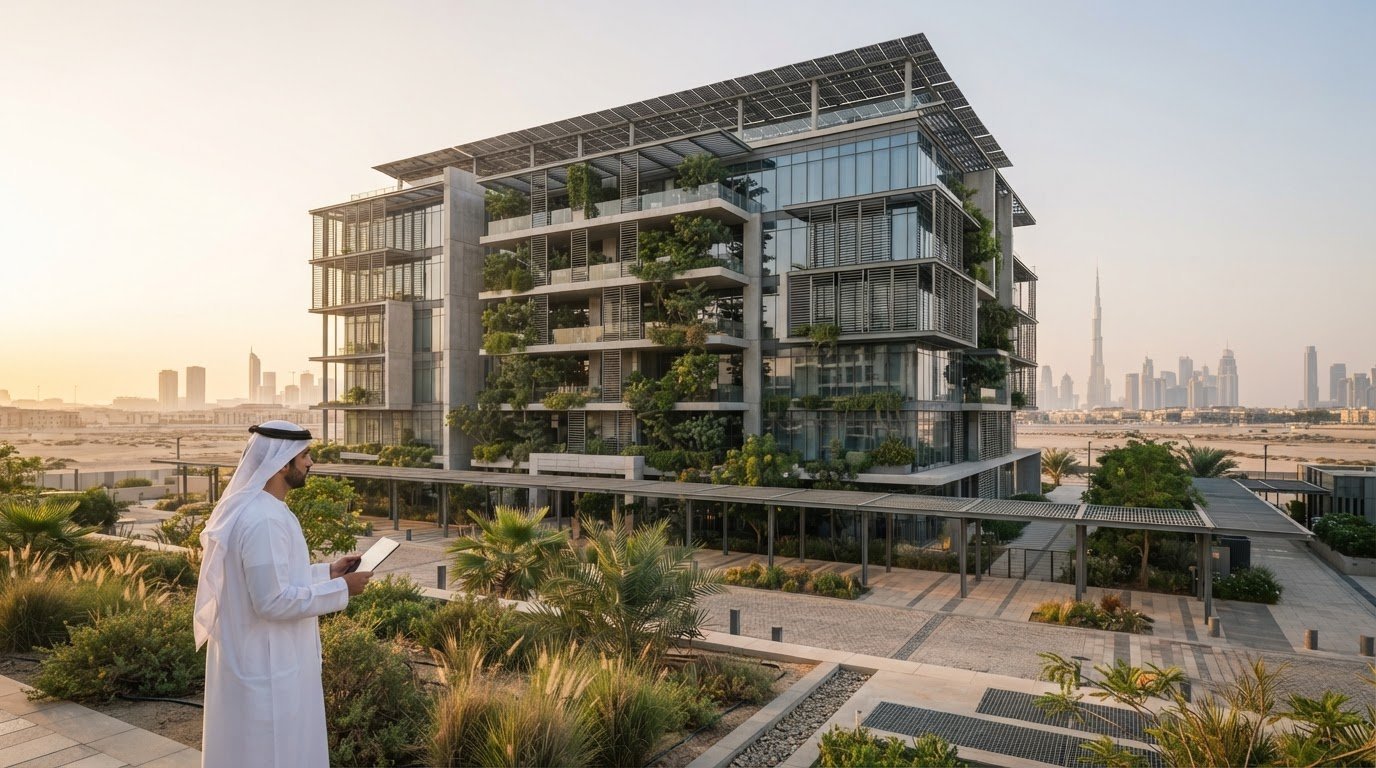
In Dubai, green-building regulations became mandatory for all new buildings in March 2014. A building is considered sustainable when its design and operation address resource use and environmental impact, including energy performance, water conservation, indoor air quality and materials. These priorities shape what sustainable and green buildings in the UAE are expected to achieve, while certification systems provide a way to assess performance.
A green label can help, but it does not tell the whole story. Local regulations and voluntary ratings serve different purposes. Knowing the difference helps when comparing properties, interpreting a certification, or assessing what sustainability features mean in practice.
This guide explains the main UAE rating systems, how Dubai’s rules work, and the environmental, social, and economic principles behind sustainable buildings. It also covers practical features that can reduce resource use and support comfortable spaces, helping you evaluate green property in the UAE.
Key Takeaways
- Assess a building through its energy, water, thermal comfort, daylight, lifecycle, indoor air quality and carbon performance, not a single feature alone.
- Understand how LEED, Estidama and Al Sa’fat differ so you can interpret a rating in the context of the building and its location.
- Recognise how material choices, reuse and waste reduction can shape a building’s environmental impact across its lifecycle.
- Weigh environmental performance alongside occupant wellbeing and long-term operating considerations when comparing properties.
- Learn how Dubai’s green-building requirements are applied through the building approval and inspection process.
What is a green building?
A green building is planned and operated to use resources efficiently while supporting occupants. In the UAE, intense heat, humidity, and cooling demand challenge design: poor shading can increase heat gain, while moisture control matters for indoor comfort.
Efficient Technologies and Sustainable Materials
Efficient technologies and sustainable materials can reduce resource use over a building’s lifecycle. UAE examples include rooftop solar panels, efficient HVAC systems, advanced insulation, and recycled materials. Their value depends on how they work together: an efficient cooling system complements the building envelope, while durable materials can reduce replacement needs. For anyone assessing sustainable and green buildings in UAE, the overall design matters more than any single feature.
Building analyses estimate performance under different conditions. Energy modeling estimates demand from cooling, lighting, and equipment. Thermal analysis examines heat transfer through the building envelope, while daylight analysis considers natural light and potential heat gain through openings. Reviewing these findings together helps designers balance energy efficiency with comfortable, usable interiors.
Water, indoor air, lifecycle, and carbon analyses add further detail. Water-efficiency assessments consider fixtures and reuse systems; indoor-air reviews examine ventilation and interior materials. Lifecycle analysis considers impacts at different stages of a building’s life, while carbon analysis evaluates emissions associated with its design and operation. These assessments explain what a green rating covers, beyond a product label alone.
Energy Conservation and Cooling Design
Energy conservation and cooling design pair lower demand with climate-responsive architecture. Building orientation, external shading, efficient glazing, and insulation can limit heat gain. Where conditions are suitable, natural ventilation and evaporative cooling can supplement mechanical systems. These choices matter because cooling demand is closely linked to a building’s envelope and layout.
Water conservation also depends on design. Drip irrigation, soil-moisture sensors, and native or drought-resistant landscaping can reduce outdoor water demand. Indoors, low-flow faucets, showerheads, and toilets help manage consumption. Greywater systems can reuse water from sinks, showers, and laundry for toilet flushing or irrigation, connecting building systems with landscape planning.
Dubai’s sustainability direction aligns with Dubai Vision 2030 and the Dubai Clean Energy Strategy 2050. These initiatives provide context for evaluating how a building responds to local climate and resource demands. For buyers comparing sustainable and green buildings in UAE, look at how shading, ventilation, cooling systems, water measures, and materials work together, not just whether one technology is present.
LEED, Estidama, and Al Sa’fat certification systems
In the UAE, LEED, Estidama, and Al Sa’fat assess building sustainability using different frameworks. Their ratings help explain how a project’s environmental performance has been evaluated.
Certification Costs and Construction Premiums
Certification and construction costs depend on the project’s rating pathway, documentation, verification, and design choices. No single cost applies across UAE projects. Construction may cost more initially, while efficient systems and materials can help lower utility and maintenance expenses over time. When assessing a property, consider both the certification’s scope and the building’s operating performance.
LEED stands for Leadership in Energy and Environmental Design. Developed by the U.S. Green Building Council, it is a globally recognised certification used for commercial buildings in the UAE. Its criteria assess areas such as energy performance, water conservation, indoor air quality, and sustainable materials. LEED certification indicates assessment against a defined framework, not simply the presence of solar panels or another isolated feature.
Estidama is a UAE-tailored sustainability rating system, particularly associated with Abu Dhabi. Its Pearl Rating System assesses areas including energy efficiency, water conservation, and materials. Al Sa’fat is Dubai Municipality’s green-building rating system, with guidelines focused on existing buildings, retrofits, and efficiency. These systems reflect different local and project contexts, so the rating name matters when interpreting a property’s certification.
Certified Buildings and Sustainable Projects
UAE projects illustrate how certifications connect to practical design. Pacific Controls Headquarters in Dubai was the country’s first LEED Platinum building. Siemens Middle East Headquarters in Abu Dhabi and ICD Brookfield Place in Dubai are also listed as LEED Platinum. According to the Dubai Sustainability Report 2024, Expo City has 123 LEED-certified buildings.
Estidama examples include the IRENA building in Abu Dhabi, rated four Pearl, and the Midfield Terminal, which received a three-pearl design rating. The IRENA building’s roof has about 1,000 square meters of solar panels, and it reduces energy needs by almost 40%. Al Bahr Towers uses dynamic shading inspired by mashrabiya and holds an Estidama 2 Pearl rating.
Certification may inform property comparisons, but it doesn’t guarantee a particular market outcome. Green-certified UAE buildings can have rental yields up to 9% higher than non-certified buildings. Rental demand, location, building condition, and operating performance also shape investment appeal, so treat a rating as one useful indicator rather than a complete valuation.
Sustainable and recycled construction materials
Material choices affect a building’s carbon footprint, durability, and environmental impact throughout its lifecycle. In the UAE, considering materials alongside design and operation helps explain sustainability beyond a building’s visible features.
Sustainable Construction Materials
Sustainable construction materials are selected for their environmental impact, useful life, and suitability for the building’s purpose. For a UAE project, compare materials used in the structure, envelope, finishes, and interior fit-out. Performance matters after construction, too: durable finishes can reduce replacement needs, while appropriate glazing and insulation can support the building’s thermal design.
Architecture determines how these choices work together. For example, a material used on an exterior façade must suit the building’s exposure to heat and direct sunlight. Interior choices matter as well: finishes can affect maintenance needs, and window placement influences daylight and artificial lighting during operation. Reviewing materials by component makes trade-offs easier to understand.
Recycled Materials in Construction
Recycled construction materials incorporate recovered material into new building products or components. Their use can reduce demand for virgin resources and divert usable material from disposal. For a project, match recycled content to its intended application, then consider durability, maintenance, and compatibility with adjacent materials.
Recycled content is only one part of responsible material selection. Consider where each material will be installed, how it will perform in local conditions, and whether it can be maintained or reused later. For example, a finish in a high-use area may need different durability considerations than a decorative feature. These decisions link material selection to long-term building operation.
Low-Carbon Materials and Waste Reduction
Low-carbon materials are selected to help reduce emissions associated with a building’s construction and use. Their contribution depends on the overall design, including the amount of material required and how long components remain serviceable. Assessing each material alongside energy systems and architecture gives a more complete picture of the building’s carbon footprint.
Waste reduction begins before materials reach a site. Construction typically wastes 10 to 50% of building materials. Design coordination, accurate ordering, careful storage, and separating reusable offcuts can limit avoidable waste. A project team can track materials from specification through installation, identifying where excess arises and whether suitable leftovers can be used elsewhere.
For occupants and owners, material decisions are most useful when linked to building performance. Durable components can support consistent operation, while considered finishes and glazing can improve comfort and lighting quality. A lifecycle perspective connects today’s choices with future maintenance, replacement, and reuse, rather than judging sustainability by recycled content alone.
Environmental, social and economic pillars
A useful sustainability assessment considers environmental impact, occupant experience, and long-term economic performance together. In the UAE, national circular-economy and net-zero initiatives provide broader context for these decisions.
Economic and Environmental Benefits
Economic and environmental benefits describe how building choices affect resource use, operating costs, and long-term value. For owners, lower utility and maintenance requirements can matter alongside a building’s environmental footprint. Sustainable green buildings can reduce maintenance costs by up to 13%, while energy-efficient design and renewable energy can also lower operating costs and utility bills.
The social pillar considers how a building serves the people who live or work there. Indoor conditions, access to natural light, and well-managed heating and cooling can support occupant wellbeing. These outcomes link environmental performance to daily experience: building systems and spaces affect comfort, while efficient operation can reduce resource demand.
The UAE Circular Economy Policy covers the period from 2021 to 2031, and sustainable building practices align with the UAE’s Net Zero 2050 strategy. Together, these initiatives place resource use and emissions within a broader national vision. For a project, the circular-economy lens encourages attention to materials and waste, while the net-zero direction makes energy and carbon performance relevant over the building’s life.
Financial Incentives and Benefits
Financial incentives and building-performance benefits are separate parts of an investment assessment. A certification rating does not by itself establish eligibility for a grant or cash incentive. For UAE buildings, documented economic benefits include lower operating and maintenance expenses, rather than a named grant amount or universal incentive.
For owners and investors, assess the financial case by examining how design and operation affect recurring costs. Energy-efficient systems, improved insulation, and renewable energy can lower utility expenses; durable components can reduce maintenance needs. These savings come from building performance, while any grant or incentive depends on its own eligibility and application terms.
Environmental and economic outcomes can support each other, but they remain distinct measures. A project may reduce environmental impact through lower resource demand, while its financial performance depends on operating and maintenance costs. Reviewing both across the building lifecycle helps buyers compare properties and understand what a sustainability claim means in practice.
Dubai Green Buildings Regulations and Specification
Dubai’s green-building requirements are local standards, separate from voluntary rating certifications. The practical sequence is to plan for applicable requirements, integrate them into the design, then proceed through building permits and inspections.
Dubai Green Building Requirements
Dubai’s regulations set sustainability requirements through the building approval process, making compliance relevant to new property development. The rules became mandatory for governmental buildings in January 2011, while they were voluntary for private buildings then. In March 2014, Dubai made green-building regulations mandatory for all new buildings.
Dubai Municipality enforces these regulations through building permits and inspections. That makes the approval process central: environmental commitments need to be reflected in design and construction, not treated as a label added after completion. By the second quarter of 2023, 72,000 buildings in Dubai met green-building specifications, showing the requirements’ broad reach across the city.
The specifications address resource use and building performance, including energy and water efficiency, indoor environmental quality, and ventilation. For a buyer, a green-compliant building and a certified building are not necessarily the same. Regulations set construction requirements, while a rating system assesses performance against its own framework.
Design, Construction, and Certification Steps
The design, construction, and certification process links regulatory compliance with project performance. For a new building in Dubai, teams integrate applicable green requirements into the design, then follow the permit and inspection process. This matters because choices affecting energy, water, and indoor conditions need coordination before construction.
During design, project teams can assess energy modeling, water efficiency, thermal performance, daylight, lifecycle impacts, indoor air quality, and carbon footprint. These analyses connect specification choices with the building’s intended operation. Construction turns those choices into built features, while inspections provide a compliance checkpoint under Dubai Municipality’s enforcement process.
Certification is a separate assessment route, not a substitute for Dubai’s regulations. A project pursuing LEED, for example, is assessed against that system’s criteria, while the Dubai permit process addresses local requirements. The UAE also has Estidama in Abu Dhabi and Al Sa’fat in Dubai, each with its own rating framework.
For existing properties, Al Sa’fat offers retrofit and efficiency guidance, extending sustainability assessment beyond new construction. The Emirates Green Building Council also has a role in setting and monitoring UAE standards. If you’re comparing homes, explore villas for sale with building performance and compliance in mind.
Chainex Real Estate: dubai houses for sale
Chainex Real Estate can help you explore properties across the UAE when you’re ready to compare real estate in light of their sustainability features. Use the distinctions in this guide to consider a building’s rating, energy and water performance, and applicable regional requirements alongside its location and suitability.
Whether you’re considering a villa, townhouse, or commercial property, these factors can help you make a more informed choice. Certification is one useful reference point; a building’s features and regulatory context provide further perspective.
To explore available properties, visit Chainex Real Estate.
Make Your Next Property Decision With Clarity
Your next step is to turn sustainability priorities into criteria that matter to your daily life or investment plans. Consider how a property’s location, layout, operating needs, and documented building performance fit together. A rating can inform your assessment, but your priorities determine which features deserve the closest attention.
For buyers comparing sustainable and green buildings in UAE, a focused property search can help narrow options without treating one label as the whole decision. Chainex Real Estate offers Dubai houses for sale, including villas and townhouses, giving you property types to consider as you refine your requirements.
Bring your preferred location, property type, and sustainability priorities into the conversation. Contact Chainex Real Estate today to explore the next step at your own pace.
Frequently Asked Questions
What Are the Benefits?
Green buildings can use fewer resources, reduce environmental impact, and support more comfortable indoor spaces. For residents, daylight and indoor air quality can influence everyday wellbeing. For owners, efficient operation and durable choices can help manage utility and maintenance needs over time. Consider the building as a whole: solar panels alone do not show how effectively its systems and spaces work together.
What are the main green building standards and rating systems used in the UAE, including Estidama, Al Sa’fat, and LEED?
The main systems include LEED, Estidama’s Pearl Rating System, and Dubai’s Al Sa’fat. LEED is an international framework used for commercial buildings, while Estidama is tailored to the UAE, particularly Abu Dhabi. Al Sa’fat focuses on existing buildings and efficiency guidance in Dubai. To interpret a rating, identify the system, then consider the building type and whether the assessment relates to design, operation, or retrofit.
What are the UAE’s federal and emirate-specific regulations for sustainable buildings?
National sustainability policies set broad direction, while building requirements and rating systems also operate at emirate level. In Dubai, Dubai Municipality enforces green-building regulations through permits and inspections. Abu Dhabi’s Estidama Pearl Rating System assesses building sustainability, while Al Sa’fat provides a Dubai framework focused on existing properties. For a project, distinguish mandatory local compliance from voluntary certification because they serve different purposes.
What are the key requirements for Estidama Pearl Rating System certification in Abu Dhabi?
Estidama’s Pearl Rating System assesses sustainability performance, including energy efficiency, water conservation, and materials. It is a UAE-tailored system particularly associated with Abu Dhabi. For a project team, a practical starting point is to align design decisions and supporting documentation with the Pearl framework’s assessment categories. The resulting rating reflects the project’s assessed performance, so understand a Pearl label within Estidama rather than treating it as interchangeable with LEED.
What are Dubai’s Al Sa’fat green building requirements and certification levels?
Al Sa’fat is Dubai Municipality’s rating system for existing buildings, focused on retrofit and efficiency guidance. It is useful when assessing an operating property, not just a new development. Read an Al Sa’fat assessment within its own framework, since its retrofit purpose differs from design-stage systems such as Estidama. For owners, the key is to connect the rating with the property’s improvement priorities and actual building performance.
What energy and water savings can sustainable buildings achieve in the UAE climate?
Energy-efficient UAE buildings can reduce energy bills by 20 to 30% compared with conventional buildings. Water savings depend on design and use, including efficient fixtures, greywater reuse, and irrigation choices. For a property comparison, separate energy performance from water performance rather than assuming one predicts the other. Cooling demand, occupancy patterns, equipment, and landscape design all influence how effectively a building conserves resources in the local climate.
Which sustainable building materials and technologies are commonly used in UAE projects?
UAE projects can use energy-efficient HVAC systems, rooftop solar panels, and recycled or sustainable construction materials. High-performance glazing, insulation, shading, and low-flow fixtures also address local heat and resource demands. Their value depends on integration: shading can limit heat gain, while efficient cooling systems meet the remaining demand. When reviewing a property, consider how its envelope, equipment, and materials work together rather than judging one feature in isolation.
How do sustainable buildings compare with conventional buildings in operating costs and environmental impact in the UAE?
Sustainable buildings can cost more to construct initially, but efficient design can lower utility and maintenance expenses over time. Environmental impact also depends on energy and water use, materials, and building operation. For a meaningful comparison, look beyond the initial specification: assess recurring resource consumption, maintenance needs, and the lifecycle of major components. These factors give a clearer picture than a sustainability label alone.