


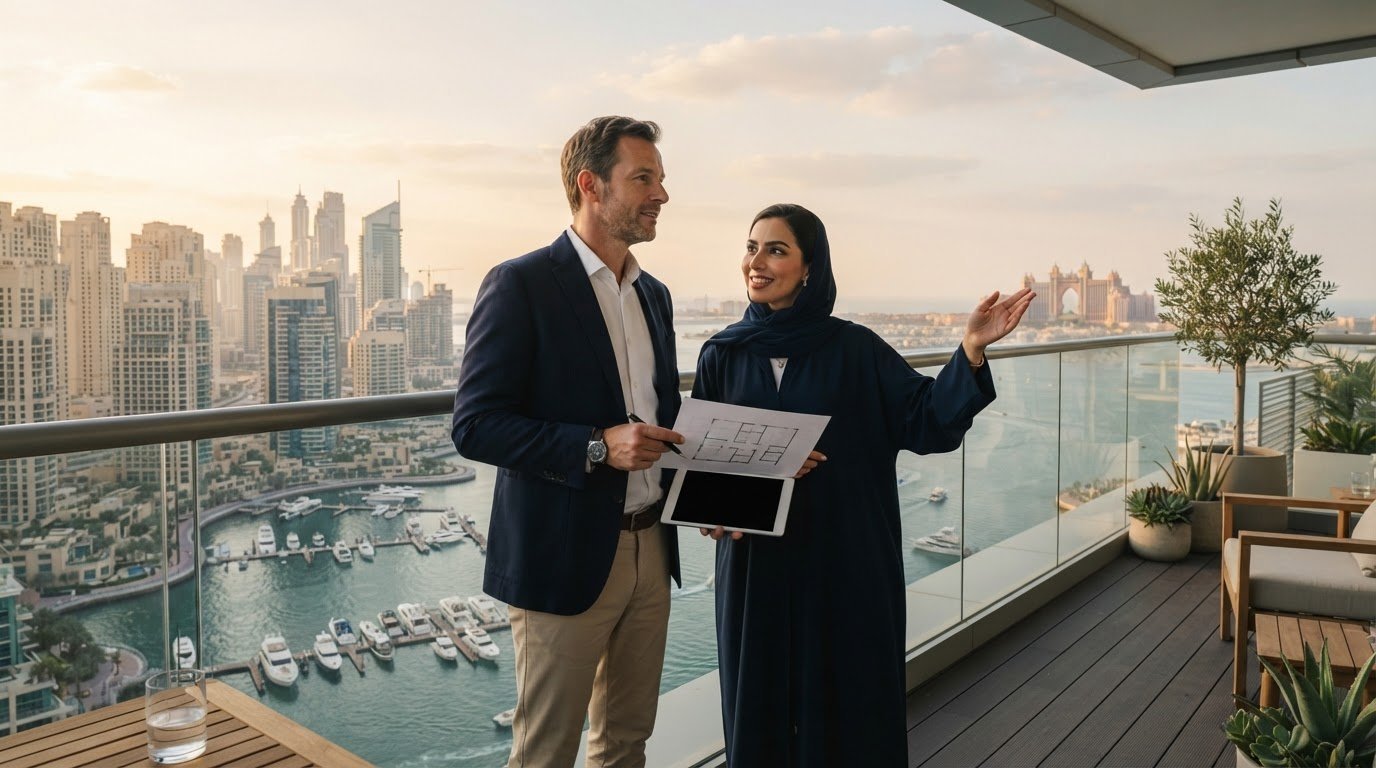
Foreign buyers can purchase property in Dubai’s approved freehold zones under Article 3 of Regulation No. 3 of 2006. Buying property in Dubai as a foreigner doesn’t require UAE residency, provided the purchase meets the applicable rules. Ownership options also include usufruct rights, so the type of right attached to a property matters as much as its location.
It’s understandable to focus first on whether you’re eligible, but choosing the right area and understanding the full cost are just as important. This guide explains where foreign ownership is allowed, what purchase fees to factor into your budget, and how neighbourhood prices and rental yields compare.
You’ll also find practical steps for moving from a shortlist to a completed purchase, including the differences between ready and off-plan properties. Use these points to assess your decision, whether you’re buying a home or considering an investment.
Key Takeaways
- Include transfer and ongoing housing costs in your purchase budget, not just the property price: Dubai’s transfer fee is 4%, and the monthly housing fee is 5% of the area’s average rental value.
- Compare neighbourhoods using both purchase prices and rental yields; Dubai Marina and Palm Jumeirah can present very different price points and investment profiles.
- If residency is part of your investment plan, review the eligibility criteria: according to Dubai Land Department, property investors may qualify for a 10-year Golden Visa when their investment exceeds AED 2 million.
- Shortlist properties by ownership type, intended use and preferred area so you can compare suitable homes, villas, townhouses or commercial properties more effectively.
Can Foreigners/Expats Buy Property in Dubai?
Yes. Foreign buyers can purchase ready or off-plan property in Dubai’s approved freehold areas without UAE residency. If you’re buying property in Dubai as a foreigner, first identify the property’s ownership type and confirm that it is in a designated area.
-
Check foreign buyer eligibility
Confirm that you can buy independently before committing. Buyers must be at least 21 years old to independently purchase property and sign property contracts in Dubai. Foreign nationality alone doesn’t prevent a purchase in an approved freehold area. A qualifying property purchase may make a buyer eligible for a 2-year UAE residence visa. According to official government records, property investors may qualify for a 10-year Golden Visa if their investment exceeds AED 2 million, subject to eligibility criteria. Chainex Real Estate can help you navigate these visa requirements and investment thresholds.
-
Compare freehold and leasehold ownership
Choose the ownership right that suits your intended use. Freehold ownership gives the buyer ownership of the property in an approved area, with the ability to occupy, lease, sell, or renovate it, subject to developer regulations. Leasehold property is commonly granted for a fixed period of up to 99 years. Foreign buyers may also acquire usufruct rights, so read the specific rights attached to the property rather than relying on the listing label. Understanding these distinctions is central to buying property in Dubai as a foreigner.
-
Identify designated freehold areas
Shortlist locations only after confirming that foreign ownership is allowed for the specific property. Article 3 of Regulation No. 3 of 2006 designates land plots available for purchase by non-nationals. Dubai’s freehold areas include properties across different neighbourhoods and property types, but a district name alone doesn’t establish the ownership right. Compare the title and designated area, then weigh location against your lifestyle plans and rental yields.
-
Review property types and purchase documents
Match the property type to your plans: foreign buyers can purchase ready and off-plan homes in approved freehold areas. Prepare your identification, signed purchase terms, and property registration documents for the transaction. For off-plan purchases, verify the developer’s approval and review the purchase terms and ownership rights together. Key risks include choosing a property outside designated areas or misunderstanding leasehold terms and developer rules.
Dubai property transfer fee and housing fee
The agreed price is only part of the budget. Allow for transfer and registration costs, ongoing housing charges, and your payment arrangements. These steps can help you prepare funds, complete the transaction, and plan for continuing expenses.
-
Estimate transaction costs
Prepare a transaction budget before signing Form F, the Memorandum of Understanding recording buyer and seller terms. Dubai buyers pay a 4% transfer fee to the Dubai Land Department. Estate agent commission is 2%, while mortgage registration costs around 0.25% of the loan amount. Title deed fees are AED 4,000 for property values up to AED 500,000, and AED 8,000 above that. List applicable costs separately so you can see what’s due at transfer.
-
Account for housing fees and service charges
Add recurring property expenses to your ownership budget rather than treating transfer costs as the full outlay. Dubai’s monthly housing fee equals 5% of the area’s average rental value. Service charges are separate costs; review the applicable charges and what they cover before comparing homes in Dubai Marina or Downtown Dubai. Include these expenses when assessing expected rental yields and the ongoing cost of ownership.
-
Arrange payment and complete the transfer
Coordinate international transfers with the transaction schedule before signing. Compare your bank’s exchange rate and transfer fees, confirm the receiving account details, and keep payment records. Arrange funds for the agreed completion date. The final ownership transfer takes place at a Dubai Land Department Trustee Office, where ownership rights are registered and the Dubai Land Department issues the title deed. Before completion, check that the seller’s agreed terms match Form F.
Once your budget and preferred area are clear, compare Dubai property listings as you refine your shortlist.
Property prices and rental yields by neighbourhood
Compare purchase prices with gross rental yields, then assess each neighbourhood against your intended use. These figures illustrate differences across Dubai; they do not guarantee income from an individual apartment or villa.
-
Compare neighbourhood prices and rental yields
Start with comparable property types. Average gross apartment yields are 6.5% in Dubai Marina and 6.03% in Jumeirah Beach Residence. Palm Jumeirah apartments recorded a 5.64% average gross yield at the start of 2025.
-
Assess rental investment potential
Compare gross yield with purchase price, property type, and the rent you expect to earn. CityWalk Dubai’s average gross yield across property types is 6.54%, while Arabian Ranches records 4.54%. These figures show why investors should compare neighbourhoods and property types rather than assuming one emirate-wide return applies to every purchase.
- Remember that gross yield is not the same as income after ownership expenses. Dubai does not currently impose annual property taxes or taxes on rental income for individual property owners, though corporate buyers and entities holding property can consult CTC Tax & Accounting to navigate local corporate tax requirements. Include service charges and property management costs in your assessment, as both affect the income retained from a rental.
- Decide whether long-term tenants or short-term rentals suit your plans before choosing an apartment or villa. Consider expected occupancy, management needs, and location. For short-term rentals, understand the applicable operating requirements and include management arrangements in your investment plan. A strong gross yield alone does not establish net income.
Foreign ownership eligibility and designated areas
For foreign buyers, the key distinction is not simply the neighbourhood but the ownership right attached to the specific property. Use these steps to assess eligibility before committing funds to a Dubai property.
- Match the property to the legal designation. Article 3 of Regulation No. 3 of 2006 identifies land plots designated as freehold and available for purchase by non-nationals. Foreign ownership is permitted in approved freehold areas, so treat the individual property’s designation, rather than a district’s reputation, as the deciding point.
- Assess the exact ownership recorded for your chosen unit or plot. Freehold provides ownership rights, while leasehold and usufruct involve different rights or timeframes. Dubai has allowed foreigners to buy and sell with full ownership rights in designated freehold areas since 2002. Ask how the registered right affects occupation, leasing, resale, or renovation.
- Use neighbourhood names to narrow your search, not to assume eligibility. Palm Jumeirah, Dubai Marina, and Downtown Dubai are distinct property markets, but a location name alone does not establish the ownership status of every property. Before proceeding, compare the specific unit’s documents and title details with its designated area.
- Include document and agent checks in your due diligence. The Dubai Land Department registers ownership rights and issues the relevant title deed, which identifies the registered interest. Verify the estate or real estate agent through trusted Dubai systems. For off-plan purchases, confirm the developer’s approval before committing.
- Keep ownership eligibility separate from residency planning. Foreign buyers do not need UAE residency to purchase in Dubai when the transaction meets applicable rules. If a visa is part of your plans, assess the relevant eligibility criteria separately: property ownership and permission to reside are distinct considerations.
Use Dubai area information to compare locations, then assess each property’s ownership designation individually.
Chainex Real Estate: dubai houses for sale
Chainex Real Estate can help you compare ownership options and shortlist properties for purchase across the UAE. Explore dubai houses for sale, including villas and townhouses, or consider commercial properties for business use throughout the Emirates. Share your preferred property type, intended use, and areas of interest to focus your search on suitable listings.
Once you understand the ownership rules and have set your priorities, review available properties against those criteria. This can make comparisons more consistent, whether you’re looking for a home or considering a commercial purchase anywhere in the country.
Contact Chainex Real Estate to discuss your property search.
Make Your Next Move with a Clear Plan
Before moving from research to a decision, write down what you need the property to achieve. A home for personal use, a long-term investment, and a rental property each call for different priorities. Clarifying your preferred lifestyle, time horizon, and willingness to manage the property can make your shortlist more useful than simply comparing locations.
When buying property in Dubai as a foreigner, revisit your shortlist and rank each option against your priorities. Note what matters most, including intended use, location, ownership structure, and ongoing responsibilities. This gives you a practical basis for discussing options and deciding which properties deserve closer attention.
When you’re ready to explore suitable possibilities, discover your next property options with Chainex Real Estate. Take the next step at a pace that supports a well-considered decision.
Frequently Asked Questions
How much are the property prices?
Prices vary by neighbourhood, property type, size, and condition. Treat this as a reference by area and property type, not a price for every home. For a useful shortlist, compare similar properties and consider how each purchase fits your intended use and budget.
Is it helpful to work with a local agent?
A local agent can help you interpret Dubai listings, compare property types, and coordinate the buying process. This can be especially useful when purchasing from abroad and assessing locations remotely. Verify the agent’s credentials through trusted Dubai systems, then explain your priorities, such as ownership structure, intended use, and whether you’re considering ready or off-plan property.
What’s the real estate market like in Dubai?
Dubai’s market recorded 60,303 real-estate transactions in Q1 2026. In Q2 2026, residential transactions reached 34,850, with off-plan sales making up 76% of residential transactions; the secondary residential market recorded 8,512 transactions. These figures show activity across different purchase routes. For your decision, compare ready and off-plan options separately, since completion timing and payment structures affect how each fits your plans.
What are Dubai property transfer fees, registration fees, and other buying costs?
Budget for transfer and transaction expenses as well as the purchase price. Mortgage registration is calculated against the loan amount, so financing affects the total.
Can foreigners get a mortgage in Dubai, and what are the deposit requirements and rates?
Yes, foreign buyers can apply for mortgages through UAE banks, though availability and terms vary by buyer and lender. Non-residents may be able to borrow around 50% to 75% of a property’s value. Down-payment requirements and interest rates may be higher for non-residents than residents. Prepare bank statements covering the last 3-6 months, and assess affordability using the lender’s loan terms and your available funds.
What are typical Dubai property prices and rental yields by area and property type?
Prices and yields differ by location and property type, so compare like with like. In August 2026, the average Dubai rental yield was 6.34%; apartments averaged 6.66%, townhouses 5.06%, and villas 4.45%. These are market averages, not forecasts for a specific property. Assess expected rent alongside purchase price, service charges, management needs, and how consistently the property suits its intended tenant or use.