


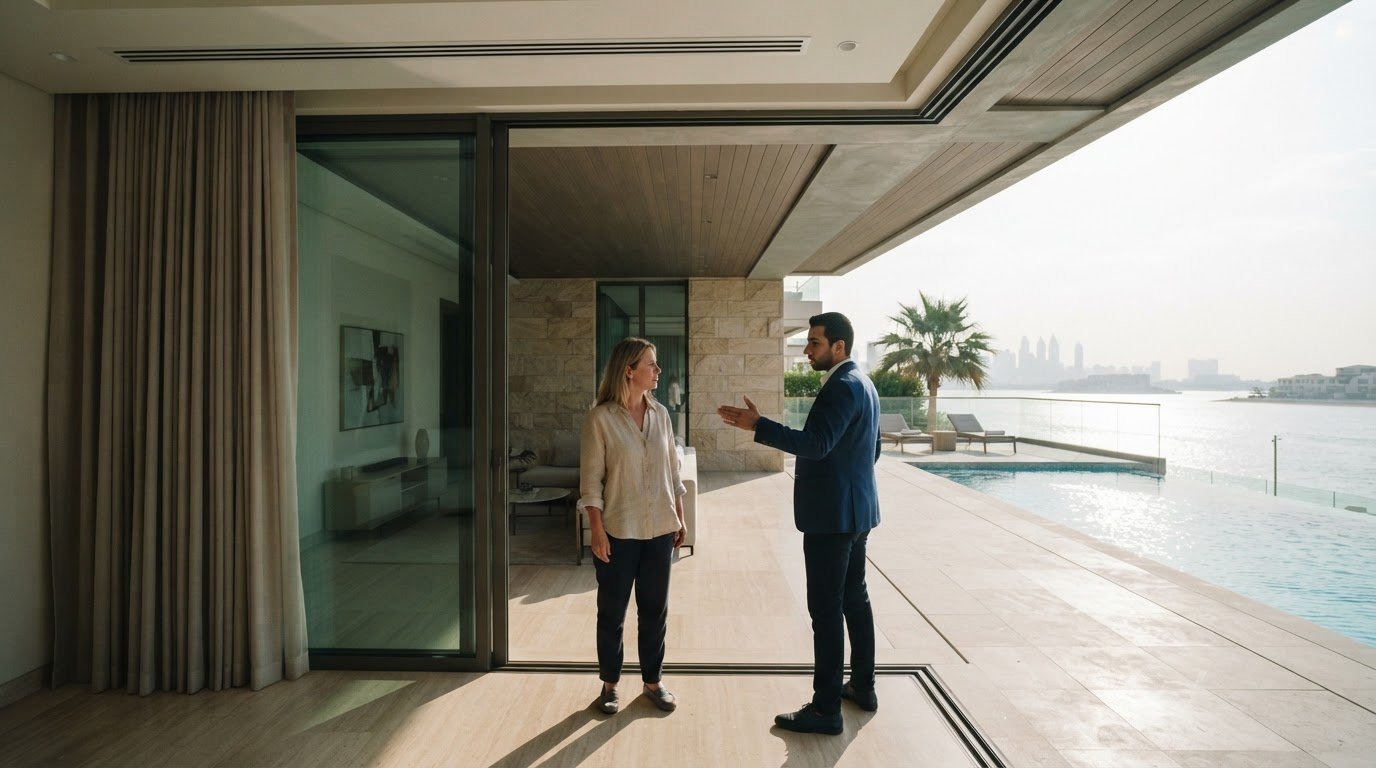
Dubai isn’t a cooler escape when summer in Europe is very hot; UAE summer temperatures can head to 50°C. The reason to choose Dubai is not milder outdoor weather, but the opportunity through Chainex Real Estate to keep your UAE property well organised while you travel. Whether Dubai suits your plans depends on how you’ll manage the heat and maintain continuity while you’re away.
It’s understandable to look for a change of pace when European heat disrupts familiar routines, but Dubai’s summer calls for preparation, not an assumption of cooler conditions. This article explains how to plan for your UAE property with Chainex Real Estate while abroad, organise travel records and map out your journey. It also compares the seasons and outlines practical considerations to help you decide whether Dubai suits your summer plans.
Key Takeaways
- Compare seasonal conditions across your intended travel dates, and plan outdoor activities around how heat and humidity feel together.
- Build your Dubai summer routine around indoor comfort, including how buildings and air conditioning shape daily life.
- Keep travel plans and records organised, and remember that according to HM Revenue & Customs, spending fewer than 183 days in the UK is not a universal exemption under the Statutory Residence Test.
- For a longer-term UAE base, explore Dubai houses for sale, including villas, townhouses and commercial properties through Chainex Real Estate.
3. Summer Temps: Europe vs Dubai by Month
Summer conditions vary across Europe, so compare specific destinations rather than the continent as a whole. In May, Mediterranean cities such as Rome and Athens are moving into warmer weather, while London’s early summer can feel cooler. June brings longer, warmer days across much of Europe, though coastal breezes and local conditions still affect comfort. By July and August, southern European destinations can experience intense heat, while northern cities may feel more temperate. If summer in Europe is very hot, why not Dubai? The answer depends on the kind of summer you want.
Dubai follows a different seasonal pattern. May marks the approach of the UAE’s hotter summer, and June, July and August bring sustained heat that shapes outdoor routines. September remains hot, even as the season begins to shift. A European summer itinerary may allow for daytime sightseeing outdoors; in Dubai, plans often work better when outdoor errands and activities are scheduled for cooler parts of the day. If summer in Europe feels very hot, why not consider Dubai? Its summer heat is a trade-off, not a cooler alternative.
For a useful month-by-month comparison, match the travel period and activity. A July visit to Barcelona and a July stay in Dubai both call for heat-aware planning, but Dubai’s summer conditions are more consistently demanding. In May or September, compare your specific European destination with Dubai instead of assuming either place will feel comfortable. For each month, consider daytime conditions, overnight comfort and how much time you’ll spend outdoors.
Travel dates can also affect residency and record-keeping, especially for UK connections. According to HM Revenue & Customs, the UK Statutory Residence Test considers time and ties, including work; spending fewer than 183 days in the UK is not a universal exemption. Keep a clear record of travel dates and work arrangements. That practical step supports a more informed review of your plans, alongside the seasonal comparison between Europe and Dubai.
4. What are typical summer temperatures and humidity levels in Dubai?
Dubai’s summer heat requires planning around outdoor exposure, not just a headline temperature. UAE summer temperatures are described as heading to 50 C. That figure signals how demanding conditions can become, but it doesn’t describe every day or neighbourhood. A short shaded walk in Downtown Dubai differs from extended time in direct sun. Use the forecast for your dates and plans, rather than assuming one temperature applies throughout summer.
Humidity also affects how heat feels. Temperature measures the air’s warmth, while humidity describes its moisture. In humid air, sweat evaporates less readily, which can make it harder for your body to cool itself. Dry heat can feel different at the same temperature. A temperature reading alone, then, won’t tell you whether a walk, outdoor meal or commute will feel comfortable.
Dubai’s coastal setting makes humidity relevant alongside heat, particularly near the waterfront. Conditions can vary by location and time, so consider the specific area and hour. A midday visit to an exposed waterfront promenade, for example, differs from an evening stop at an indoor venue. Neither is a guaranteed forecast, so check conditions for your planned activity.
For a practical summer plan, review the daily forecast before setting outdoor commitments. Note the expected temperature, humidity and any advisories for Dubai. When possible, schedule outdoor errands for cooler parts of the day and keep alternatives flexible. Reschedule a walk, beach visit or outdoor meal if conditions feel too intense. This turns weather information into choices for the day ahead.
For European visitors, the main adjustment is recognising that Dubai’s summer combines sustained heat with humidity that can affect perceived comfort. A temperature that looks manageable on a screen may feel more demanding during exertion or in direct sun. Consider both temperature and humidity when planning, and allow for indoor breaks between outdoor activities. The UAE’s peak summer conditions call for deliberate scheduling, not assumptions based on European summers.
3. How does humidity affect perceived heat in Europe and Dubai?
Humidity affects how efficiently the body releases heat through evaporation. At the same air temperature, humid conditions can feel more oppressive than dry ones. This matters when comparing a shaded street in London with an exposed waterfront walk in Dubai. A thermometer records air temperature, but not how demanding an activity feels.
Europe doesn’t have a single summer humidity profile. A coastal afternoon in Barcelona can feel different from a dry inland day near Madrid, even at similar temperatures. In London, cloud cover, breeze and damp air can shape comfort differently. City, time of day and exposure all matter, so comparisons based only on national averages can mislead travellers planning specific activities.
Dubai also has distinct local conditions. Moist air near the Gulf can make an outdoor setting feel different from a less exposed inland location. A short stop beside the water and a longer walk through a sunlit urban area place different demands on the body. Consider the setting as well as the forecast when planning time outdoors.
Use a practical comparison each day: check temperature and humidity together, then consider shade, wind and activity. A slow evening stroll in a shaded area, for example, is not equivalent to brisk walking at midday. If the air feels heavy, reduce exertion, take an indoor break or shift the activity. These choices matter more than treating one reading as a complete measure of comfort.
For a trip between Europe and Dubai, plan outdoor time around the combined conditions, not just the temperature displayed on an app. Pack light clothing suited to your itinerary, and allow for indoor breaks after time outside. A seaside lunch, a city walk and a shaded courtyard each involve different levels of exposure. Comparing these settings gives a more useful sense of perceived heat than comparing temperatures alone.
The author says people warned him about Dubai’s approaching heat every day for three months. He also describes going to the beach at noon during Dubai’s summer, an experience that shows why exposure and timing matter.
4. How do Dubai buildings, air conditioning, and urban design manage extreme summer heat
Dubai’s summer routine often shifts between outdoor exposure and cooled interiors. Air conditioning makes homes, offices, hotels and shopping centres practical places to rest from the heat. This shapes daily planning: a visit to Dubai Mall, for example, can combine indoor time with short outdoor transfers. Comfortable interiors don’t cool the street, so plan each transition rather than assuming air conditioning protects you everywhere.
Building design also affects indoor comfort. Shaded windows and covered entrances can limit direct sun in rooms or on doorways. Curtains or blinds offer another simple way to reduce sunlight indoors. Features vary between buildings, so consider a room’s sun exposure and cooling arrangements when choosing where to spend time. A shaded lobby and a sunlit balcony won’t feel alike on a hot afternoon.
At street level, shade can change the experience of walking through Dubai. Building overhangs, covered walkways and shaded waiting areas can reduce direct exposure along some routes. They don’t remove the heat, and shade may be intermittent. Even a short walk from a building entrance to a taxi can involve sun. Check the route and transport arrangements before setting out, especially when an errand involves several stops.
Air-conditioned transport and indoor destinations help organise a summer day around shorter periods outdoors. Plan the journey from a cooled home to a vehicle, then from the drop-off point into the destination. Keep outdoor activities brief and schedule longer visits indoors. If your plans include a waterfront or open plaza, identify an indoor alternative nearby. This makes buildings and transport part of the itinerary rather than relying on mild outdoor conditions.
To explore how Dubai locations might fit your plans, browse Dubai property options as you consider the neighbourhoods and buildings that support your preferred routine.
Chainex Real Estate: dubai houses for sale
If summer planning has prompted you to consider a longer-term UAE base, Chainex Real Estate can help you explore Dubai houses for sale. Your priorities may point to a villa, townhouse or commercial property, depending on how you plan to use the property and manage your UAE commitments while abroad.
Consider how a property’s location, indoor layout and access to daily amenities fit your routine, especially when summer heat makes outdoor journeys less convenient. Once you’ve decided that owning in Dubai aligns with your plans, exploring suitable properties is a practical next step.
If you’d like to discuss your property search, contact Chainex Real Estate.
Plan a Dubai Base Around Your Next Chapter
If summer in Europe is very hot, why not Dubai? The more useful question is whether a Dubai base fits your plans beyond one season. Consider how often you expect to be in the UAE, how you would use a home, and how you would organise personal and business commitments while travelling. These priorities can clarify whether you’re planning a temporary stay or considering a longer-term property decision.
Chainex Real Estate offers Dubai houses for sale, including villas and townhouses. Start your property search by defining its intended use: a family home, a place to return to between trips, or another arrangement that suits your plans. Clarifying those priorities can make your next conversation more focused and useful.
For a considered discussion about your Dubai property search, contact Chainex Real Estate. Your next step can be a thoughtful one, shaped around the life you want to build.
Frequently Asked Questions
Why can Europe feel hotter than Dubai during summer despite Dubai’s higher temperatures?
A particular outing in Europe can feel hotter because perceived heat depends on more than the temperature reading. A sun-exposed walk in a European city, with limited shade, still air and strenuous sightseeing, can feel more taxing than a shorter, shaded journey between cooled indoor spaces in Dubai. The comparison changes with the city, weather, activity and time outdoors, so conditions vary from place to place.
When is the best time to visit Dubai or Europe to avoid extreme heat?
To avoid Dubai’s most sustained summer heat, avoid June, July and August; May and September remain hot. European conditions vary by destination, and northern cities may feel more temperate than southern destinations in July and August.