


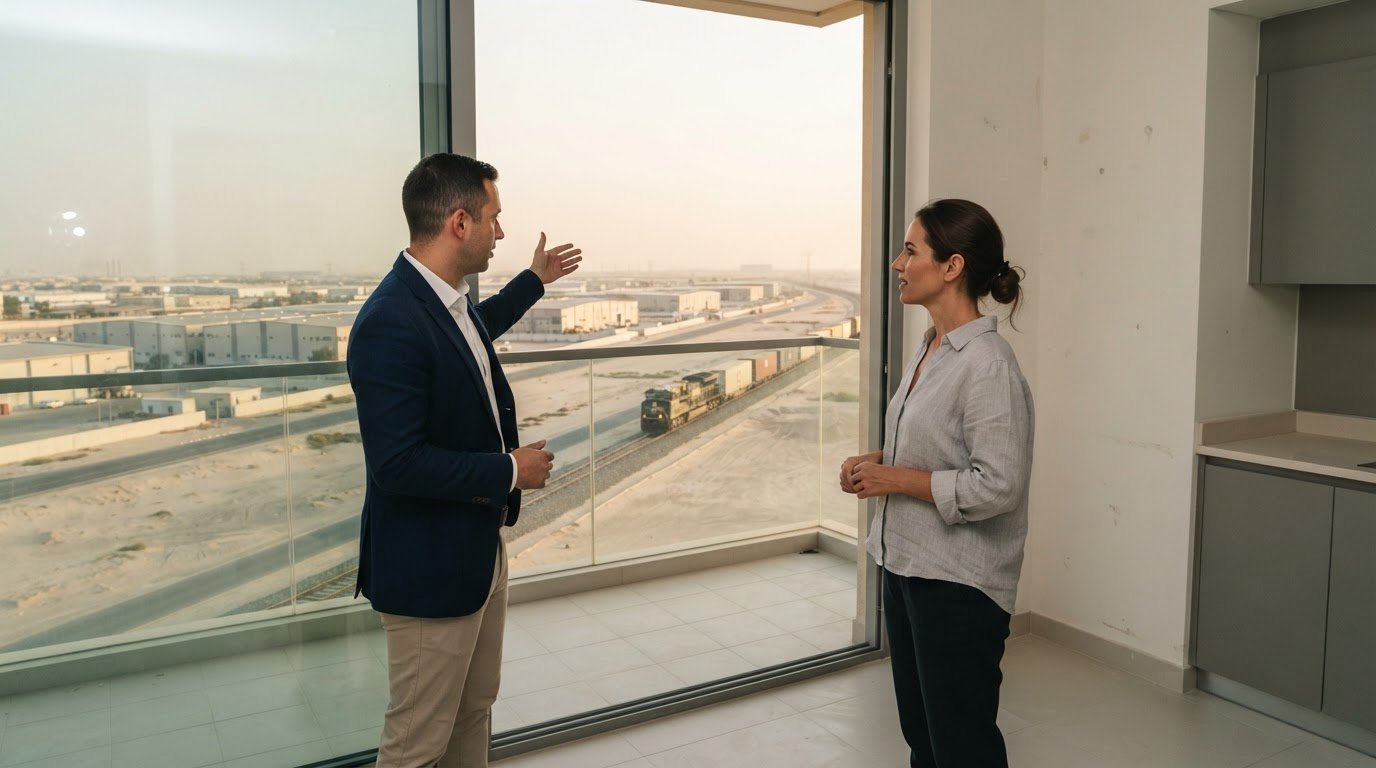
The biggest property-market shift from the Etihad railway connecting all Emirates may come from the places it brings within easier reach, not simply the speed of the train. The planned network is approximately 1,200 kilometres long and is intended to link all seven emirates, with passenger services serving 11 cities and regions.
For residents and investors, improved connections between the Emirates could affect how they weigh location, commuting and access to employment centres. The impact will depend on routes, stations and links to local transport. Rail access alone does not guarantee a change in property values.
This article explains the planned network, including the proposed Dubai extension towards Fujairah and Ras Al Khaimah, and the journey times outlined for key routes. It also compares the scheduled Abu Dhabi-Dubai trip with the proposed high-speed service and considers what future links to Oman could mean for regional connectivity.
Key Takeaways
- Understand how proposed cross-border rail links could broaden access between the UAE, Oman and the wider region.
- See why the planned network’s reach across emirates may matter when weighing where to live, invest or do business.
- Compare how journey times differ by route and what that could mean for inter-emirate travel.
- Assess the proposed Dubai and northern Emirates extension as one factor in evaluating property locations, not as a guarantee of future value changes.
Future rail links to Oman and the GCC
The proposed UAE-Oman railway would extend Etihad Rail’s reach beyond the national network. In April 2024, Etihad Rail and Oman Rail announced a joint venture, Hafeet Rail, to develop a 300-kilometre line. The route is planned to connect the UAE network with Sohar, passing through Al Ain. Construction began in May 2024, establishing a physical step toward cross-border rail travel.
Al Ain is central to the route’s geography: it would connect the UAE railway with Sohar, an Omani port city. This creates a planned rail corridor between the Emirates and Oman, rather than a separate line ending at the UAE border. For passengers and businesses, the connection could make journeys between inland UAE locations and northern Oman more direct by rail. The experience will depend on station locations and how travellers reach them.
Proposed journey times underline the corridor’s potential reach. A trip between Al Ain and Sohar is expected to take 47 minutes, while the planned journey from Abu Dhabi city to Sohar is expected to take 1 hour and 40 minutes. These are route estimates, not door-to-door travel times. A traveller’s total journey also includes access to stations and onward transport at the destination.
The Oman connection is relevant to the wider GCC because it could link UAE rail infrastructure with a neighbouring Gulf country. The plan describes a UAE-Oman corridor; it does not establish a completed railway serving every GCC state. This distinction matters when considering property. Al Ain’s proposed role as a cross-border gateway may be relevant to people seeking access to Oman, while Sohar provides the connection on the Omani side. Rail access can inform location planning, alongside a property’s purpose, local transport and daily needs.
Planned network connecting all seven emirates
The Etihad railway connecting all Emirates is planned to span approximately 1,200 kilometres when complete. It is designed to link urban and economic centres across all seven emirates. A railway crossing an emirate, however, does not automatically provide convenient access to every neighbourhood. Station locations and onward transport determine which communities gain the most practical connection.
The passenger network is planned to serve 11 cities and regions. Named destinations include Abu Dhabi, Dubai, Fujairah and Al Dhaid in Sharjah. Zayed City and Liwa are scheduled to join on 30 November, while Al Dhafra Region stations are scheduled for 30 December. Sharjah Station is scheduled to open on 30 March 2027. These planned additions extend the service footprint beyond the largest urban centres.
For property analysis, a city on the network is not the same as a home near a station. A station could improve access to another emirate, but its everyday usefulness depends on local connections. Residents may still need transport between home, work and the station. The railway’s reach provides useful context, while neighbourhood-level access determines its practical relevance.
The Etihad railway connecting all Emirates may also support wider regional rail travel through cross-border links. The clearest named proposal is the UAE-Oman corridor discussed above. It does not mean a completed railway already serves every GCC country. For property decisions, consider regional connectivity alongside location, intended use and local transport. Reviewing Dubai area profiles can help place planned connections within a neighbourhood context.
The operational Etihad Rail network totals 900 kilometres in length following the commencement of Stage Two operations. The Etihad Rail network is planned to accommodate axle loads of 32.5 tonnes. These measures describe infrastructure capacity rather than the experience at any individual station. On the passenger side, Etihad Rail’s passenger network is estimated to carry 36.5 million passengers annually, and Etihad Rail passenger trains are planned to carry up to 400 passengers per journey.
Etihad Rail’s passenger network currently serves four UAE passenger stations: Abu Dhabi, Dubai, Fujairah and Al Dhaid in Sharjah. Distinguishing the operational network from the larger planned network helps clarify what access is available now. Passenger estimates and train capacity indicate intended scale, but do not establish journey frequency or convenience for a particular home.
Inter-emirate journey times
The scheduled Etihad Rail journey between Abu Dhabi and Dubai takes around 64 minutes. A separate planned high-speed line is designed to connect the cities in 30 minutes. That proposed line would span 150 kilometres and is expected to be operational by 2030. These figures describe different services, so they should not be treated as interchangeable travel times.
Other planned passenger routes provide useful comparisons. The journey between Abu Dhabi and Fujairah is expected to take around one hour and 45 minutes. Travel between Abu Dhabi and Al Dhannah, also known as Al Ruwais, is expected to take approximately one hour and 10 minutes. These routes link different destinations, making the right comparison dependent on where a passenger starts and finishes.
Train speed helps explain the difference between standard and high-speed services, but it doesn’t tell the whole story. Standard passenger trains are expected to operate at up to 200 kilometres per hour. The proposed Abu Dhabi-Dubai high-speed service is designed for speeds up to 350 kilometres per hour. Stops and station locations also shape the time spent travelling between cities.
For a realistic commute estimate, consider the complete journey, not only the train segment. A resident travelling from home to work may need to reach a station first, then continue from the destination station. For example, someone travelling between Abu Dhabi and Dubai should consider the locations of both endpoints alongside the scheduled 64-minute rail journey. The same principle applies to Fujairah and Al Dhannah.
These journey times can help frame property-location decisions, but they don’t establish how much a neighbourhood may benefit. A station’s usefulness depends on its connection to homes, workplaces and local transport. Compare the route serving a destination with the actual places you need to reach. For longer-term planning, distinguish a scheduled journey from a proposed service, such as the 30-minute high-speed connection targeted for 2030.
Planned Dubai and northern Emirates extension
A planned 279-kilometre extension is intended to connect Dubai with Fujairah and Ras Al Khaimah. Its significance lies in linking the UAE’s east coast and northern emirate with Dubai by rail. For residents, businesses and visitors, the proposed route could broaden travel choices beyond existing road connections. Its practical value will depend on station locations and connections to local destinations.
Dubai already has an Etihad Rail station at Al Yalayis. A dedicated pedestrian bridge connects it with Jumeirah Golf Estates Metro Station, illustrating how rail can link with urban transport. The planned extension would broaden the Dubai connection northwards and eastwards. Route details matter: a station’s proximity to homes, workplaces and services shapes how useful the railway is day to day.
Fujairah and Ras Al Khaimah are distinct destinations, not interchangeable stops. Fujairah is on the UAE’s east coast, while Ras Al Khaimah is in the north. A rail link serving both could make cross-emirate journeys more accessible and expand the areas connected to Dubai. When assessing property, consider transport access alongside local amenities and the intended use of the home.
Keep the extension separate from the proposed 150-kilometre Abu Dhabi-Dubai high-speed line, which is expected to be operational by 2030. The high-speed project concerns travel between two major cities; the 279-kilometre extension addresses Dubai’s connections with Fujairah and Ras Al Khaimah. Treating them as separate projects helps avoid assuming one timetable or route applies to the other.
For buyers considering Dubai, planned connectivity is one factor, not a measure of future property performance. Station access, everyday travel needs and neighbourhood services all matter. Explore Dubai houses for sale with your location and transport requirements in mind.
Etihad Rail inaugurated its Dubai Station on 28 September, and the first scheduled Etihad Rail train from Al Yalayis Station in Dubai departed at 06:14. Passengers can use Dubai’s Nol system alongside Etihad Rail services, with a single QR code for journeys involving trains, Metro, Tram and bus services.
Chainex Real Estate
Chainex Real Estate can help you assess UAE property options in light of your location and travel priorities. With the **Etihad railway connecting all Emirates**, rail plans may inform your decision, but the right choice also depends on how a home or business property fits your daily needs and intended use.
Whether you’re considering a house, villa, townhouse or commercial property for sale, compare its location with current transport links and the proposed national network. This gives you a more balanced basis for assessing connectivity without treating future plans as a guarantee of property performance.
For tailored guidance on nationwide property options, contact Chainex Real Estate.
Make your next property decision with perspective
As the Etihad railway connecting all Emirates takes shape, transport planning can offer one useful perspective when assessing a property’s long-term role. Start with what matters now: where you need to live or work, how you travel, and whether the location suits your intended use. Then consider proposed connections as context, not as the sole reason to choose an area.
Rail plans are one consideration, not a promise of property performance. Present-day access, neighbourhood services and your priorities remain central. A measured decision considers how a property serves you today while allowing for possible changes in connectivity. This keeps long-term possibilities in view without losing sight of practical needs.
When you’re ready to discuss property options in Dubai, contact Chainex Real Estate. A considered next step can help you move forward with greater clarity and confidence.
Frequently Asked Questions
What sights can I see from the train?
The views depend on your route and the stations it serves, so there is no single sightseeing experience across the network. A journey between major urban centres will differ from one towards the east coast or Al Dhafra. Treat the train primarily as inter-city transport: scenery is part of the journey, not a guaranteed itinerary of specific landmarks.
How long will journeys between Abu Dhabi, Dubai, Sharjah, and other emirates take?
Journey times vary by route: Abu Dhabi to Dubai takes around 64 minutes on the scheduled service, while the proposed high-speed service is designed for 30 minutes. Abu Dhabi to Fujairah is expected to take about one hour and 45 minutes. For Sharjah, use the duration for your specific station pair when planning, and allow for travel between stations and your final destination.