


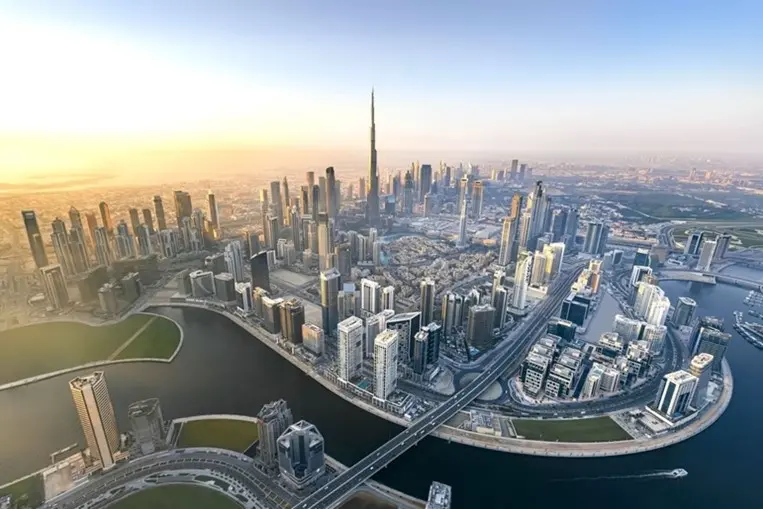
When Dubai’s real estate market slows down, most investors pause. They wait for confidence to return, for prices to bottom out, for someone else to move first. The investors who build lasting wealth do the opposite. They move quietly, strategically, and with conviction. This guide explains exactly how.
Table of Contents
1. What Is a Real Estate Market Slowdown in Dubai?
2. Why Dubai Slowdowns Are Different from Global Markets
3. Why a Slowdown Is the Best Time to Build Wealth in Dubai
4. Mindset: How Dubai’s Wealthiest Investors Think in a Slow Market
5. Strategy 1: Buy When the Market Is Quiet
6. Strategy 2: Target Cash Flow Over Capital Gains
7. Strategy 3: Off-Plan at Slowdown Terms
8. Strategy 4: Reposition Your Dubai Portfolio
9. Strategy 5: Find Motivated Sellers in Dubai
10. Strategy 6: Buy-to-Let in Dubai’s Resilient Districts
11. Strategy 7: Renegotiate Your Financing in a Slow Market
12. What to Avoid When Dubai Slows Down
13. How UAE Regulations Protect Your Wealth During a Slowdown
14. Dubai Districts to Watch in a 2026 Slowdown
15. The Dubai Slowdown Wealth Checklist
16. Conclusion: In Dubai, the Quiet Market Makes the Millionaires
17. Frequently Asked Questions (FAQ)
1. What Is a Real Estate Market Slowdown in Dubai?
A real estate market slowdown is not a crash. It is a period of reduced transaction velocity, softer price growth, longer days on market, and increased negotiating room for buyers. It is a natural part of every property market cycle and Dubai is no exception.
Signs the Dubai Market Is Slowing
Understanding the signals helps you act before others recognise the opportunity. The key indicators of a Dubai market slowdown include:
- DLD monthly transaction volumes declining for two or more consecutive quarters
- Average price per square foot growth falling below 3 percent year on year
- Properties staying listed for 60 days or more without offers
- Developers launching extended payment plans to stimulate demand
- Rental yields rising relative to sales prices as buyers withdraw
- Secondary market discounts appearing on recently completed units
How Long Dubai Slowdowns Last
Dubai has experienced three significant correction cycles since 2000. The 2008 to 2011 correction lasted approximately three years before recovery began. The 2014 to 2020 softening phase lasted six years and was followed by the strongest bull run in the market’s history. The 2020 COVID dip lasted less than twelve months before record transaction volumes were recorded in 2021.
The historical pattern is consistent: Dubai slowdowns are temporary, and every period of reduced prices has been followed by a period of significant capital appreciation. Investors who understood this and acted during the quiet periods generated the strongest long-term returns.
Why Dubai Is Different from Other Markets
Dubai’s slowdowns are structurally different from those seen in Western property markets. There is no property tax, which removes the forced selling pressure that accelerates corrections elsewhere. There is no capital gains tax, which means sellers are not forced to realise losses. The Golden Visa programme creates a class of long-term residents with a structural incentive to hold property. And the RERA regulatory framework prevents the kind of over-leveraged developer behaviour that causes construction collapses in less regulated markets.
These structural factors mean Dubai slowdowns tend to be softer, shorter, and more recoverable than those in comparable global cities.
2. Why Dubai Slowdowns Are Different from Global Markets
When London, Sydney, or Toronto slow down, the dynamics are driven by forced sellers, overleveraged homeowners, and credit contraction. When Dubai slows down, the dynamics are entirely different. Understanding this distinction is the foundation of every successful slowdown investment strategy.
A Cash-Heavy Buyer Base
The majority of Dubai property transactions are cash purchases. Unlike mortgage-dependent markets where rising interest rates force buyers out immediately, Dubai’s cash-heavy buyer base insulates the market from the most violent corrections. A slowdown in Dubai typically means fewer transactions, not a collapse in values.
The Golden Visa Effect
Since 2019, investors who purchase property above AED 2 million qualify for a 10-year renewable UAE residency visa. This programme has fundamentally changed the behaviour of property owners in Dubai. Investors with residency status have a personal reason to hold their asset through market cycles rather than sell under pressure. The result is reduced distressed selling supply during slowdowns.
No Property Tax, No Capital Gains Tax
In markets like the UK, USA, and Australia, property owners face ongoing tax obligations that can force sales during difficult periods. In Dubai, there is no annual property tax, no capital gains tax, and no inheritance tax on real estate. This means owners can hold indefinitely without financial penalty, dramatically reducing the distressed supply that drives corrections in other markets.
RERA and Regulatory Protection
The Real Estate Regulatory Agency (RERA) governs every aspect of Dubai’s property market. Escrow laws protect buyer funds in off-plan projects. The DLD Title Deed system ensures clear ownership records. The Rental Index prevents landlords from profiteering during tight periods. These protections create confidence on both sides of the market and prevent the panic-driven dynamics seen in less regulated markets.
CBUAE Banking Resilience
The Central Bank of the UAE’s D1 trillion resilience package ensures that banking credit remains available throughout any slowdown. Unlike markets where bank lending dries up and triggers a credit crunch, Dubai’s banking system is specifically designed to keep capital flowing to property buyers and developers during periods of external pressure. This is the single most important structural difference between a Dubai slowdown and a slowdown anywhere else in the world.
3. Why a Slowdown Is the Best Time to Build Wealth in Dubai
Every significant fortune built through Dubai real estate has one thing in common: the initial purchase was made when others were hesitant.
The Historical Proof
Investors who bought in Dubai between 2010 and 2012 — in the depths of the post-GFC correction — and held for five years achieved capital gains of between 60 and 120 percent depending on the district. Investors who bought during the COVID period of late 2020 and early 2021 saw property values in prime districts appreciate by 40 to 80 percent within two years.
The pattern is not coincidental. It is the result of a market with genuine demand fundamentals, strong regulatory protection, and a global reputation that attracts new buyers continuously. The slowdown is not a signal to leave. It is a signal to enter.
The Wealth Transfer That Happens in Every Slowdown
During slowdowns, wealth transfers from impatient sellers to patient buyers. Sellers who need liquidity, who made speculative purchases, or who misread the cycle as a permanent decline accept prices below the long-term market value. Buyers who understand the fundamentals, have capital ready, and can hold through the cycle absorb those assets at discounted entry points.
This is not speculation. It is the mechanism through which every property market cycle creates and distributes wealth. In Dubai, the mechanism is particularly powerful because the recovery periods are sharp and the appreciation rates among the highest of any major global city.
Why Most Investors Miss It
Most investors require visible momentum before they act. They need prices to be rising, transaction volumes to be high, and news coverage to be positive before they commit capital. By the time all of those signals are present, the best entry prices are gone. The investors who build wealth are the ones who act when the signals are absent — when the market is quiet and the opportunity is invisible to the majority.
4. Mindset: How Dubai’s Wealthiest Investors Think in a Slow Market
Strategy follows mindset. Before examining specific tactics, it is essential to understand how the investors who consistently outperform in Dubai approach a slowdown period.
They Think in Decades, Not Quarters
Dubai’s wealthiest property investors do not measure their success in twelve-month cycles. They buy assets they intend to hold for five, ten, or twenty years. With that time horizon, a two-year slowdown is not a threat. It is a buying window. Every year of holding in a well-located Dubai property has historically delivered positive total returns when rental yield is included alongside capital appreciation.
They Separate Price from Value
Price is what you pay on the day. Value is what the asset delivers over time. In a slowdown, prices soften but the underlying value drivers of Dubai real estate do not change: the city’s geographic position as a global trade hub, the regulatory environment, the tax efficiency, the lifestyle infrastructure, and the continued growth of the resident and transient population. A lower price for an asset whose value is unchanged is simply a better deal.
They Use Data, Not Headlines
Sentiment in media coverage of property markets lags reality by six to twelve months. By the time headlines are declaring a market recovery, prices have already moved. Sophisticated Dubai investors track DLD transaction data, RERA rental index movements, and CBUAE credit statistics. They act on data before the headlines catch up.
They Maintain Liquidity
The investors who perform best in slowdowns are those who arrived at the slowdown with capital ready to deploy. Building a liquidity reserve specifically for market opportunity is not idle cash management — it is strategic positioning. Entering a slowdown with available capital is the equivalent of having a loaded weapon when the target appears.
5. Strategy 1: Buy When the Market Is Quiet
The most direct wealth-building strategy in a Dubai slowdown is straightforward: buy quality assets while competition is low and negotiating power is high.
How to Identify Undervalued Properties in Dubai
The Dubai Land Department’s REST application provides publicly accessible transaction data for every registered sale in the emirate. By comparing recent transaction prices per square foot in a specific building or community against the historical average for that location, investors can identify assets trading below their established value baseline.
Properties in established communities with strong rental demand that are trading at a discount to their three-year average price per square foot represent genuine value opportunities. In a slowdown, these opportunities multiply as sellers become more motivated and less patient.
Negotiation Power in a Slow Dubai Market
In an active market, sellers hold the power. Multiple offers, quick decisions, and full asking prices are the norm. In a slow market, the dynamic reverses. Sellers accept longer negotiations, price reductions, and non-standard terms. Buyers who are pre-approved for mortgage finance or who can demonstrate available cash move from a position of maximum strength.
In a Dubai slowdown, it is entirely reasonable to offer 5 to 15 percent below the listed price on secondary market properties. Motivated sellers who have been waiting for months will often meet a serious buyer at a significant discount. That discount is the beginning of your wealth creation.
What to Look for in a Slow Market Purchase
- Established communities with a proven rental history and low vacancy rates
- Properties with low service charges relative to rental income
- Buildings or communities close to major employment hubs or transport links
- Sellers who have listed at the same price for more than 60 days
- Assets where the rental yield at the purchase price exceeds 6 percent
6. Strategy 2: Target Cash Flow Over Capital Gains
In an active market, investors often focus primarily on capital appreciation. In a slowdown, the smarter focus shifts to cash flow. Rental income is a reliable, recession-resistant return that continues regardless of what the sales market is doing.
Dubai Rental Yields in a Slowdown
One of the counterintuitive dynamics of a Dubai property slowdown is that rental yields tend to improve. When sales prices soften but rental demand remains supported by employment and population growth, the yield calculation moves in the investor’s favour. Properties that yielded 5 percent in an active market may yield 7 or 8 percent during a slowdown — simply because the purchase price has fallen while the rental rate has held.
Dubai already offers among the highest gross rental yields of any major global city. Yields of 6 to 9 percent are achievable in established communities during normal market conditions. During slowdowns, entry-level properties in high-demand rental districts can deliver gross yields above 9 percent.
The Districts That Deliver Cash Flow in Dubai
Not all Dubai districts deliver equally strong rental yields. The districts consistently producing the strongest rental returns include:
- Dubai Silicon Oasis — yields of 8 to 10 percent on apartments due to tech worker demand
- International City — one of Dubai’s highest-yielding communities for studio and one-bedroom units
- Jumeirah Village Circle (JVC) — strong demand from mid-income residents, yields of 7 to 9 percent
- Business Bay — professional tenant base with yields of 6 to 8 percent on well-priced units
- Dubai Sports City — affordable entry point with solid rental demand and yields of 7 to 9 percent
How to Calculate Real Yield in Dubai
Gross yield is the annual rent divided by the purchase price. But real yield must account for Dubai-specific costs. Service charges in Dubai range from AED 8 to AED 25 per square foot per year depending on the building. Agency fees for tenant placement run at 5 percent of annual rent. Maintenance reserves should be budgeted at 1 to 2 percent of property value annually. Real yield is gross yield minus these costs. Any property delivering real yield above 5 percent in Dubai is a strong cash flow investment.
7. Strategy 3: Off-Plan at Slowdown Terms
One of the most powerful opportunities in a Dubai slowdown is the off-plan market. When demand softens, developers respond by improving their terms. Payment plans become more generous, post-handover payment structures become available, and launch prices reflect the competitive environment for buyers’ attention.
How Dubai Developers Respond to Slowdowns
Dubai’s developer market is highly competitive. When transaction volumes slow and buyers become more selective, developers compete aggressively for the buyers who remain active. The typical responses include:
- Extended payment plans of 3 to 5 years rather than the standard 2 years
- Post-handover payment plans allowing buyers to continue paying after taking possession
- Reduced or waived Dubai Land Department (DLD) registration fees
- Guaranteed rental income for 1 to 3 years post-handover
- Lower booking deposits of 5 percent rather than the standard 10 percent
- Flexible payment milestone structures tied to construction progress rather than fixed dates
The Compounding Advantage of Slowdown Pricing
An off-plan property purchased at a slowdown price benefits from two sources of return. First, the purchase price itself is lower than it would have been in an active market — meaning the capital gain at handover or resale is larger. Second, the generous payment terms mean less capital is deployed upfront, improving the return on invested capital. In a well-chosen project, a slowdown off-plan purchase can deliver capital gains of 20 to 40 percent by handover, even in a market that has not fully recovered.
How to Evaluate Developer Risk in a Slowdown
Due diligence on developers is more important in a slowdown. The questions to ask before committing to an off-plan purchase include:
- Is the project registered with RERA and is the escrow account established?
- What is the developer’s track record of on-time delivery in previous projects?
- What percentage of the project has already been sold?
- What is the current construction progress relative to the payment schedule?
- Does the developer have adequate banking facilities to complete construction independently of sales proceeds?
8. Strategy 4: Reposition Your Dubai Portfolio
A slowdown is not only an opportunity to buy new assets. It is an opportunity to improve the quality of the assets you already hold. Portfolio repositioning — selling lower-quality or lower-location assets and using the proceeds to upgrade into better locations — is one of the most effective wealth-building strategies available in a soft market.
The Logic of Repositioning
In an active market, the gap in price between a mid-tier asset and a premium-location asset is at its widest. Buyers pay a large premium for prime. In a slowdown, that premium compresses. Premium assets soften in price more proportionally, while mid-tier assets soften more in absolute terms because the buyer pool for premium properties includes more international cash buyers who are less sensitive to market cycles.
This creates a window where the relative cost of upgrading is lower than at any other point in the cycle.
Which Assets to Sell in a Slowdown
The assets most suitable for disposal in a slowdown are:
- Properties in communities with weak rental demand and high vacancy rates
- Buildings with high and rising service charges that compress net yield
- Assets in locations without proximity to employment, transport, or lifestyle infrastructure
- Older buildings with high maintenance requirements and limited renovation upside
- Off-plan units purchased for speculative resale that have not appreciated as expected
Which Assets to Buy When Repositioning
The optimal repositioning targets in a Dubai slowdown are prime and near-prime locations that are trading below their historical premium due to general market softness. Downtown Dubai, Dubai Marina, Palm Jumeirah, and Business Bay consistently recover faster and appreciate more strongly after slowdowns than peripheral communities. Entering these locations during a soft market at compressed premiums is the repositioning opportunity that generates the strongest cycle-over-cycle returns.
9. Strategy 5: Find Motivated Sellers in Dubai
Every slowdown produces motivated sellers — owners who need to sell for reasons unrelated to market conditions. Finding these sellers before the broader market identifies them is one of the highest-return activities available to a Dubai investor.
Who the Motivated Sellers Are
Motivated sellers in a Dubai slowdown typically fall into one of several categories:
- Investors who purchased off-plan for speculative resale and need to exit before service charges and carrying costs accumulate
- Expatriates who have left Dubai and are managing a property remotely with the associated costs and complexity
- Investors who are overleveraged and need to reduce debt obligations
- Executors of estates who need to liquidate inherited property assets
- Developers with completed inventory they need to clear to fund their next project
How to Find Motivated Sellers Using DLD Data
The Dubai Land Department’s REST application allows investors to search transaction history by community, building, and unit. By identifying properties that have been relisted multiple times at progressively lower prices, or properties that were purchased several years ago at a higher price by an absentee owner, investors can identify potential motivated sellers before approaching them directly through an agent.
How to Negotiate with Motivated Sellers
The most effective negotiation with a motivated seller in Dubai is to present certainty over price. Motivated sellers fear two things: further market decline while they wait and a buyer who pulls out at the last moment. An investor who can present a clean offer with evidence of available funds and a commitment to a rapid timeline will consistently win against higher offers from less certain buyers. In a slowdown, a fast and certain deal at 10 percent below asking is worth more to a motivated seller than a slower deal at full price.
10. Strategy 6: Buy-to-Let in Dubai’s Resilient Districts
Buy-to-let investment in Dubai is one of the most reliable wealth-building strategies available to investors of any size. The key during a slowdown is to focus on districts that maintain rental demand regardless of the sales market cycle.
Why Location Beats Timing in Dubai
No investor times the market perfectly. But every investor can choose the right location. A property in a high-demand rental location, purchased at any point in the cycle, will deliver consistent income and participate in the capital appreciation that follows every Dubai slowdown. Location is the variable within the investor’s control. Timing is not.
Districts That Hold Rental Demand in a Slowdown
Business Bay
Business Bay maintains strong rental demand throughout market cycles because it is home to a large population of corporate professionals working in the adjacent DIFC and Downtown financial districts. One and two bedroom apartments in Business Bay consistently achieve occupancy rates above 90 percent even during softmarket periods. The area’s proximity to the Dubai Canal and the Downtown lifestyle infrastructure also attracts the high-quality long-term tenant base that buy-to-let investors require.
Jumeirah Lake Towers (JLT)
JLT is one of Dubai’s most established mixed-use communities and has demonstrated consistent rental demand across multiple market cycles. The combination of commercial office space, residential units, and retail amenities creates a self-contained community where tenants renew consistently. Yields in JLT remain competitive and the community’s Metro connectivity ensures continued demand from professionals across the city.
Dubai Marina
Dubai Marina commands a premium rental rate due to its lifestyle infrastructure, waterfront positioning, and established status as a premier address for international professionals. In a slowdown, the premium softens slightly but does not disappear. Tenants who want Marina living remain willing to pay above-market rates for the location. For buy-to-let investors, this pricing resilience protects income during softer sales market periods.
Dubai Hills Estate
Dubai Hills Estate has emerged as one of the most in-demand residential communities for families and established professionals. Its proximity to top-tier international schools, the Dubai Hills Mall, and its green open space infrastructure creates a tenant profile of long-term, high-quality renters who renew consistently. In a slowdown, family-oriented communities with strong lifestyle infrastructure outperform communities that depend solely on transient professional demand.
Jumeirah Village Circle
JVC offers the strongest value proposition in Dubai’s mid-market rental segment. Affordable entry prices, strong yields, and a large and growing residential population make JVC one of the most consistent performers for buy-to-let investors with a value focus. In a slowdown, the affordability of JVC attracts tenants relocating from more expensive communities — which can actually improve demand and yields during periods of market softness.
11. Strategy 7: Renegotiate Your Financing in a Slow Market
A slowdown is not only an opportunity for new acquisitions. It is an opportunity to optimise the financing structures on existing holdings. In a slow market, banks are more motivated to retain good customers, competition for mortgage business is higher, and the CBUAE’s proactive policy framework creates favourable conditions for borrowers.
How the CBUAE Package Helps Existing Mortgage Holders
The CBUAE’s D1 trillion resilience package explicitly includes mechanisms for banks to provide flexibility to existing mortgage holders facing external pressure. Banks have the discretion to restructure repayment terms, extend loan periods, and delay non-performing classifications for borrowers under temporary stress. If you are carrying a mortgage on a Dubai property and are experiencing cash flow pressure, approaching your bank proactively during a slowdown is always more effective than waiting until the pressure becomes critical.
How to Renegotiate an Existing Mortgage
The renegotiation conversation with a UAE bank should cover three areas. First, request a review of your current interest rate against the prevailing market rate. Banks in a competitive, slow lending environment will often reduce margins for quality customers to retain their business. Second, explore the option of extending your mortgage term to reduce monthly payments and improve cash flow. Third, if you hold multiple properties with the same bank, request a portfolio review that treats your entire holding as a single relationship rather than individual transactions.
Using the Slow Market to Improve Mortgage Terms
Mortgage competition between UAE banks increases in a slow market as each institution fights for a smaller pool of active buyers. This is the optimal time to approach competing banks with refinancing proposals. A bank that wants your business in a slow market will offer better terms than a bank that is processing a queue of applications in an active one. Rate reductions of 0.25 to 0.75 percent are achievable through refinancing in a competitive lending environment, and over the life of a mortgage these savings are significant.
12. What to Avoid When Dubai Slows Down
Understanding what not to do is as important as knowing what to do. The slowdown period produces specific investor behaviours that consistently destroy wealth.
Panic Selling
The single most expensive mistake a Dubai property investor can make is selling a quality asset at a slowdown price. Sellers who exit quality, well-located properties during soft market periods lock in losses that the subsequent recovery would have eliminated. Unless there is a genuine financial need requiring liquidity, holding through a Dubai slowdown has consistently been the correct decision. The data across every cycle confirms this.
Overleveraging at Slowdown Prices
Buying at a slowdown price is an excellent strategy. Buying with maximum leverage at a slowdown price is a dangerous one. Even in a slowdown, property values can continue to soften for a period before recovering. An investor who is highly leveraged at peak loan-to-value may face a margin call or forced sale if values decline further before recovering. The appropriate strategy is to buy quality assets at slowdown prices with conservative leverage, leaving room to absorb further softness without losing the position.
Ignoring Service Charges
Service charges in Dubai are an often-underestimated cost. Buildings with service charges above AED 20 per square foot per year significantly compress net rental yields. In a slowdown, when gross yields may already be under pressure, high service charges can turn a marginally positive investment into a loss-making one. Always calculate service charges into your return model before committing to any Dubai property purchase, and be particularly cautious about buildings where service charges have been rising year on year.
Chasing Off-Plan Launches Without Research
Slowdowns produce desperate developer launches with aggressive marketing. Not every off-plan project in a slowdown is a good investment. Some are being launched because the developer needs cash flow to fund other projects. Some are in locations with weak rental demand and long-term oversupply risk. Some have payment plans that look attractive but include back-loaded instalments that create cash flow strain at handover. Every off-plan purchase in a slowdown requires independent due diligence on the developer, the location, the payment plan, and the comparable resale and rental market.
Making Emotional Decisions
Slowdowns produce emotional extremes in both directions. Some investors become paralysed by fear and miss the opportunity entirely. Others become overexcited by apparent bargains and abandon their investment criteria in pursuit of a deal. The antidote to both extremes is a written investment framework that defines your criteria, your budget, your expected yield, your holding period, and your exit conditions before you begin any search. Decisions made within a framework are consistently better than decisions made in the moment.
13. How UAE Regulations Protect Your Wealth During a Slowdown
One of Dubai’s most significant competitive advantages as a property investment destination is the depth and quality of its regulatory framework. These protections are most valuable during slowdowns, when they prevent the legal and financial chaos that often accompanies market corrections in less regulated environments.
RERA: Your Regulator
The Real Estate Regulatory Agency (RERA) governs all aspects of Dubai’s property market. Every developer, every agent, and every project must be licensed and registered with RERA. In a slowdown, RERA’s enforcement activity increases to protect buyers from developers who may try to cut corners on delivery or misrepresent project status. RERA’s Mollak system manages service charge oversight, ensuring that landlords and owners are not overcharged during periods when cost management matters most.
The Escrow Law: Your Off-Plan Protection
Federal Law No. 8 of 2007 requires all off-plan property developers in Dubai to deposit buyer payments into RERA-supervised escrow accounts. Developers can only draw from these accounts against verified construction milestones. In a slowdown, this law is the single most important protection for off-plan buyers. Even if a developer faces financial difficulty, your payment is held in a protected account and can only be released for the purpose of completing your building. This protection does not exist in most global property markets.
The Dubai Land Department Title Deed
Every property purchase in Dubai is registered with the Dubai Land Department and a Title Deed is issued to the buyer. This document provides irrefutable proof of ownership that cannot be contested or cancelled by any party other than a court order. In a slowdown, when legal disputes between buyers, sellers, and developers can multiply, the DLD Title Deed system ensures that your ownership is protected by the full force of UAE law.
RERA Rental Index: Your Income Protection
The RERA Rental Index sets the maximum and minimum rent that landlords can charge for every type of property in every area of Dubai. Landlords cannot raise rent beyond the index thresholds regardless of market conditions. For buy-to-let investors, this means your rental income is protected from the aggressive landlord behaviour that characterises poorly regulated rental markets during stress periods. For tenants, it means rental stability regardless of what the sales market is doing.
Ejari: Your Lease Protection
Every tenancy contract in Dubai must be registered with the Ejari system, which is administered by RERA. Ejari registration makes every lease legally binding and enforceable through the Rental Dispute Settlement Centre. In a slowdown, when financial pressure can lead to disputes between landlords and tenants, Ejari-registered leases provide legal certainty for both parties and ensure that disputes are resolved through a fast, specialised court process rather than the general civil courts.
14. Dubai Districts to Watch in a 2026 Slowdown
Specific micro-markets within Dubai offer particularly compelling opportunities during a period of market softness. The following areas combine strong fundamental demand drivers with prices that are sensitive to market sentiment — creating the best entry conditions for investors prepared to act.
Dubai South
Dubai South is one of the most strategically positioned communities in the emirate. Located adjacent to Al Maktoum International Airport — which is being expanded to become the world’s largest airport — and the Dubai Expo City site, Dubai South is a long-term infrastructure-backed growth story. Slowdown prices in Dubai South represent entry points into a community whose fundamental demand drivers are decades long. Residential prices remain affordable, yields are strong, and the long-term capital appreciation thesis is among the most compelling in the market.
Arjan and Dubai Science Park
Arjan has emerged as one of Dubai’s most popular mid-market residential destinations, driven by proximity to the Al Barsha employment corridor, Dubai Hills Mall, and the rapidly developing Dubai Science Park. During a slowdown, Arjan offers strong yield opportunities at prices that remain below those of adjacent premium communities. The area’s tenant base is stable and professional, and its infrastructure is maturing rapidly.
Jumeirah Village Triangle
Jumeirah Village Triangle (JVT) offers a quieter, more established alternative to its neighbour JVC. Lower density, larger unit sizes, and a more established community infrastructure make JVT appealing to family tenants who prioritise living quality over price. In a slowdown, JVT properties can be acquired at yields of 7 to 8 percent with a tenant base that renews consistently and a location that benefits from every infrastructure improvement in the wider Jumeirah Village area.
Meydan
Meydan represents one of Dubai’s most undervalued premium locations. Proximity to Downtown Dubai, the Ras Al Khor Wildlife Sanctuary, and the upcoming Meydan One Mall create a strong lifestyle infrastructure thesis. In a slowdown, Meydan prices reflect general market softness despite a fundamentally strong location. Investors who buy in Meydan during a soft period are positioning in a community whose premium is not yet fully reflected in prices.
Ras Al Khor Industrial and Logistics Corridor
For commercial property investors, the Ras Al Khor corridor offers compelling opportunities during slowdowns. Warehousing, light industrial, and logistics assets in this area benefit from Dubai’s sustained growth as a regional trade and logistics hub. Commercial property yields in the corridor consistently outperform residential yields and are driven by business demand that is less sensitive to residential market cycles.
15. The Dubai Slowdown Wealth Checklist
The following checklist is a practical framework for executing a slowdown investment strategy in Dubai. Work through each step before committing capital to any investment decision.
- Define your investment objective clearly. Are you targeting cash flow, capital appreciation, or portfolio repositioning? Your objective determines every subsequent decision.
- Establish your budget and liquidity position. How much capital do you have available? What is your mortgage pre-approval status with a UAE bank? Enter the market knowing your ceiling.
- Download the DLD REST application and study transaction data in your target communities for the past 24 months. Identify the price per square foot range and establish what constitutes genuine value versus asking price.
- Calculate the real yield of any property you are considering. Gross rent minus service charges minus agency fees minus maintenance reserve, divided by purchase price. Any property below 5 percent real yield requires a strong capital appreciation argument to justify.
- If considering off-plan, verify the RERA project registration number and escrow account status before engaging with any developer representative. Do not proceed without independent verification.
- Identify at least three comparable properties in your target community that have transacted in the past 90 days. Use these as your price benchmarks for negotiation.
- Engage a RERA-licensed agent who specialises in your target community. Ask for their full transaction history in that area. A specialist agent with deep local knowledge is worth more in a slowdown than a generalist agent with a large portfolio.
- Conduct physical due diligence on any property you are considering. Inspect service charge payment history, review the building’s maintenance fund balance, and assess any upcoming major maintenance requirements.
- Review your financing options with at least two UAE banks before making an offer. Know your best available rate and terms before entering any negotiation.
- Define your hold period and exit strategy before you buy. Know whether you are planning to sell at the next market peak, hold for rental income indefinitely, or pass the asset to the next generation. Your hold period determines how you manage the asset and when you measure success.
16. Conclusion: In Dubai, the Quiet Market Makes the Millionaires
Every investor who has built significant wealth through Dubai real estate has one experience in common: they bought when the market was quiet, held when others doubted, and sold or refinanced when the recovery rewarded their patience.
The strategies in this guide are not theoretical. They are the actual approaches used by Dubai’s most successful property investors across multiple market cycles. They work because the fundamentals of Dubai’s real estate market — its regulatory strength, its tax efficiency, its global connectivity, its cash-heavy buyer base, and its central bank’s commitment to financial resilience — are real and durable.
A slowdown is not a reason to step back from the Dubai market. It is an invitation to step in. The question is not whether the market will recover. Every data point in Dubai’s history answers that question. The question is whether you will be positioned in the market when it does.
The investors who answer yes to that question are the ones who look back five years from now and describe the quiet period as the best decision they ever made.
At ChainX, we exist to help you make that decision with confidence, with data, and with a partner who understands every dimension of the Dubai market cycle. The quiet market is open. The opportunity is real. The time to act is now.
17. Frequently Asked Questions
Is it safe to invest in Dubai real estate during a slowdown?
Yes. Dubai’s regulatory framework, RERA oversight, DLD Title Deed system, and CBUAE banking resilience package provide multiple layers of protection for investors at every stage of the market cycle. Slowdowns in Dubai are historically followed by strong recoveries, and the protections in place prevent the legal and financial chaos that accompanies corrections in less regulated markets.
What is the best type of property to buy in a Dubai slowdown?
The optimal slowdown purchases combine strong rental yield with a location that benefits from Dubai’s long-term infrastructure growth. Established mid-market communities with proven rental demand, affordable service charges, and proximity to employment and transport links represent the strongest risk-adjusted opportunity. Off-plan projects from established developers with RERA-registered escrow accounts can also offer exceptional value during slowdowns.
How do I know when Dubai’s slowdown has reached its bottom?
No investor identifies the precise bottom of any market. The more practical approach is to identify assets that offer compelling value at current prices regardless of whether prices soften further. If a property delivers a real yield above 6 percent and is in a location with proven long-term demand, it represents a sound investment at that price even if the market continues to soften for another six to twelve months.
What districts in Dubai are most resilient during a slowdown?
Districts with diverse demand drivers — combining residential, commercial, and lifestyle infrastructure — are consistently the most resilient. Business Bay, Dubai Marina, Dubai Hills Estate, JLT, and JVC have demonstrated resilience across multiple cycles. For investors with a longer time horizon and a higher growth appetite, Dubai South and Meydan offer compelling slowdown entry opportunities.
Can I negotiate the price on a Dubai property in a slowdown?
Yes, and you should. In a soft market, sellers are more flexible and motivated buyers hold significant negotiating power. Offers of 5 to 15 percent below asking price are reasonable and regularly accepted in a slowdown environment. The key is to present a clean, credible offer with evidence of available finance and a commitment to a fast completion timeline.
How does the UAE Golden Visa interact with slowdown investment?
Purchasing a property above AED 2 million qualifies the buyer for a 10-year renewable UAE residency visa. In a slowdown, properties that previously required above-market prices to reach the AED 2 million threshold become accessible at better value. A slowdown can therefore be the moment that makes the Golden Visa investment threshold achievable at a price that delivers both residency eligibility and a strong investment return.
What role does the CBUAE’s resilience package play in a property slowdown?
The CBUAE’s D1 trillion resilience package ensures that mortgage credit remains available, developer financing stays active, and existing borrowers are protected from premature loan classification during periods of temporary financial pressure. For property investors, this means the banking system continues to support market activity throughout the slowdown, preventing the credit contraction that turns soft markets into severe corrections in less protected economies.
How is ChainX positioned to help investors in a slow Dubai market?
ChainX combines real-time market data, regulatory intelligence, and on-the-ground Dubai property expertise to identify and execute slowdown investment opportunities. From portfolio repositioning to off-plan due diligence to buy-to-let district analysis, ChainX works with investors at every level of experience and every budget to build wealth through the Dubai property cycle.
Invest in Dubai’s Market with Confidence and Intelligence
ChainX connects you to the best opportunities in Dubai real estate — in every market condition, at every stage of the cycle.
