


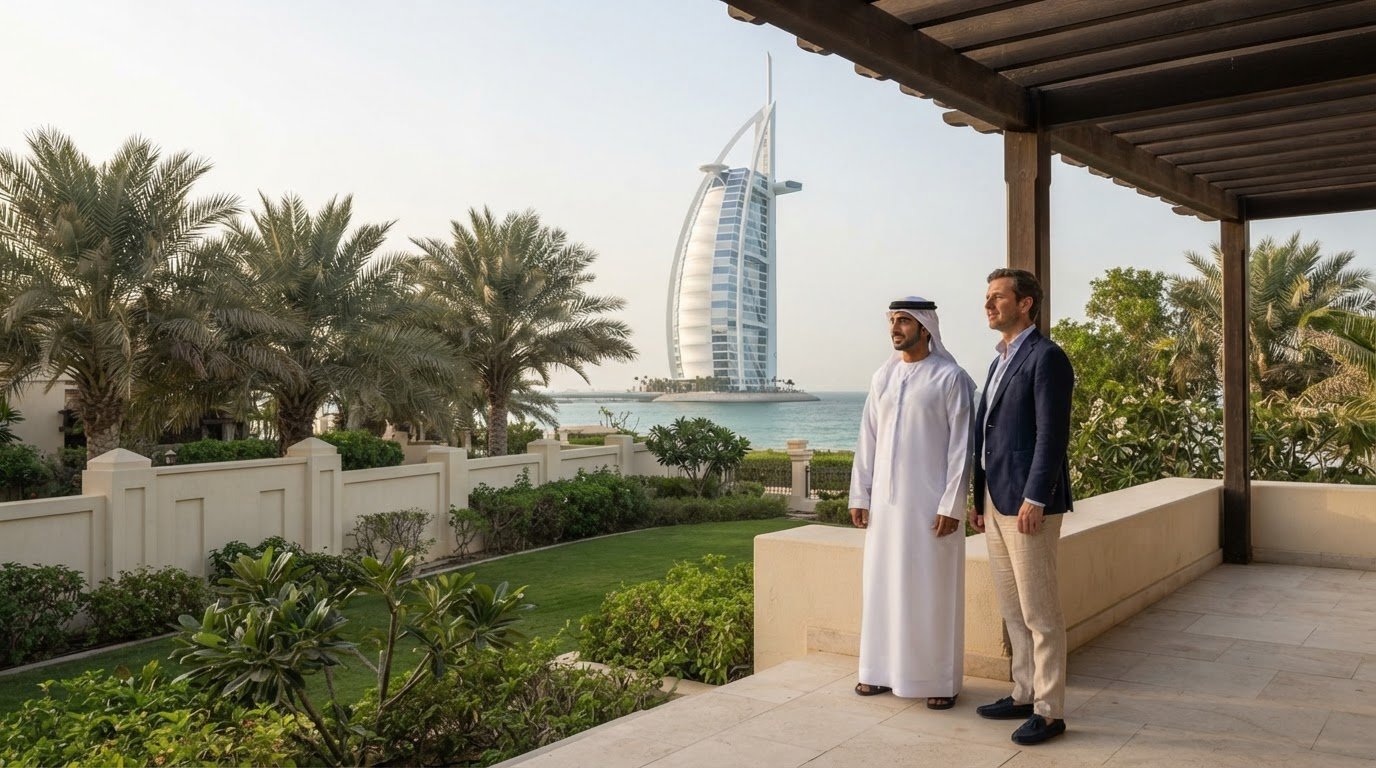
Two very different landmarks help define Dubai’s coastal skyline: Burj Al Arab and Palm Jumeirah. The hotel stands on a purpose-built island just off Jumeirah Beach, with a sail-inspired silhouette, an architectural height of 321 metres and 56 floors, including three below ground. Palm Jumeirah adds a contrasting island landmark to the wider coastal setting.
The familiar outlines of Burj Al Arab and Palm Jumeirah are more than striking views: they show how Dubai has shaped its waterfront into places with distinct identities. This guide explains the hotel’s height and floor count, the ideas behind its design and island setting, and its relationship to Palm Jumeirah. You’ll get a clearer picture of what makes each landmark distinctive and how they contribute to Dubai’s sense of place.
Key Takeaways
- See how two distinct coastal landmarks contribute to Dubai’s identity, and what makes their relationship visually striking.
- Understand why architectural height and floor count describe different aspects of the hotel’s scale.
- Explore how the sail-inspired form and purpose-built island setting shape the building’s presence on the waterfront.
- Get a clearer sense of the hotel’s location and how its setting relates to Jumeirah Beach and the wider city.
Burj Al Arab as a symbol of Dubai alongside Palm Jumeirah
Burj Al Arab and Palm Jumeirah give Dubai’s coastline two distinct signatures. The hotel’s sail-shaped profile stands offshore from Jumeirah Beach, while Palm Jumeirah’s branching outline extends into the Gulf. Together, they frame the city as a place where landmark architecture and large-scale island development meet.
For a direct trip between them, take a taxi or car for a door-to-door journey. Public transport followed by a short onward ride can also work. Traffic and your exact destination on Palm Jumeirah affect the route.
Choose Burj Al Arab for a closer look at an architectural landmark and its coastal setting. Choose Palm Jumeirah for island views, waterfront walks and a wider range of visitor experiences. Visiting both offers the clearest comparison.
Visitors can admire the hotel’s exterior from public viewpoints, but it is not a public walk-in attraction. Entry is arranged through visits and guest experiences, so you’ll need an appropriate reservation or booking.
At Jumeirah Beach and Palm Jumeirah, stick to designated public areas and follow signs around private hotel and residential spaces. Allow extra travel time during busy periods, as road traffic can affect journeys between the coast and the island.
There is no single useful distance for every trip: the hotel stands on its own offshore island, while Palm Jumeirah destinations span its trunk, crescent and fronds. Your starting point, destination and route determine the journey.
On Palm Jumeirah, explore the waterfront, take in views across the Gulf and enjoy the island’s dining and resort settings. A walk along the shoreline offers a different perspective from viewing the island from the mainland.
For photographs, Jumeirah Beach offers a coastal view of Burj Al Arab, while Souk Madinat Jumeirah provides a distinctive setting with the hotel in the distance. On Palm Jumeirah, choose a waterfront viewpoint to capture the island against the Dubai skyline.
Photographic records also capture boats speeding along the coast near Palm Jumeirah and Logo Island in Dubai, with the Burj Al Arab in the background, on April 6, 2015. Another caption describes the Burj Al Arab with Palm Jumeirah in the background in Dubai on January 15, 2013.
Building height and floor count
Burj Al Arab reaches an architectural height of 321 metres, a figure that gives its coastal silhouette much of its visual presence. Its floor count is 56, including three below ground. These measurements describe different aspects of the building: height records its vertical scale, while the floor count describes levels within its structure.
The highest floor sits 197.5 metres above ground, notably below the 321-metre architectural height. That distinction helps explain why a building’s stated height and highest floor elevation aren’t interchangeable. The architectural measurement captures the building’s overall vertical profile; the top-floor figure identifies the elevation of its highest floor.
- Architectural height: 321 metres, the hotel’s overall vertical measurement.
- Total floors: 56, with three levels below ground included in that count.
- Top-floor elevation: 197.5 metres above ground, a separate measurement from architectural height.
For visitors viewing Burj Al Arab from Jumeirah Beach or Palm Jumeirah, the 321-metre figure describes the landmark’s full height, while the floor count gives a sense of its internal scale. The 197.5-metre top-floor elevation adds another useful reference point. Read together, the figures show why a single height number cannot explain every dimension of a high-rise building.
Comparisons are clearest when measurements use the same basis. Architectural height should be compared with architectural height, and floor totals should account for below-ground levels. Burj Al Arab’s 56-floor count includes those three underground floors, so a count limited to above-ground levels would describe a different measure.
These figures also help interpret photographs: perspective, distance and the viewing angle can make the hotel appear taller or shorter. The stated 321-metre architectural height remains the fixed reference, while the 197.5-metre elevation locates its highest floor. Together, the three measurements offer a more precise picture of the Dubai landmark than height alone.
A photograph caption records the building at night as seen from Palm Jumeirah in Dubai on March 3, 2024.
Burj Al Arab’s sail-inspired design and purpose-built island
Burj Al Arab’s identity rests on two connected features: its sail-inspired form and its position on a purpose-built island. Together, they shape how the hotel meets the sea and appears along Dubai’s coast.
Sail-Inspired Design
The hotel’s exterior recalls a sail, giving its outline a clear maritime reference. View the building from Jumeirah Beach: its curved profile looks different from a nearby street-level view, where its scale becomes more apparent. This contrast helps explain how the sail shape serves as both a design signature and a defining feature of Dubai’s coastal skyline.
For a photograph, frame the silhouette against the open Gulf rather than only against other buildings. The sail-like outline is easier to recognise when its full profile stands clear. From Palm Jumeirah, the hotel becomes part of a wider coastal composition, connecting its architectural form to Dubai’s island setting.
Purpose-Built Island Setting
Burj Al Arab stands on a purpose-built island just off Jumeirah Beach in Dubai. Its separation from the mainland gives the hotel a distinct relationship with the shoreline: water surrounds the building, while the coast provides a nearby point of reference. This setting is central to understanding why the hotel is seen as a landmark rather than simply another beachfront structure.
When viewing the island, notice the transition from Jumeirah Beach to the water and then the hotel. This sequence clarifies the building’s position without an aerial view. Palm Jumeirah offers another perspective on Dubai’s constructed islands, though its broad outline differs from the hotel’s compact, purpose-built setting.
The island and sail form work together visually. From the mainland, water separates the hotel from the built-up coast; from Palm Jumeirah, the hotel is one element in a broader seascape. Each viewpoint changes the composition, so consider the shoreline, open water and silhouette as parts of the same scene.
For a practical visit, choose a public coastal viewpoint with an unobstructed view of the hotel. Then compare it with a waterfront view from Palm Jumeirah. The contrast makes the design’s maritime reference and the hotel’s island position easier to appreciate.
What is the Burj Al Arab and where is it located?
Burj Al Arab Jumeirah is a hotel in Dubai, United Arab Emirates, known for its distinctive coastal setting. It was completed in 1999 and opened on 1 December 1999. Those dates mark its completion and opening, giving visitors a clear point of reference for its place in Dubai’s modern development.
The hotel stands on a purpose-built island just off Jumeirah Beach, along Dubai’s Jumeirah coastline rather than in the central business district. Palm Jumeirah is another coastal landmark, but it is a separate island development with a different layout and visitor experience.
For visitors arriving by air, Burj Al Arab Jumeirah is 22.1 kilometres from Dubai International Airport. That distance is a useful geographic reference, but the route and journey time depend on the chosen road and traffic conditions. A taxi or car provides direct road access towards the Jumeirah coast.
Burj Al Arab is a hotel, not simply an observation tower or public monument. Its 202 suites and seven restaurants form part of its hospitality offering. The distinction matters when planning a visit: viewing the building from the coast differs from entering the hotel for a booked stay, meal or other arranged experience.
To orient yourself, locate Jumeirah Beach on a Dubai map, then find the hotel just offshore. Use Dubai International Airport as an arrival reference, not as a nearby neighbourhood. To compare the coastal landmarks, place Palm Jumeirah alongside the hotel and see how their distinct island settings relate to Dubai’s shoreline.
The name Burj Al Arab Jumeirah also helps distinguish the hotel from other Dubai landmarks. Its location connects it with the Jumeirah coast, while its hotel function gives the building an active hospitality role. Together, its opening in 1999, coastal address and visitor experiences explain why it remains a prominent destination in the city.
Chainex Real Estate: dubai houses for sale
Chainex Real Estate helps international and local buyers explore Dubai houses for sale when the city’s coastal landmarks prompt them to consider living or investing in the United Arab Emirates. Its sale options include villas, townhouses and commercial properties, giving buyers distinct categories to compare against their preferred location and intended use.
A villa may suit someone seeking a standalone home, while a townhouse offers a different residential format. Commercial properties are an option for buyers considering business use. The right choice depends on your goals and how the property’s location fits your plans. Comparing these factors early can make your search more focused.
If you’re ready to explore Dubai property options, contact Chainex Real Estate or visit its website.
Make Your Next Dubai Move With Clarity
The appeal of Burj Al Arab and Palm Jumeirah can prompt a bigger question: what kind of Dubai property suits your plans? Start by considering how you want to use a home, which setting matters to you, and whether a villa or townhouse fits your priorities.
Chainex Real Estate offers Dubai houses for sale, including villas and townhouses. If you’re ready to move from exploring Dubai’s landmarks to considering a property purchase, you can contact Chainex Real Estate to discuss your next step.
Define what you’re looking for, then approach the search with a clear sense of purpose. Start your next Dubai property decision with a thoughtful conversation with Chainex Real Estate.
Frequently Asked Questions
How far apart are Burj Al Arab and Palm Jumeirah?
There is no single fixed distance: Burj Al Arab stands on its own offshore island, while Palm Jumeirah destinations span the trunk, crescent and fronds. The journey depends on your exact destination and route.
What is Palm Jumeirah and how was it built?
Palm Jumeirah is a large-scale island development with a branching outline extending into the Gulf. Its construction method is not described here.