


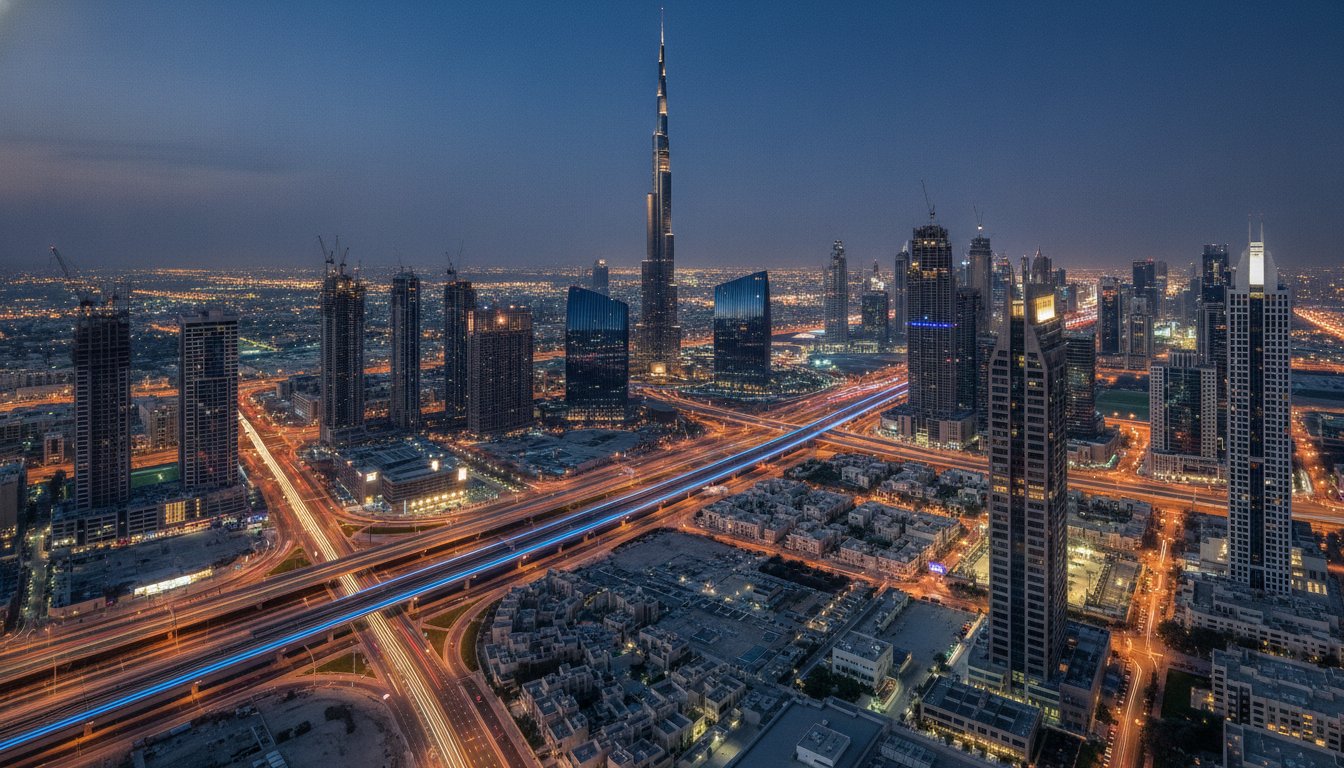
Can a single line of steel and concrete increase your property’s value by 25% before the first train even leaves the station? It’s a valid question as tunneling for the Blue Line officially inaugurated in May 2026. Most investors feel the weight of information overload, finding it difficult to separate genuine urban utility from marketing noise. We recognize that evaluating the Blue & Gold — Past and Future requires more than just tracking headlines; it necessitates a professional perspective on how infrastructure drives real ROI.
This article provides a detailed roadmap of how these projects, representing a Dh54.5 billion investment, will redefine the Dubai 2040 Urban Master Plan. You’ll learn exactly what the Blue Line opening on September 9, 2029, and the Gold Line completion on September 9, 2032, mean for your investment strategy. We’ll outline the specific districts poised for growth and provide the actionable criteria you need to select premium properties near these future transport nodes with absolute confidence.
Key Takeaways
- Understand how the Dh54.5 billion metro expansion aligns with the Dubai 2040 Urban Master Plan to transform the city’s connectivity and residential demand.
- Identify the specific investment windows for capital appreciation as the Blue Line approaches its 2029 opening and the Gold Line advances toward 2032.
- Discover how the concept of Blue & Gold — Past and Future acts as a strategic guide for locating high-growth residential and commercial corridors.
- Master the “Infrastructure Premium” framework to distinguish between short-term marketing hype and long-term urban utility.
- Learn how professional portfolio management helps you secure premium off-plan property sales in areas projected to see 25% value increases.
From Red and Green to Blue and Gold: The Evolution of Connectivity
Dubai’s urban development relies on a backbone of rail connectivity that started nearly two decades ago. The Red Line, inaugurated on September 9, 2009, and the Green Line, which followed on September 9, 2011, weren’t just transport projects; they were economic foundations. They proved that high-quality infrastructure precedes and dictates residential demand. As we analyze the Blue & Gold — Past and Future, we’re seeing the city move from a linear growth model to a sophisticated, multi-centered metropolis. This evolution reflects a city that has matured beyond its initial expansion phase, focusing now on density and metropolitan efficiency.
The transition toward the Blue and Gold lines represents a shift in how the city functions. Mass transit projects like these act as essential catalysts for national economic diversification, moving the UAE closer to a knowledge-based economy. By 2032, the vision is to create a polycentric urban model that reduces the reliance on a single central business district. This strategy ensures that as the population grows, the city remains mobile and productive, providing a stable environment for long-term real estate investment.
The Legacy of the Initial Metro Phase
Looking back at the last 15 years, the data is undeniable. Communities within a 10 minute walking distance of the Red Line saw a permanent shift in resident behavior and property valuation. Rental yields in transit-connected zones consistently stayed 15% to 20% higher than the market average, even during global economic fluctuations. This success sparked a permanent shift from car-centric mobility to transit-oriented development. We define Value Capture in transport infrastructure as the strategic recovery of increased land values generated by public transit investment to reinvest in the city’s future growth. This cycle has already turned former outskirts into some of the most sought-after Dubai houses for sale, setting a precedent for the next phase of expansion.
The 2040 Urban Master Plan Integration
The expansion is a physical manifestation of the Dubai 2040 Urban Master Plan. By integrating the Blue and Gold lines, the RTA is creating a “20-minute city” where residents can reach 80% of their daily needs within a short, sustainable commute. This aligns with national sustainability goals, aiming to move a significant portion of the population onto a carbon-neutral rail network. The 2032 vision for a total of 81 stations ensures that the city remains liveable even as the population climbs toward 5.8 million people. Understanding the Blue & Gold — Past and Future means recognizing that today’s construction sites are tomorrow’s most valuable residential and commercial addresses. The RTA’s disciplined execution of this network provides the transparency and confidence that international investors require when committing to the UAE market.
The Blue Line: A Strategic Corridor for the Next Generation
The Blue Line isn’t just an extension; it’s a structural pivot for the city’s eastern quadrant. Spanning 30 kilometers with 14 specialized stations, this Dh20.5 billion project serves as a vital artery for the Blue & Gold — Past and Future narrative. It splits into two strategic paths: one reaching toward the established International City and the other penetrating the high-tech corridors of Dubai Silicon Oasis. By the time it opens on September 9, 2029, it’s expected to reduce traffic congestion by up to 20% in these high-density areas. This infrastructure provides a stable foundation for long-term capital growth.
A standout feature is the Emaar Properties Station, set to become the world’s tallest metro station. This engineering milestone isn’t merely for aesthetics; it reflects the vertical density of the new urban centers. With 10% of the project already complete as of late April 2026, the progress is tangible. For investors, this represents a closing window of opportunity to enter the market before the “infrastructure premium” fully prices out the initial value. We’re seeing a clear trend where professional portfolio management becomes essential to timing these entry points correctly.
The physical realization of these ambitious designs relies on specialized heavy-duty equipment, where the lifting solutions provided by Johnson Arabia LLC play a crucial role in managing the logistical challenges of high-rise metro construction.
Connecting Academic and Innovation Hubs
The Blue Line directly services Academic City and Dubai Silicon Oasis, home to over 30 universities and thousands of tech professionals. This connectivity is a game-changer for student housing demand. We’re already observing a shift where students and faculty no longer need to rely on private transport, fostering a more fluid talent mobility. The architectural intent of the interchange stations focuses on fluidity and light, using glass and steel to symbolize the transparency and speed of the knowledge economy.
Enhancing Residential Accessibility
For areas like Ras Al Khor and International City, the Blue Line offers a first-time link to the wider metropolitan grid. Reduced commute times are directly correlated with long-term tenant retention; people stay where they can move freely. Investors looking at off-plan property sales in these sectors should note that proximity to a station is the most reliable predictor of future occupancy rates. This accessibility transforms previously underserved sectors into primary residential choices.
Authentic visual evidence already shows the integration of these stations into local life. In a real photograph of a modern station plaza, you’ll see the sleek, curved station roof blending into a landscaped square. Residents walk from their villas or apartments directly to the platform entrance, highlighting a lifestyle where the car is an option, not a necessity. This seamless integration is what defines the next generation of Dubai’s urban landscape.
The Gold Line: Redefining Luxury and Commercial Mobility
While the Blue Line serves as a bridge for innovation and education, the Gold Line represents the pinnacle of commercial connectivity and high-end urban living. This project, valued at Dh34 billion, is set to become Dubai’s first fully underground metro line, spanning 42 kilometers and featuring 18 strategically placed stations. By its scheduled completion on September 9, 2032, the Gold Line will serve approximately 1.5 million residents, linking iconic districts such as Mina Rashid, City Walk, Business Bay, and Jumeirah Village Circle. This expansion is a critical component of the Blue & Gold — Past and Future strategy, ensuring that the city’s commercial heart remains accessible and competitive on a global scale.
The strategic positioning of the Gold Line is designed to complement, rather than just mirror, the existing Red Line axis. By providing a deeper reach into the city’s densest business districts, it boosts the attractiveness of prime office spaces. Multinational corporations often prioritize locations with superior mass transit links to ensure employee mobility and reduce operational overheads. We’re seeing a shift where the “Luxury Transit” concept becomes a reality; stations on this line are expected to feature elevated design standards, including premium materials and integrated digital concierge services that cater to a high-net-worth demographic.
The Gold Line vs. Existing Routes
The Gold Line targets a distinct demographic compared to the Blue Line. While the Blue Line focuses on the “next generation” of tech professionals and students, the Gold Line is engineered for the corporate elite and luxury shoppers. This distinction is evident in the station functionality. Three key differences include:
- Fully Underground Climate Optimization: Unlike the elevated sections of the Red Line, the Gold Line’s entirely subterranean route allows for more precise temperature control and a quieter transit environment.
- Direct Luxury Retail Integration: Stations are being designed with “dry-link” corridors that lead directly into the podiums of high-end shopping malls and five-star hotels.
- Executive Service Points: Expect dedicated lounges and high-speed connectivity zones within stations to facilitate “work-on-the-move” for Business Bay professionals.
Impact on Premium Real Estate Tiers
The announcement of the Gold Line has already triggered a surge in international interest for luxury properties. Investors are looking for villas for sale and high-end penthouses that sit within the immediate catchment area of these new nodes. The synergy between high-end retail hubs and transit access creates a “scarcity premium” for real estate. An authentic sunset photograph of a construction site in Business Bay perfectly captures this transition; the raw steel of the future station portal is silhouetted against a vibrant orange sky, with the Burj Khalifa looming in the background. It’s a visual reminder that the infrastructure of 2032 is being forged today, creating the next frontier for the Blue & Gold — Past and Future of the UAE.
Real Estate Investment Trends: Capitalizing on Infrastructure Milestones
Understanding the financial mechanics of mass transit is what separates a passive observer from a strategic investor. The “Infrastructure Premium” isn’t a theory; it’s a documented market phenomenon. In previous decades, we saw how the Red Line catalyzed growth in the marina. Now, as we evaluate the Blue & Gold — Past and Future, the data suggests that land and properties near these new stations are expected to appreciate by up to 25%. This isn’t just about convenience; it’s about the fundamental revaluation of urban space. Timing your entry during the current tunneling phase, which officially began in May 2026, allows you to capture value before the 2029 and 2032 completions.
Tenant preferences are shifting rapidly. Proximity to rail is becoming a non-negotiable requirement for the modern workforce, which prioritizes predictability in their daily commute. This demand translates into higher occupancy rates and more resilient rental yields. However, risk mitigation is essential. Off-plan investments near these transit nodes require specialized consulting to ensure that a project’s delivery timeline aligns with the RTA’s infrastructure milestones. We’ve seen that not all developers have the track record to manage the complexities of building near major tunneling sites.
Identifying High-Growth Corridors
The most significant ROI is found within the “Station Catchment Area,” typically defined as the 800 meter radius around a node. For those targeting the upper echelons of the market, our guide to luxury property dubai explains how transit connectivity is now a prestige marker, much like a sea view or a golf course frontage. Analyzing developer track records near these sites is critical; you need to know who has successfully delivered transit-oriented projects in the past. Look at a genuine photograph of a master-planned community near the Blue Line route. You’ll see the contrast between the established villas and the new, fenced-off tunneling sites where the future station will emerge. This visual evidence of progress is a powerful indicator for those timing their market entry.
Long-term Appreciation vs. Short-term Yields
Investors must balance immediate rental income with the projected 2032 capital gains. While the Blue Line (2029) offers a shorter horizon for rental stabilization, the Gold Line (2032) presents a more significant long-term appreciation play due to its positioning in high-end commercial districts. The Blue & Gold — Past and Future framework suggests a diversified portfolio. Holding assets across both lines mitigates risk and ensures exposure to different economic sectors, from education to luxury retail. If you’re ready to explore these high-growth corridors, our team provides expert guidance on Off-plan Property Sales to ensure your timing is perfect.
Securing Your Future in the UAE’s Expanding Property Landscape
The narrative of Blue & Gold — Past and Future serves as a definitive guide for those who view real estate as a long-term strategic asset. We’ve seen how the expansion of the metro network from 2009 to 2011 fundamentally reshaped the city’s core. Now, with tunneling for the Blue Line inaugurated in May 2026, we’re entering a similar window of accelerated growth. Timing isn’t just about the date of purchase; it’s about aligning your entry with these infrastructure milestones to maximize capital appreciation. Chainex acts as a strategic partner; we help you manage these transitions with the calm, informed perspective of an experienced advisor who understands the gravity of these decisions.
The UAE continues to set a global benchmark for transit-oriented real estate, proving that infrastructure is the most reliable multiplier of land value. By 2032, the total network will encompass 81 stations, serving a projected population of 5.8 million residents. This level of disciplined urban planning creates a predictable environment for investors. The 2040 Urban Master Plan isn’t just a vision; it’s a clear roadmap that shows exactly where the next high-density hubs will emerge, allowing you to position your portfolio ahead of the curve.
Strategic Consulting for Diversified Portfolios
We provide customized investment roadmaps that look far beyond the immediate horizon. It’s not enough to simply buy near a station; you must understand how the 2032 metro map interacts with established commercial hubs and new innovation zones. If you’re looking to buy property in dubai, our role is to bridge the gap between high-level urban planning and your specific portfolio goals. We translate technical RTA data into actionable intelligence. This ensures you select assets that will remain liquid and high-yielding for decades to come, regardless of market cycles.
The Chainex Advantage in Market Analysis
Our “Chainex-approach” is built on proprietary insights that go much deeper than generic market reports or surface-level news. We identify emerging residential and commercial nodes before they become mainstream headlines. This ensures a level of discretion and exclusivity that’s essential for premium transactions. When you look at an authentic photo of our team on a site visit, you’ll see the focus on grounded, primary-source verification. We don’t rely on summaries; we’re on the ground, analyzing the progress of the 15.5km underground tunnels and the first metro bridge crossing Dubai Creek. These feats of engineering rely on high-quality industrial components, and you can learn more about the specialized solutions from Bearings World that support the UAE’s infrastructure. This commitment to precision is what defines our professional partnership.
Contact our consultants today for a personalized analysis of properties near the Blue and Gold lines. We take the burden of complex market research off your shoulders, allowing you to focus on the results of a well-executed strategy. Your real estate journey deserves the highest level of professional oversight, and we’re here to provide it.
Navigating Your Next Strategic Investment Move
The expansion of Dubai’s metro network marks a definitive shift toward a more connected and value-driven urban model. By understanding the Blue & Gold — Past and Future, you can position your portfolio to benefit from the scheduled 2029 and 2032 completions. These projects, representing a Dh54.5 billion investment, provide the stability international investors seek in a maturing market. We’ve explored how proximity to these 81 total stations is projected to drive property appreciation by up to 25%, making early entry during the 2026 tunneling phase a critical strategic move.
Success in this landscape requires more than just following headlines; it demands the precision of specialized market analysis and exclusive access to premium listings. As your strategic partner, we take the complexity out of property management and off-plan acquisitions, ensuring your interests are protected at every stage. We invite you to Partner with Chainex Real Estate for Expert Investment Consulting and gain the clarity needed for your next move. The future of the UAE’s infrastructure is being built today, and we’re ready to help you secure your place within it.
Frequently Asked Questions
What is the primary difference between the Blue and Gold Metro lines?
The Blue Line is a 30 kilometer route designed to connect innovation and academic hubs through a mix of elevated and underground tracks. It represents a Dh20.5 billion investment with 14 stations. The Gold Line is Dubai’s first fully underground metro line, spanning 42 kilometers with 18 stations, and it primarily services luxury commercial and residential districts with a Dh34 billion budget.
When will the Dubai Metro Blue Line be fully operational for the public?
The Dubai Metro Blue Line is officially scheduled to open for the public on September 9, 2029. Construction is moving at a steady pace, with tunneling work inaugurated in May 2026. As of late April 2026, the project had already reached the 10% completion milestone, providing a clear timeline for investors to plan their market entry.
How much appreciation can I expect for a property located near a future Gold Line station?
Properties located within the immediate catchment area of a Gold Line station are expected to appreciate by up to 25% by the 2032 completion date. This projection is based on historical data from the initial metro phases, where proximity to rail drove a consistent 15% to 20% premium. Analyzing the Blue & Gold — Past and Future helps our clients identify these high-growth corridors before the premium is fully priced in.
Are the Blue and Gold lines part of the UAE’s 2040 Urban Master Plan?
Both lines are central pillars of the Dubai 2040 Urban Master Plan, which aims to develop a “20-minute city” for a population projected to reach 5.8 million. The plan ensures that 80% of residents can access their daily needs within a 20-minute commute. This strategic expansion is designed to create a sustainable, integrated transport network that supports long-term urban growth and economic stability.
Is it better to invest in off-plan or ready property near the new metro lines?
Off-plan property sales typically offer the highest potential for capital gains, as they allow you to capture the infrastructure premium during the construction phase. Ready properties are excellent for investors seeking immediate rental income, though they often require a higher initial investment. For those studying the Blue & Gold — Past and Future, off-plan options near the 2032 Gold Line stations currently offer the most significant long-term appreciation play.
Which areas will benefit the most from the Blue Line’s connection to Academic City?
International City, Dubai Silicon Oasis, and Ras Al Khor will experience the most significant transformation due to the Blue Line link. These districts house over 30 universities and a massive community of tech professionals. The new connection is expected to reduce local traffic congestion by up to 20%, making these areas prime targets for student housing and professional rental portfolios.
How do the new metro lines affect the rental yield of existing apartments?
The addition of a nearby metro station typically increases rental yields by 15% to 20% compared to non-connected properties. Modern tenants prioritize predictable commutes, which leads to higher occupancy rates and longer lease renewals. This shift toward transit-oriented development ensures that existing apartments near the new 81-station network remain highly competitive and resilient in the secondary market.
What are the key stations on the 2032 Dubai Metro map for investors?
Investors should prioritize the Emaar Properties Station, which will be the world’s tallest metro station, and the first metro bridge crossing Dubai Creek. Other critical nodes for high-end growth include the underground stations at Business Bay, Jumeirah Village Circle, and Dubai Creek Harbour. These locations represent the strategic intersections of the city’s future commercial and residential elite.
