


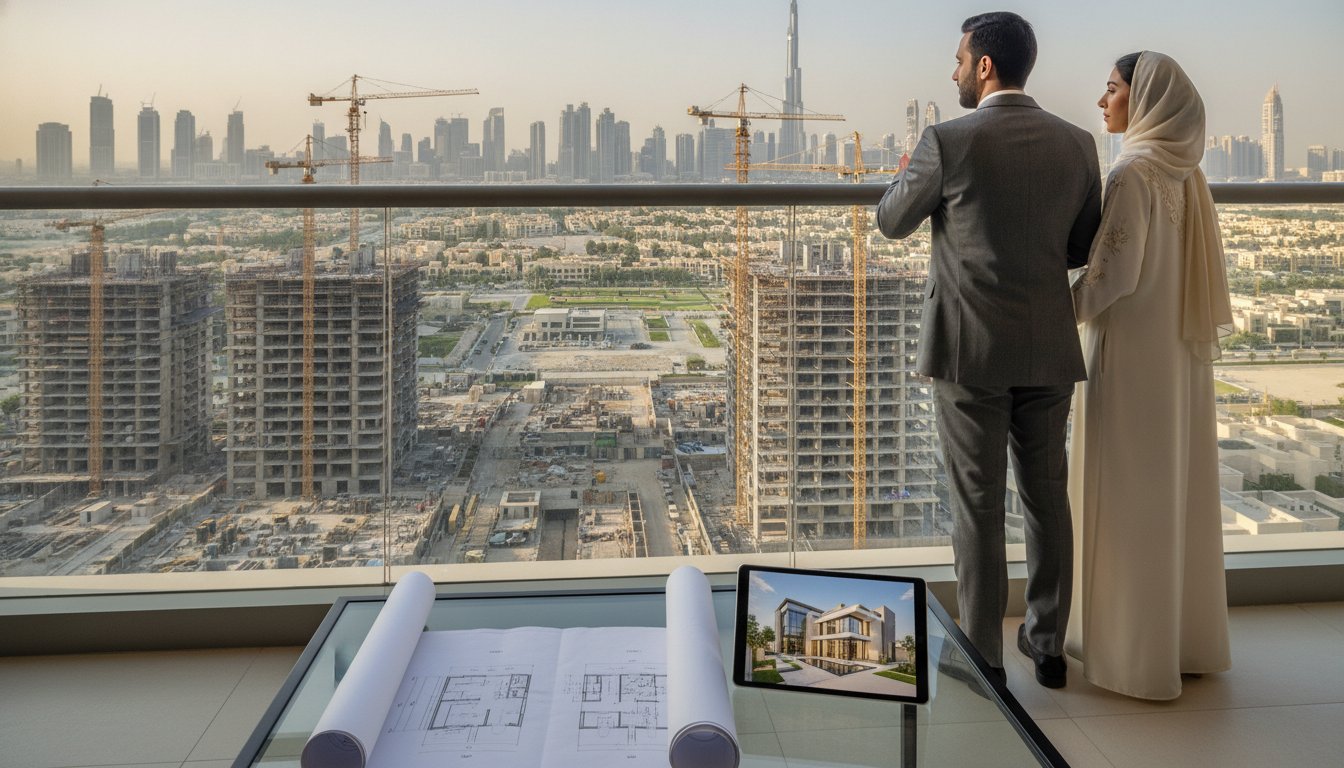
Imagine standing on a vacant plot in District 11, Mohammed Bin Rashid City, envisioning a luxury villa that exists only on a glossy brochure. For many investors in the UAE, the transition from that vision to a physical asset is often clouded by uncertainty. You’ve likely felt the weight of responsibility that comes with committing millions of AED to a project that hasn’t broken ground yet. The risks of buying off-plan property, from fluctuating market cycles to the 15% project delay rates observed in specific sectors during 2023, require more than just optimism; they demand a calculated, professional strategy.
We believe that your investment journey should be defined by security rather than anxiety. It’s natural to seek absolute clarity on how Law No. 8 of 2007 protects your deposits through mandatory escrow accounts. This guide will show you how to master these legal complexities and safeguard your capital against unexpected market shifts. We’ll provide a clear risk-mitigation framework and the insights needed to select developers who prioritize transparency as much as you do.
Key Takeaways
- Gain a strategic understanding of the UAE off-plan landscape, focusing on how to capitalize on lower entry prices while managing the timeline from initial payment to final handover.
- Learn to navigate the specific risks of buying off-plan property, including construction delays and market fluctuations, to ensure your asset retains its projected value upon completion.
- Explore the critical role of mandatory Escrow Accounts and national regulatory oversight in safeguarding your AED-denominated investments against developer insolvency.
- Implement a rigorous due diligence framework to evaluate developer delivery history and verify project compliance with the latest real estate authority standards.
- Discover how professional consulting provides a competitive edge through unbiased analysis and early access to high-yield “pre-launch” units that are often unavailable to the general public.
Understanding the Off-Plan Landscape: Opportunity vs. Risk
Investing in the United Arab Emirates real estate market requires a shift in perspective, particularly when moving from ready-to-move-in homes to uncompleted projects. This transition means you aren’t just acquiring a physical space; you’re securing a future asset. To build a foundational understanding, many investors ask: What is off-plan property? Essentially, it is a commitment to purchase a residence or commercial unit before the developer has finished construction, or even before they’ve broken ground. This strategy demands a transition from a homebuyer mindset to that of an investment manager who prioritizes portfolio growth over immediate occupancy.
The strategic appeal of this asset class lies in its ability to generate wealth through timing and entry-point optimization. In the Dubai market, off-plan units often enter the market at prices 15% to 20% lower than comparable secondary market properties. However, navigating the risks of buying off-plan property requires a disciplined approach. Investors must align these purchases with a broader national real estate strategy, ensuring the asset fits within long-term economic cycles rather than short-term speculative trends. Success in this landscape isn’t about luck; it’s about the precision of your entry and the reliability of the developer you choose as a partner.
Why Investors Target Uncompleted Projects
The primary driver for seasoned investors is the significant price gap between uncompleted units and the secondary market. In 2023, data from the Dubai Land Department showed that off-plan transactions accounted for nearly 60% of total market volume, driven by the desire to lock in current prices for future delivery. Beyond the initial discount, the structure of payment plans offers a level of liquidity management that ready properties cannot match. Developers frequently offer 60/40 or 70/30 schedules, where the bulk of the payment is stretched over the construction period, often culminating at the handover stage. Off-plan ROI is the delta between the initial purchase price and the projected market value at the time of handover. This financial leverage allows investors to manage multiple assets simultaneously without the immediate burden of a full mortgage or cash outlay.
The Contractual Foundation: The Sale and Purchase Agreement
Every off-plan transaction is governed by the Sale and Purchase Agreement (SPA), a legally binding document that carries immense weight in UAE courts. This contract is your primary shield against the risks of buying off-plan property, specifically regarding delays or deviations from the original plan. You must scrutinize clauses related to the anticipated completion date, the percentage of allowable floor area variation, and the specific compensation terms if the developer fails to meet milestones. Under Law No. 8 of 2007, all payments must be deposited into a RERA-approved escrow account, ensuring funds are only used for construction purposes. For a deeper look at the regulatory environment, you should review How to Buy Property in Dubai: The Ultimate Guide for Investors (2026) to understand how these contracts integrate with the latest local laws.
The 3 Critical Risks of Buying Off-Plan Property
While the prospect of capital appreciation is compelling, seasoned investors recognize that the risks of buying off-plan property require a calculated approach. Success in the United Arab Emirates market depends on moving beyond the glossy renders to understand the structural and economic variables that can impact your ROI. External economic shifts can occasionally stretch developer liquidity, making it vital to distinguish between a temporary delay and a fundamental project failure.
Construction Delays and Project Cancellations
The most frequent challenge investors face involves the timeline. In Dubai, standard Sale and Purchase Agreements (SPA) typically grant developers a 12-month grace period beyond the initial completion date before any legal penalties apply. If a project is officially cancelled by the Real Estate Regulatory Agency (RERA), the funds held in the mandatory project escrow account are protected. These funds are then distributed back to investors under the supervision of the Dubai Land Department. To visualize the transition from risk to reality, we recommend placing a high-resolution photograph of a completed, high-end facade next to an active construction site to illustrate the patience required during this phase.
Market Value Fluctuations During the Build Cycle
Market volatility is a reality when build cycles span three to five years. Entering the market during a construction peak can lead to “negative equity” if the handover occurs during a cyclical downturn. However, history shows that the premium segment maintains a different trajectory. For instance, The Definitive Guide to Luxury Property in Dubai (2026) highlights how high-end assets often retain value even when the broader market softens. Investors must ensure their financial strategy can withstand a scenario where the property is valued at 10% less than the purchase price at the time of handover, even if long-term prospects remain strong.
Quality and Specification Discrepancies
There is often a gap between marketing brochures and the legally binding SPA. The contract often allows for a 5% variation in final square footage without price adjustments, which can affect your projected rental yield. You should pay close attention to the legal safeguards for off-plan buyers that govern material substitutions and finishing standards. To mitigate this risk, the “snagging” process acts as your final defense; it’s a professional inspection conducted before the final payment to ensure the developer has met every specified detail. If you are currently reviewing your investment portfolio, ensuring these technical specifications match your expectations is a priority for preserving asset value.
- Escrow Protection: Always verify the project’s RERA-registered escrow number.
- Developer Track Record: Analyze completion rates of previous phases before committing capital.
- Contractual Clarity: Ensure the SPA includes specific clauses regarding material quality and common area amenities.
Understanding these risks of buying off-plan property allows you to build a more resilient strategy. By focusing on legal protections and realistic market cycles, you transform a speculative purchase into a disciplined investment.
National Legal Safeguards: How Your Investment is Protected
The UAE property market operates under a strict regulatory umbrella designed to shield investors from uncertainty. While the risks of buying off-plan property often center on concerns regarding project abandonment or construction delays, the Dubai Land Department (DLD) has implemented layers of protection that make these scenarios increasingly rare. Central to this framework is the mandatory registration of every off-plan sale in the Oqood system. This initial title deed provides a formal legal record of your ownership interest from the moment you sign the contract. It ensures the developer cannot sell the same unit to multiple parties, a safeguard that provides peace of mind during the multi-year construction cycle.
The Mechanics of Escrow Account Protection
Law No. 8 of 2007 mandates that every developer must establish a project-specific escrow account with an approved bank. Your payments don’t go into the developer’s general corporate pocket. Instead, they’re held by a third-party trustee. The Real Estate Regulatory Agency (RERA) only permits the release of these funds when specific construction milestones are verified by independent consultants. For example, a developer can’t access your capital for finishing works until the structure is physically confirmed as complete. You should always verify the project’s escrow account number on the Dubai REST app before transferring a single AED. Paying into a corporate account is a major red flag that bypasses these legal safety nets.
RERA’s technical team monitors progress through regular site inspections. These reports are public. You can see the current percentage of completion and even view time-lapse photos of the site. This transparency ensures that the risks of buying off-plan property are managed through data rather than guesswork. If a project hasn’t reached the 20% completion mark, the developer’s access to the escrow funds remains strictly limited, protecting the bulk of your investment if the project stalls early on.
Termination Rights and Legal Recourse
When timelines shift, the law provides a clear exit path for the investor. Under Executive Decree No. 6 of 2010, if a developer fails to start a project without a valid reason or abandons it entirely, RERA has the authority to cancel the development. In these cases, investors are entitled to refunds from the escrow balance. Most contracts allow for a 12-month grace period for the developer. If the delay exceeds this window, you have the right to seek contract termination or financial compensation through the DLD’s legal channels.
The process of filing a dispute is streamlined through national real estate tribunals. These bodies act as a strategic partner for the investor, ensuring that developers honor their contractual obligations. If you find yourself in a position where a project is significantly delayed, consulting with a legal expert can help you navigate the specific clauses in your Sale and Purchase Agreement (SPA). This professional oversight ensures that your exit strategy is as robust as your entry plan.
[Note: Insert a photo here of a professional legal consultation setting to illustrate the support available to investors during the dispute process.]
A Strategic Due Diligence Framework for Off-Plan Buyers
Investing in Dubai’s evolving skyline requires more than just capital; it demands a rigorous investigative process. Mitigating the risks of buying off-plan property begins with a five step framework designed to protect your equity and ensure the project aligns with your long term financial goals. This structured approach moves beyond marketing promises and focuses on verifiable data points.
- Step 1: Analyze the developer’s 10 year delivery history. Focus on the gap between promised handover dates and actual completion.
- Step 2: Verify the project’s RERA registration. Use the Dubai REST app to confirm the existence of a dedicated escrow account. Under Dubai Law No. 8 of 2007, every dirham you invest must be deposited into this account to be used solely for construction.
- Step 3: Study the 2040 Urban Master Plan. Evaluate how upcoming infrastructure, such as the Blue Line Metro extension announced in November 2023, will impact the specific plot’s accessibility.
- Step 4: Stress test the payment plan. Model your cash flow against a potential 12 month delay to ensure you aren’t forced into a distressed sale.
- Step 5: Calculate net yields. Deduct service charges, which often range from AED 15 to AED 35 per square foot, from the projected gross rental income.
Vetting the Developer Beyond the Brand Name
Don’t rely on high profile billboards. Investigate if the development firm has faced significant litigation or recurring structural issues in their previous portfolios. A healthy balance sheet and strong institutional backing provide a vital safety net during global market fluctuations. Visiting a developer’s previously completed projects is a mandatory step in the Chainex-szemlélet. It allows you to inspect the aging of materials and the quality of facility management firsthand; these factors directly influence your future resale value.
Analyzing Payment Plan Sustainability
Payment structures in the UAE vary significantly. A 10/90 plan offers a low entry point but requires a massive 90% payment at completion. This creates a liquidity risk if mortgage rates rise or bank valuations come in lower than the purchase price. A 50/50 plan often provides more security for an investor’s cash flow. Post handover payment plans, where you pay a portion over 2 to 5 years after receiving the keys, can be highly advantageous. These plans allow rental income to cover a portion of the installments, effectively boosting your net ROI.
Current market data from Q1 2024 indicates that prime areas like Business Bay and Jumeirah Village Circle maintain gross rental yields between 6.5% and 9%. Ensuring your chosen project sits within these performance brackets is essential for a resilient portfolio. Our team acts as your strategic partner, removing the burden of technical verification from your shoulders.
To secure your investment with a data driven approach, schedule a strategic portfolio review with our consultants today.
Partnering for Security: Why Expert Consulting Is Essential
Buying property in the United Arab Emirates requires more than just a down payment. It demands a sophisticated understanding of the local landscape. While developers focus on selling their specific projects, an independent agency like Chainex Real Estate provides an unbiased filter. We don’t just show you brochures; we analyze the developer’s delivery history, financial stability, and the actual construction progress on-site. This objective oversight is the most effective way to minimize the risks of buying off-plan property in a market that moves as fast as Dubai’s.
Strategic partners gain access to “pre-launch” data that isn’t available to the general public. This allows our clients to secure high-floor units or corner layouts with the best views before the official marketing campaign begins. By entering at “Phase 0” pricing, investors often see immediate equity growth before the first stone is even turned. We move beyond the single transaction mindset, focusing on how a specific unit fits into your ten-year wealth strategy.
Chainex acts as your shield against market misinformation. Sales agents often gloss over service charge estimates or future infrastructure delays. We provide the hard data. Our consultants verify that every project has a registered escrow account with the Dubai Land Department (DLD), ensuring your AED 50,000 or AED 100,000 booking fee is legally protected and utilized only for construction costs.
The Chainex Approach to Risk Mitigation
Our proprietary vetting process involves a deep dive into the developer’s past performance. We track the percentage of projects delivered on time versus those with significant delays. We provide market analysis that looks at secondary market demand in the surrounding area, ensuring your exit strategy is viable. Below is a photograph of a senior Chainex consultant in our Dubai office, meticulously reviewing technical floor plans and MEP (Mechanical, Electrical, and Plumbing) drawings with a client to ensure the internal layout matches the premium price point.
- Escrow Verification: We confirm all payments are directed to DLD-approved accounts.
- Supply-Demand Modeling: We calculate the projected unit density in the sub-community to prevent oversupply issues.
- Contractual Review: We highlight “Force Majeure” clauses and completion date extensions that could impact your ROI.
Securing Your Future in the National Property Market
Don’t leave your capital to chance in a complex market. Secure a partnership that prioritizes your protection and long-term growth. Consult with Chainex for a secure off-plan investment strategy and take the first step toward a high-performing, low-risk UAE property portfolio today.
Securing Your Future in the UAE Real Estate Market
Navigating the risks of buying off-plan property requires a sophisticated blend of market intelligence and strict adherence to local regulations. Investors should prioritize projects registered under Dubai Law No. 8 of 2007, which ensures all payments are held in secure escrow accounts until specific construction milestones are reached. Success in this sector isn’t just about selecting a luxury villa or a modern penthouse; it’s about verifying the developer’s RERA status to avoid delays. By applying a rigorous due diligence framework, you turn potential vulnerabilities into calculated advantages. We act as your strategic partner bridging developers and international investors, providing specialized investment consulting and market analysis that goes beyond surface-level listings. Our expertise in luxury villas, penthouses, and modern apartments ensures your capital is protected by professional oversight and detailed portfolio management. It’s time to move beyond uncertainty and build a legacy based on verified data. Maximize your portfolio with Chainex investment consulting and step into the Emirates’ most exclusive opportunities with complete confidence. Your path to a secure, high-yield future starts with the right expertise.
Frequently Asked Questions
Is it safe to buy off-plan property in the current market?
Buying off-plan in the UAE is considered safe due to the stringent regulatory framework established by the Dubai Land Department and RERA. Law No. 8 of 2007 mandates that all investor funds are deposited into a project-specific escrow account. This ensures your capital is only released as construction milestones are verified by independent consultants. While market fluctuations represent one of the risks of buying off-plan property, the legal protections significantly mitigate the danger of developer non-performance.
Can I sell my off-plan property before it’s completed?
You can sell your off-plan property before completion through a process called assignment, provided you’ve met the developer’s minimum payment threshold. Most major developers in Dubai require you to have paid between 30% and 40% of the total purchase price before they’ll issue a No Objection Certificate for resale. This flexibility allows investors to capitalize on capital appreciation during the construction phase without waiting for the final handover.
What happens if the developer goes bankrupt?
If a developer faces insolvency, RERA takes control of the project to protect investor interests under the provisions of Law No. 13 of 2008. The authorities can either transfer the project to another developer for completion or liquidate the assets to refund investors from the escrow account. Since your funds are legally separated from the developer’s corporate accounts, they aren’t accessible to their general creditors.
How much deposit is typically required for an off-plan purchase?
What is an escrow account and how does it protect me?
An escrow account is a specialized bank account registered with the DLD where all buyer payments are held and managed by a third-party trustee. This structure protects you by ensuring the developer can’t use your money for other projects or company expenses. Funds are only disbursed to the developer after a certified engineer confirms that a specific stage of construction, such as the completion of the substructure or the 10th floor, has been reached.
Can I get a mortgage for an off-plan property?
You can obtain a mortgage for an off-plan property in the UAE, but banks generally limit the Loan-to-Value ratio to 50% during the construction phase. Once the property reaches completion, you can often refinance to a higher ratio of up to 80% for expatriates. Lenders will require the project to be registered with RERA and the developer to be on their approved list before they’ll issue a pre-approval.
How do I check if a project is officially registered?
You can verify a project’s registration status instantly by using the Dubai REST app or the official Dubai Land Department website. Every legal project is assigned a unique registration number that you can search to view the project’s current construction percentage and the status of its escrow account. This transparency is vital for assessing the risks of buying off-plan property and ensures you’re dealing with a licensed entity.
What should I do if my off-plan property is delayed by more than a year?
If a project is delayed beyond the typical 12-month grace period specified in your Sales and Purchase Agreement, you should first review the termination clauses in your contract. You have the right to seek a formal explanation through RERA and can potentially file a case with the Dubai International Arbitration Centre for a refund or compensation. In many cases, developers will offer alternative units or revised payment schedules to resolve the delay amicably.