


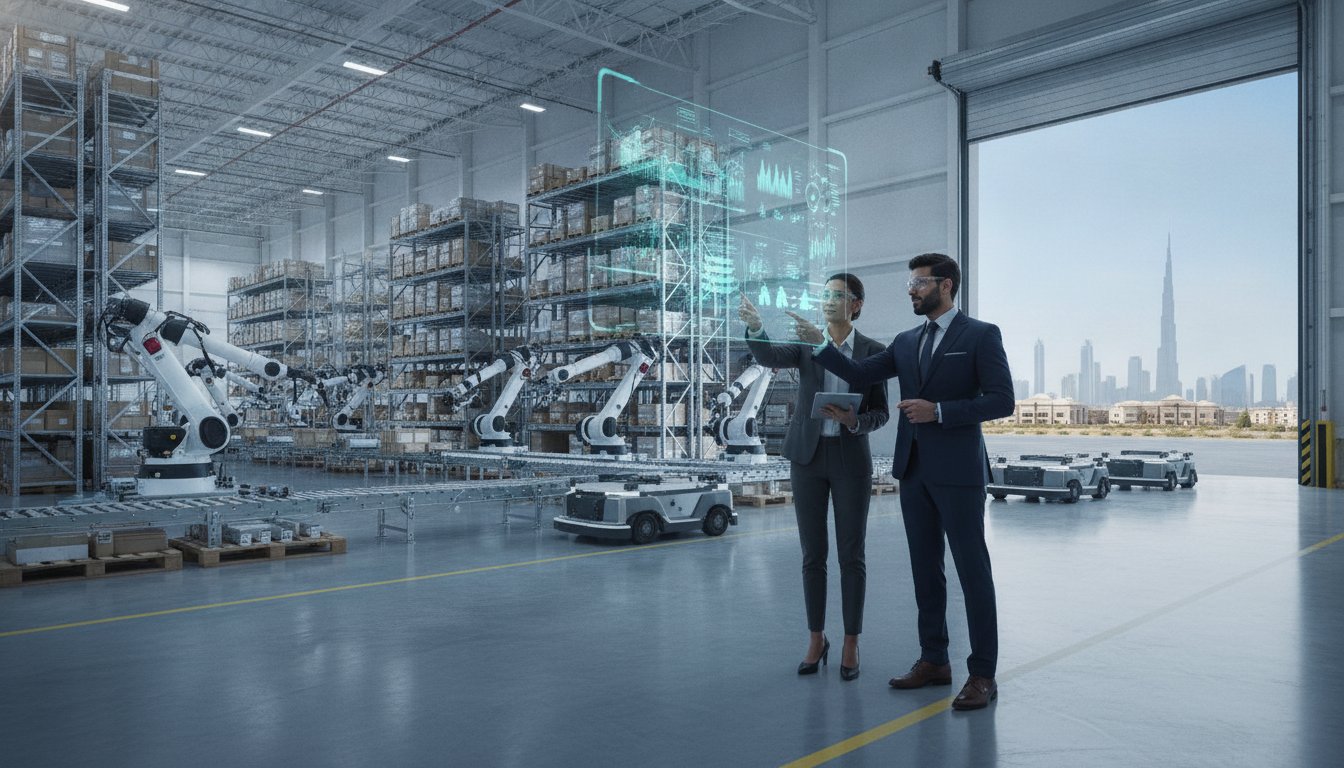
The UAE Cabinet recently authorized a massive AED 1 billion National Industrial Resilience Fund to accelerate local production and AI adoption. This strategic move signals a shift where industrial assets are no longer just warehouses; they’re the backbone of a diversifying economy. You’ve probably noticed that finding the right industrial zone properties for sale in UAE involves more than just comparing square footage. It’s about securing a position within a rapidly evolving ecosystem where logistics demand is driving rental growth as high as 32% in strategic industrial zones across the nation.
We understand that the distinction between leasehold and freehold zones, coupled with navigating diverse utility frameworks, can create hesitation for even the most seasoned investor. You’re looking for a secure, long-term commercial asset without the regulatory guesswork. This article provides an expert breakdown of current ownership laws, investment yields, and the strategic steps required for a successful acquisition. We’ll guide you through the full roadmap to ensure your investment stands on a foundation of technical and operational certainty.
Key Takeaways
- Understand how the AED 1 billion National Industrial Resilience Fund is transforming local manufacturing and AI-driven production into a high-yield investment opportunity.
- Navigate the legal complexities of ownership by distinguishing between 99-year leasehold terms and permanent freehold rights for industrial zone properties for sale in UAE.
- Identify the technical requirements for Grade-A warehousing to ensure your asset meets the rigorous power and logistics standards of modern e-commerce leaders.
- Master the essential due diligence process, including verifying KVA capacity and zoning compatibility, to avoid costly operational delays after acquisition.
- Learn how to align your commercial portfolio with national initiatives like Operation 300bn to maximize long-term rental growth and supply chain resilience.
The Evolution of Industrial Real Estate in the UAE
The transition toward a post-oil economy has fundamentally redefined the value of land across the Emirates. What were once viewed as peripheral storage areas have become the focal points of Operation 300bn, the government’s ambitious plan to nearly triple the industrial sector’s economic contribution by 2031. This shift is turning industrial zone properties for sale in UAE into some of the most sought-after commercial assets in the region. Unlike residential markets that fluctuate with consumer trends, these properties are anchored by the National Industrial Resilience Fund, a targeted AED 1 billion investment designed to stabilize supply chains and localize essential production.
Industrial real estate in this region encompasses a diverse range of assets tailored to the modern economy. You’ll find manufacturing plots designed for heavy industry, temperature-controlled logistics hubs for the pharmaceutical sector, and specialized storage facilities built for the growing e-commerce market. The recent push for AI adoption in production lines means that modern facilities are now being equipped with the high-voltage power and data infrastructure required for advanced automation. This technological evolution ensures that the industrial sector remains a stable pillar of the national economic landscape.
Strategic Infrastructure and Connectivity
The UAE’s geography is its greatest asset, but the infrastructure is what makes it a centerpiece of global trade. Proximity to massive deep-water ports like Jebel Ali and the rapidly expanding Etihad Rail network has created a premium for land that offers multi-modal connectivity. We’ve seen that properties located within five kilometers of a major rail terminal or port often command a significant premium due to their logistical efficiency. This connectivity is a primary driver for the 6.6 million square feet of new industrial stock expected to enter the Dubai market throughout 2026.
Authentic Visual Context: A high-resolution photograph captures a newly constructed, Grade-A warehouse facility in Dubai Industrial City. The building features sleek silver cladding, 12-meter clear heights, and multiple automated loading docks. In the background, the vast cranes of a deep-water port are visible against a clear blue sky, emphasizing the seamless connection between storage and global trade routes.
Market Performance and Yield Expectations
Industrial properties consistently provide some of the most attractive returns in the Middle East. While residential yields often hover between 5% and 7%, well-located industrial assets frequently achieve net yields of 8% to 10%. In the first quarter of 2026, occupancy rates in prime zones like Dubai South and JAFZA remained exceptionally high, often exceeding 90%. This demand is driven by a lack of ready-to-move-in Grade-A stock. For those looking at long-term capital appreciation, freehold industrial land in specialized zones offers a unique opportunity to secure a finite resource in a growing market.
Legal Ownership Structures for Industrial Assets
Securing a position in the UAE’s industrial landscape requires a clear understanding of the legal frameworks that protect your investment. The national strategy, often referred to as Operation 300bn, has streamlined many of these processes to attract global capital. However, the distinction between ownership types remains a critical factor for long-term portfolio planning. When evaluating industrial zone properties for sale in UAE, you’ll primarily encounter two structures: freehold and leasehold.
- Freehold Ownership: This grants the buyer perpetual rights to both the land and the structures built upon it. It’s typically available in designated “Investment Zones” and offers the highest level of control and capital appreciation potential.
- Leasehold Ownership: This involves a long-term lease, often for 99 years, from a master developer or the government. While you own the improvements and buildings, the land title remains with the lessor.
The choice between these structures often depends on your specific business activity and the location of the asset. For instance, mainland properties are governed by local Departments of Economic Development, whereas free zone properties fall under the jurisdiction of specific authorities like JAFZA or KIZAD. Each authority has its own set of regulations regarding property transfers and registration fees. If you’re looking to diversify your holdings, you might also consider commercial properties for sale that offer pre-installed infrastructure in these prime locations.
Foreign Ownership and Investment Protection
Recent legislative changes have significantly enhanced the rights of international investors. Federal laws now permit 100% foreign ownership of companies in most industrial sectors, which has naturally increased the demand for mainland industrial plots. While the general acquisition principles overlap with residential transactions, as detailed in our ultimate guide for investors, industrial assets require additional scrutiny regarding activity-specific permits. The UAE legal system provides robust safeguards for these investments, ensuring that property rights are registered and enforceable through dedicated commercial courts.
Musataha and Long-Term Land Rights
The Musataha agreement is a specialized legal instrument that’s particularly relevant for the industrial sector. It grants the holder a “right in rem” to construct, use, or invest in a building on land owned by another party for a period of up to 50 years. This structure is ideal for manufacturing plants that require substantial capital expenditure but don’t necessarily need to hold the underlying land title in perpetuity.
Musataha rights are highly formal; they must be registered with the relevant Land Department to be legally binding. One of the primary advantages of a Musataha contract is its mortgage-ability. Banks in the UAE recognize these registered rights as valid collateral, allowing investors to leverage their position to fund the construction of high-spec facilities. This flexibility is a cornerstone of the UAE’s effort to foster a sophisticated manufacturing environment.
High-Demand Industrial Property Categories
The UAE industrial market has matured far beyond basic sheds and open plots. Today, sophisticated investors focus on specialized assets that cater to high-growth sectors like pharmaceuticals, food technology, and global e-commerce. This shift is accelerated by the National Industrial Resilience Fund, which prioritizes supply chain security and food manufacturing. If you’re scanning the market for industrial zone properties for sale in UAE, you’ll find that demand is highest for Grade-A facilities that offer technical sophistication alongside prime location.
- Manufacturing Plots: These provide the foundation for the “Make it in the Emirates” campaign. Investors often seek plots in Dubai Industrial City or KIZAD that allow for bespoke construction tailored to heavy or light industrial use.
- Cold Storage: With the national focus on food security, temperature-controlled facilities are seeing a surge in value. These assets require significant power allocations but offer premium rental yields compared to standard dry storage.
- Grade-A Warehousing: These are the gold standard for logistics, featuring high ceilings and advanced fire-suppression systems that modern corporate tenants demand.
The performance of these categories is reflected in the numbers. For instance, Dubai Industrial City saw year-on-year rental growth of 32% by early 2026, reaching 58 AED per square foot. This trend highlights the scarcity of high-quality stock and the willingness of tenants to pay a premium for facilities that support advanced operations.
Logistics and Distribution Hubs
Logistics hubs are the lifeblood of the UAE’s retail and export sectors. A Grade-A warehouse isn’t just about size; it’s about operational efficiency. Key features include ceiling heights of 10 to 12 meters, floor loads capable of supporting heavy racking, and automated loading docks. Last-mile locations in areas like Al Quoz or Dubai Investment Park are particularly prized for their proximity to major residential centers, ensuring faster delivery times for the e-commerce sector.
Authentic Visual Context: A real-world photo shows the interior of a massive, brightly lit distribution center in Dubai South. Rows of high-density racking reach toward the ceiling, while automated guided vehicles move between aisles. The floor is polished concrete, reflecting the overhead LED lighting, and several temperature-controlled zones are clearly demarcated in the distance.
Staff Accommodation and Labor Camps
You can’t operate a massive industrial facility without a dedicated workforce. This reality has turned labor camps into a high-demand investment category. However, these aren’t basic dormitories. Modern facilities must strictly adhere to MOHRE (Ministry of Human Resources and Emiratisation) compliance standards. This includes specific square footage per person, on-site medical clinics, and recreational amenities. Investing in “approved” accommodation is a strategic move; it ensures long-term occupancy from major industrial tenants who require compliant housing to maintain their operational licenses.
Due Diligence: Technical and Operational Checklist
Acquiring industrial real estate requires a shift in perspective. While residential buyers might focus on aesthetic finishes, an industrial investor must prioritize the invisible infrastructure that dictates operational success. When you evaluate industrial zone properties for sale in UAE, you aren’t just purchasing a title deed; you’re securing a specific capacity for production and logistics. A failure to verify technical specs can lead to stalled production lines or rejected operational licenses, turning a promising asset into a liability.
Your checklist must begin with a rigorous assessment of access and egress. Modern logistics operations rely on the seamless movement of heavy vehicles, often including 40 foot trailers. You need to verify that the internal road network and the property’s specific loading bays allow for the necessary turn circles and maneuverability. If the road infrastructure doesn’t support your fleet’s weight or size, the facility’s utility is effectively halved before you even begin operations.
Utility and Infrastructure Verification
Confirming the availability of power and water with national utility providers like DEWA or ADDC is the most critical step in your technical audit. Sufficient KVA allocation, which measures the total power capacity assigned to a property, often serves as the ultimate deal-breaker for industrial buyers since upgrading a building’s electrical supply can take months and cost hundreds of thousands of dirhams. For heavy manufacturing or cold storage, this power requirement is non-negotiable.
Beyond power, fire safety compliance is a major hurdle. Every industrial building must meet strict Civil Defense requirements, which vary significantly based on the materials being stored or manufactured. You should request the most recent maintenance certificates for fire suppression systems and ensure the building’s current configuration hasn’t voided its existing safety permits. If you’re unsure about a specific property’s compliance history, our team can help you identify commercial properties for sale that meet all current safety and utility standards.
Zoning and Permitting Process
Zoning compatibility is where many international investors encounter difficulties. The Ministry of Industry and Advanced Technology (MoIAT) plays a central role in aligning business activities with national standards. You must ensure the land’s designated usage matches your specific industrial activity. For example, a plot zoned for light manufacturing might not permit the chemical processing or heavy waste output required by certain industries.
A common pitfall involves attempting to expand or convert a facility without checking for existing encumbrances on the title deed. Some industrial plots come with restrictions that limit the height of new structures or dictate the percentage of the plot that can be covered by buildings. Verifying these details with the relevant Land Department or Free Zone Authority ensures that your long-term expansion plans remain viable. This level of scrutiny protects your capital and ensures that your asset remains a liquid, high-performing part of your portfolio.
Partnering for Industrial Success with Chainex Real Estate
Industrial real estate is a high-stakes environment where precision and local insight are the primary currencies of success. As the UAE accelerates its manufacturing ambitions through the National Industrial Resilience Fund, the complexity of identifying and securing the right assets increases. Chainex Real Estate serves as a strategic bridge, connecting global capital with the most promising developers and projects across the seven emirates. Our role goes beyond that of a traditional broker; we act as a long-term partner, ensuring that your acquisition of industrial zone properties for sale in UAE aligns perfectly with your broader corporate objectives.
Navigating the nuances of commercial negotiations requires a sophisticated touch. Whether you’re dealing with mainland land departments or specialized free zone authorities, the transfer of industrial assets involves intricate regulatory steps. Chainex Real Estate handles these processes with a commitment to transparency, taking the weight off your shoulders so you can focus on operational readiness. Our expertise in commercial properties for sale ensures that every deal is structured to maximize security and future-proof your investment against shifting market dynamics.
Investment Consulting Beyond the Transaction
Our advisors at Chainex Real Estate maintain a discreet and professional tone that reflects the high prestige and weight of the industrial sector. We don’t just look at a single warehouse; we analyze how that asset fits into a diversified portfolio. This might involve balancing manufacturing plots with high-yield cold storage facilities or staff accommodation. For international firms seeking a UAE footprint, our market entry advisory provides the data-driven clarity needed to make confident decisions. We provide the calm, expert guidance required to manage high-value portfolios with absolute precision.
Next Steps: Securing Your Industrial Asset
Starting your search for prime industrial land or facilities requires more than just browsing public listings. Many of the most valuable opportunities in the UAE’s industrial zones never reach the open market. The Chainex Real Estate approach involves leveraging a deep network of industry contacts to identify off-market assets that meet your specific technical requirements, from KVA allocations to specialized zoning needs. This proactive strategy allows our clients to stay ahead of the competition in a landscape where Grade-A stock is increasingly scarce.
If you’re ready to explore the potential of the UAE’s industrial sector, we invite you to contact the team at Chainex Real Estate for a confidential consultation. We’ll provide a customized market analysis that highlights current yields and upcoming supply in your target zones. By partnering with us, you gain a strategic ally dedicated to your long-term success in one of the world’s most dynamic industrial landscapes. We ensure that every step of your acquisition roadmap is handled with the highest level of professional supervision.
Securing Your Position in the UAE’s Industrial Future
The transition toward a technology-driven industrial economy presents a finite window for high-caliber acquisitions. As we’ve explored, the combination of government-backed resilience initiatives and world-class infrastructure creates a landscape where the right asset serves as a generational wealth generator. Success now rests on your ability to look beyond the surface, ensuring that technical specifications like power capacity and zoning alignment meet the rigorous demands of future tenants. Navigating the market for industrial zone properties for sale in UAE requires a sophisticated synthesis of legal foresight and operational knowledge.
Chainex Real Estate remains dedicated to providing the deep market analysis and expert investment consulting necessary to navigate these complexities with confidence. As a strategic partner to international investors, we ensure that every transaction is grounded in transparency and long-term value. We invite you to Explore Strategic Industrial Investment Opportunities with Chainex Real Estate and position your capital at the heart of the region’s growth. The future of the Emirates’ industrial sector is being built today, and we’re here to ensure your place within it is both secure and prosperous.
Frequently Asked Questions
Can foreigners buy industrial land in the UAE?
Foreigners can buy industrial land in designated investment zones across the Emirates. While mainland properties historically required a local partner, 100% foreign ownership is now standard for most industrial activities as of 2026. This makes industrial zone properties for sale in UAE highly accessible to international firms looking to establish a permanent presence in the region.
What is the difference between a warehouse and an industrial plot for sale?
A warehouse is a pre-built structure ready for immediate occupation, while an industrial plot is raw land equipped with utility connections for custom construction. Plots offer the flexibility to design facilities for specific floor loads or ceiling heights required by heavy industry. Warehouses are better suited for logistics firms that need to start operations without the lead time of a construction project.
How much power (KVA) do I need for a manufacturing facility?
Manufacturing facilities typically require a minimum of 100 to 200 KVA for light assembly, while heavy industry often demands 500 KVA or more. It’s essential to verify the existing allocation before purchase. Upgrading power through utility providers like DEWA or ADDC can be a lengthy process; securing a property with an adequate initial load is vital for operational continuity.
What are the typical maintenance costs for industrial properties in the UAE?
Typical maintenance costs for industrial assets range from 2 to 5 AED per square foot annually. These fees usually cover essential services such as Civil Defense fire system maintenance, security, and common area cleaning. Older facilities might incur higher costs due to roof repairs or cooling system updates, so a technical audit is always recommended during the due diligence phase.
Is a Musataha agreement better than a leasehold for industrial use?
A Musataha agreement is often superior for heavy industrial use because it provides a “right in rem” to develop and own the building for up to 50 years. This structure is recognized by banks as collateral for financing, unlike standard short-term leaseholds. For investors planning large-scale manufacturing plants, the Musataha offers a level of security and mortgage-ability that simple leases don’t match.
Are there taxes on industrial property sales in the UAE?
The UAE doesn’t levy a traditional annual property tax, but commercial transactions are subject to a 5% Value Added Tax (VAT). Additionally, a transfer fee, typically 4% of the property value, is paid to the relevant Land Department. It’s important to clarify if the 5% VAT is recoverable through your business’s tax registration before finalizing the acquisition.
How do I verify if a labor camp is MOHRE-compliant?
You can verify compliance by requesting the facility’s MOHRE (Ministry of Human Resources and Emiratisation) approval certificate. This document confirms the property meets strict standards for living space, ventilation, and sanitation. Modern compliant camps must also provide on-site medical rooms and recreational zones to ensure the welfare of the workforce, which is a key requirement for corporate tenant renewals.
What is the average ROI for industrial property in the UAE compared to residential?
Industrial properties in the UAE generally offer a net ROI of 8% to 10%, which consistently outperforms the 5% to 7% typically seen in the residential sector. This higher yield is driven by the stability of long-term corporate leases and the increasing demand for Grade-A logistics space. While the entry price for industrial assets can be higher, the lower tenant turnover provides a more predictable income stream.
