


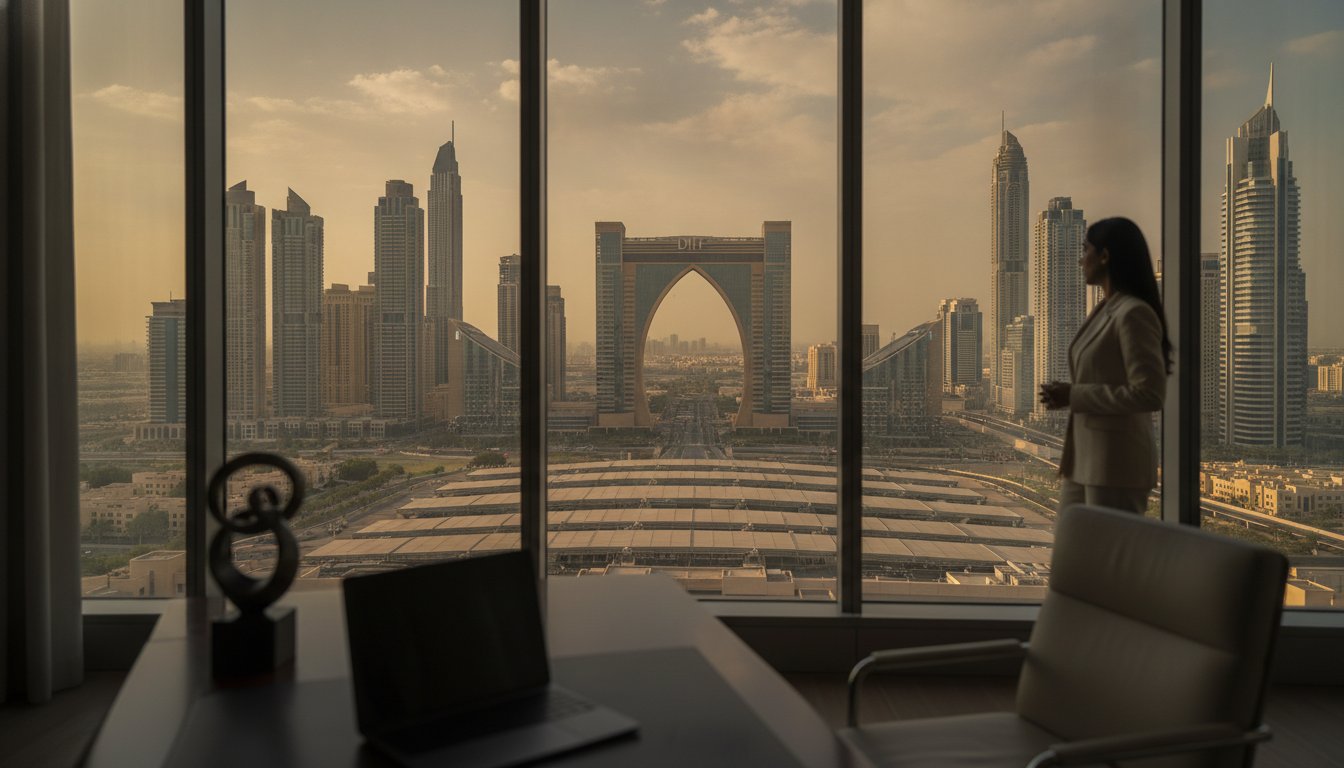
While many investors focus on the rapid expansion of new residential districts, the most sophisticated capital is quietly consolidating within a 110-hectare enclave that operates under its own legal jurisdiction. You likely recognize that while the broader market shows signs of normalization in 2026, finding an asset that balances high yields with absolute legal transparency remains a challenge. It’s natural to feel concerned about navigating the complexities of different UAE legal frameworks or the lack of clarity in traditional property management when evaluating Dubai financial centre real estate.
This strategic guide will demonstrate why the financial district remains the most resilient and high-yielding asset class in the national property market. We’ll show you how to secure a rental property that benefits from a built-in base of high-earning professionals, where gross yields currently reach up to 8%. You’ll gain a clear understanding of the capital appreciation potential for 2026, supported by a forecast of 30% growth in registered companies within the district. We also provide clarity on the latest residency visa updates and the June 2026 regulations regarding Prescribed Companies, ensuring your investment is backed by the highest level of legal protection available in the region.
Key Takeaways
- Understand how the independent legal framework and English common law within the district provide a sovereign-like security for your global assets.
- Explore the synergy between high commercial occupancy and residential demand, ensuring your property maintains a consistent rental premium in the market.
- Evaluate the specific ROI potential of Dubai financial centre real estate, where gross rental yields currently outperform other prime luxury hubs at 6% to 8%.
- Learn to navigate the strategic choice between immediate rental income from ready units and the significant capital appreciation offered by premier off-plan developments.
- Discover how a professional partnership for portfolio management can transition your approach from a simple transaction to a long-term wealth preservation strategy.
Understanding the Financial Centre Ecosystem
The district serves as a specialized economic zone that’s fundamentally different from any other neighborhood in the city. It’s a key pillar of the national economic diversification strategy, designed to attract global capital through a combination of world-class infrastructure and a unique regulatory environment. As we move into 2026, the “Living” initiatives are steering a significant urban expansion. This project is transforming the area from a purely corporate hub into a 24/7 lifestyle destination. For those watching Dubai financial centre real estate, this shift means that residential demand is no longer just a byproduct of office hours; it’s becoming a self-sustaining ecosystem of luxury and convenience.
This ecosystem supports every facet of a high-net-worth lifestyle, ensuring that when residents need to host significant personal or corporate celebrations, they can easily explore Premium Mekanlar to find the perfect setting that matches the prestige of their investment.
The Independent Jurisdiction Advantage
International investors are often drawn to this enclave because of the legal certainty provided by its independent jurisdiction. Unlike “onshore” Dubai, which follows a civil law system, this district operates under an English Common Law framework. This means property transactions, leasing agreements, and dispute resolutions are handled by a dedicated court system and a separate property registrar. The Dubai Financial Services Authority (DFSA) plays a vital role in maintaining market transparency, ensuring that every asset is governed by international standards. This legal clarity removes the complexities often found in other regional markets, offering a familiar and protective environment for your property holdings.
Economic Drivers for 2026
The demand for housing and office space is directly fueled by the district’s unprecedented corporate growth. By the end of 2025, the number of active registered companies reached 8,844, representing a 28% increase from the previous year. Forecasts for 2026 suggest a further 30% expansion. This isn’t limited to traditional banking; the area now hosts over 1,600 innovation and technology firms. The growth of specialized FinTech hubs and the Metaverse Platform has attracted a new generation of high-earning professionals. These tenants prioritize living in a district that matches their global career trajectory. Key growth drivers include:
- Corporate Density: A projected 30% increase in registered firms for 2026, boosting demand for both Grade-A office and luxury residential space.
- Human Capital: An influx of tech specialists and executives seeking high-end urban living within walking distance of their workspace.
- Strategic Maturation: The evolution into a 24/7 ecosystem through new retail, elite dining, and cultural infrastructure that supports long-term residency.
By positioning your portfolio within this ecosystem, you’re investing in a district that operates as a global financial gateway. The ability to attract both tech pioneers and traditional financial giants ensures that Dubai financial centre real estate remains a resilient asset class. It provides a level of stability and yield potential that’s difficult to replicate in purely residential developments.
Analyzing Asset Classes: Residential vs. Commercial
The fundamental strength of Dubai financial centre real estate lies in the symbiotic relationship between its commercial and residential sectors. While other areas of the city might face supply pressure from expansive new land releases, this district is essentially land-locked. This finite nature protects asset values over the long term. We’re currently observing a strategic pivot in how developers approach the remaining plots. Projects like DIFC Living are moving away from the traditional office-only model, creating a 24/7 ecosystem where high-level executives can live within minutes of their global headquarters. This high commercial occupancy is the primary engine that drives residential rental premiums, as the professional population continues to outpace the available housing stock.
Residential Investment Dynamics
Residential properties in the district cater to a very specific, high-net-worth demographic. Studios and one-bedroom apartments are the “workhorses” of the rental market, particularly for investors targeting the corporate sector. These units benefit from a built-in tenant base of international professionals who prioritize proximity and prestige over raw square footage. While service charges here are often higher than the city average, they’re justified by “executive lifestyle” amenities, including elite concierge services and direct access to the Gate Avenue retail spine. There’s also a growing appetite for short-term corporate stays, which often offer higher yields than traditional year-long leases for well-positioned units.
Commercial Real Estate Potential
On the commercial side, the demand for Grade-A office space remains exceptionally high. The recent influx of family offices and global hedge funds has created a consistent waiting list for premium floor plates. Many of these entities are encouraged by the stable UAE foreign investment policies that ensure a transparent and predictable operating environment. For the individual investor, commercial opportunities often manifest through sub-leasing models or niche segments like specialized infrastructure for data centers. This commercial density is what ultimately secures your residential investment; when office occupancy remains near capacity, the demand for nearby luxury living is guaranteed. If you’re looking to balance your holdings, exploring commercial properties for sale alongside residential units can provide a more resilient, diversified income stream.
The scarcity of new land within the district’s boundaries means that every square foot is optimized for maximum utility. As the district matures, the distinction between “work” and “home” continues to blur, making mixed-use developments the most sought-after assets in 2026. This integration ensures that even during broader market fluctuations, the district maintains its status as a high-demand enclave where supply is naturally restricted and demand is globally sourced.
The Investment Case: Yields, ROI, and Risk Mitigation
The entry price for Dubai financial centre real estate often prompts a discussion about value versus cost. While median prices reached approximately AED 3,150 per square foot in 2025, looking at these figures in isolation ignores the district’s unique supply-demand dynamics. Investors who prioritize long-term durability over aggressive, short-term headline returns find that the entry premium is a necessary filter for quality. Unlike other luxury hubs where supply is elastic, the finite boundaries of this district create a natural floor for asset values. This scarcity, combined with a built-in corporate tenant base, ensures that liquidity remains high. You’ll find that well-maintained units in this zone often trade faster on the secondary market than similar assets in purely residential neighborhoods.
Projected ROI for 2026
Total return in this district is a composite of consistent rental income and sustainable capital growth. For 2026, industry benchmarks like Knight Frank project a 3% growth in prime property values, signaling a healthy normalization rather than a speculative bubble. When calculating your returns, it’s vital to distinguish between gross and net yields. In this jurisdiction, net yield is defined as the total annual rent minus the specialized DIFC service charges. While these charges reflect the district’s high-standard maintenance and elite infrastructure, the 6% to 8% gross yields typically leave a robust net margin. The expansion of the neighboring Zabeel District further enhances this outlook, as it brings more retail and connectivity to the periphery without diluting the core district’s prestige.
Risk Management for Foreign Investors
The primary risk mitigation tool for international capital is the district’s independent legal status. Real estate disputes and ownership rights are governed by the DIFC Courts, which operate under English Common Law. This provides a familiar and transparent framework that’s distinct from “onshore” Dubai regulations. Additionally, the stability of the UAE Dirham, which is pegged to the US Dollar at 3.67, protects your portfolio from currency volatility. For families looking at long-term wealth preservation, the Family Wealth Centre and the district’s stringent data privacy laws offer layers of protection that are unavailable in most global financial hubs. These structures ensure that your investment is not just a high-yielding asset, but a legally protected component of your global estate.
Ownership here is also remarkably tax-efficient. You’ll benefit from a system that levies no capital gains tax on the sale of property and no income tax on rental earnings. This allows you to reinvest your returns or repatriate capital with minimal friction. When you combine this fiscal efficiency with the district’s legal “sovereignty,” the case for Dubai financial centre real estate moves beyond simple property ownership. It becomes a strategic play in one of the world’s most stable and transparent investment environments.
Acquisition Strategy: Off-Plan vs. Ready Properties
Choosing between off-plan and ready assets requires a clear understanding of your liquidity needs and risk tolerance. In early 2026, off-plan sales represent approximately 62% of total market transactions, a trend that is mirrored within Dubai financial centre real estate. Ready properties offer the immediate gratification of rental income and the ability to inspect the final finish, while off-plan projects provide a structured entry point into the district’s appreciation cycle. The decision often hinges on whether you prioritize immediate cash flow or the potential for capital gains during the construction phase.
Projects like DIFC Living and DIFC Square are redefining the district’s urban fabric, blending high-end residential units with state-of-the-art workspace. These developments often launch with competitive payment plans, such as 70/30 or 60/40 structures, allowing you to leverage your capital more effectively. We’re also seeing a 2026 trend where major developers offer post-handover payment plans even for ready units, though these are becoming increasingly rare as demand continues to outstrip supply in the core financial hub.
The Off-Plan Selection Framework
Protecting your capital starts with vetting the developer’s track record within this specific jurisdiction. It’s vital to ensure that all payments are made into a DFSA-regulated escrow account, which is a mandatory safeguard for uncompleted projects here. We’re seeing a rise in “Immersive Tower” designs that integrate vertical gardens and advanced wellness technology. These specific architectural features are more than just aesthetic choices; they’re strategic assets that are likely to command higher resale values and rental premiums upon completion.
Navigating the Secondary Market
Established towers in the Gate District or near the Burj Daman often present opportunities for investors seeking immediate stability. Finding undervalued units in these prime locations requires a deep market analysis to identify properties where the price per square foot hasn’t yet caught up to the 2026 median. You’ll often find the best value in apartments that have recently undergone professional refurbishment, as these are highly sought after by corporate tenants. For a more detailed walkthrough of the legal and financial steps involved in the process, you can consult our guide on How to Buy Property in Dubai.
Whether you choose the growth potential of new builds or the stability of ready units, your acquisition must be backed by precise data and a clear exit strategy. If you’re ready to explore current opportunities, our team can provide a curated list of off-plan property sales currently available within the financial district. This ensures you’re looking at the most competitive options that align with the high standards of the district’s professional community.
Partnering with Chainex for Portfolio Management
Securing a high-performing asset within the district is only the first step in a successful investment journey. The long-term performance of Dubai financial centre real estate depends heavily on how the property is managed and positioned within a competitive rental market. At Chainex, we transition from being a simple intermediary to a strategic partner, taking the operational burden off your shoulders. We recognize that international investors require more than just a transaction; they need a professional presence on the ground that understands the high expectations of the district’s corporate tenant base.
Our property management services are designed specifically for absentee landlords who prioritize discretion and efficiency. We handle every aspect of the tenancy lifecycle, from rigorous professional vetting to ensuring that the unit maintains its “Grade-A” status through proactive maintenance. This meticulous approach is what allows our clients to consistently achieve the upper end of the 6% to 8% yield range. By providing detailed market analysis, we help you understand exactly where your property sits in the current 2026 landscape, ensuring your rental rates remain optimized without risking unnecessary vacancy periods.
Consulting Beyond the Transaction
We believe that an investment should be dynamic, not static. Chainex bridges the gap between major developers and global financial institutions, giving our clients access to insights that aren’t typically available through standard brokerage channels. Our team monitors market movements in real-time to identify strategic “exit” opportunities, allowing you to capitalize on capital appreciation when the timing is most favorable. Whether you’re looking to consolidate your holdings or diversify into new mixed-use developments, our consulting ensures every move is data-driven. For a broader perspective on how these assets fit into a wider portfolio, you can explore The Definitive Guide to Luxury Property in Dubai.
Why Expertise Matters in 2026
As the market reaches a stage of “emerged” maturity in 2026, the ability to interpret subtle economic shifts becomes the primary differentiator for successful investors. We’re committed to absolute transparency, providing you with clear reporting and honest advice that prioritizes your portfolio’s growth over quick commissions. Our role is to act as your eyes and ears in the financial district, ensuring that your assets are protected by the latest legal frameworks, including the June 2026 updates for Prescribed Companies. This level of expert oversight transforms real estate into a truly passive, high-yielding component of your global wealth strategy.
If you’re ready to move beyond standard property ownership and begin building a resilient, professionally managed portfolio, our advisors are here to guide you. We invite you to Contact Chainex Real Estate for a DIFC Investment Consultation and discover the value of a professional partnership in one of the world’s most prestigious financial hubs.
The Future of Resilient Wealth in the Financial District
Navigating the 2026 market requires a shift from speculative buying to the acquisition of sovereign-like assets. We’ve explored how the independent common law framework and the transition to a 24/7 lifestyle destination create a unique supply-demand imbalance that favors the disciplined investor. By focusing on Dubai financial centre real estate, you’re positioning your capital in a micro-market where scarcity is real and yields are underpinned by a global corporate elite. The integration of luxury residential units with high-occupancy commercial spaces ensures that your portfolio remains protected from broader market volatility.
Success in this enclave depends on more than just identifying a unit; it requires a strategic partnership that provides specialized investment consulting for HNWIs and comprehensive market analysis for 2026. Our team at Chainex offers the professional oversight and strategic partnerships with leading developers necessary to maximize your ROI. We invite you to Secure Your Strategic Investment Consultation with Chainex to refine your acquisition strategy. Your journey toward high-yield, legally protected property ownership starts with a data-driven conversation. We look forward to helping you build a legacy in the heart of the region’s premier financial hub.
Frequently Asked Questions
Is DIFC property a good investment in 2026?
Yes, it remains a premier choice for investors seeking a mature, “emerged market” driven by genuine demand rather than speculation. The total value of real estate sales in Dubai reached AED 60.6 billion in February 2026, showing an 18.14% increase over the previous year. This district specifically benefits from a 30% forecasted growth in active registered companies, ensuring a consistent influx of high-earning professional tenants.
What is the average rental yield for apartments in the financial district?
Gross rental yields for Dubai financial centre real estate currently range between 6% and 8%. While studio apartments typically yield approximately 5.8%, two-bedroom units offer around 4.6%. These yields are supported by the district’s status as a global financial hub, which maintains a stable base of corporate executives and high-net-worth individuals.
Can foreigners own 100% of a property in the Dubai Financial Centre?
Yes, foreign nationals can purchase freehold property with 100% ownership rights within this designated zone. This allows international investors to hold assets directly or through a DIFC Prescribed Company. As of June 2026, any person can incorporate such a company as a passive holding vehicle for real estate assets, regardless of their nationality or domicile.
How do property laws in this district differ from the rest of the UAE?
The district operates under its own independent English Common Law framework, which is distinct from the civil law used in the rest of the UAE. It maintains a separate court system and property registrar. This legal separation provides international investors with a familiar and transparent environment for contract enforcement and asset protection.
What are the typical service charges for residential towers in this area?
Service charges in this enclave reflect the high standards of maintenance and elite executive amenities provided to residents. While these costs are often higher than the city average, they’re essential for preserving the “Grade-A” status of the buildings. These fees cover the professional management and world-class infrastructure that justify the district’s premium rental rates.
Are there commercial properties available for individual investors?
Yes, individual investors can acquire various commercial properties for sale, including office spaces and retail units. The demand for physical office presence from family offices and hedge funds has reached record levels in 2026. This makes commercial assets a resilient choice for those looking to diversify their portfolio beyond residential holdings.
How does the “Zabeel District” expansion affect current property values?
The expansion acts as a strategic catalyst by enhancing retail connectivity and urban infrastructure on the district’s periphery. Knight Frank projects that prime property values will grow by approximately 3% in 2026 as the area matures. This expansion adds value to existing assets by improving the overall lifestyle offering without diluting the core district’s prestige.
What is the process for registering a property in the DIFC?
Property registration is handled by the DIFC Registrar of Real Property rather than the Dubai Land Department. The process involves a 4% transfer fee, usually paid by the buyer. For properties valued over AED 500,000, the registration fee is AED 4,000 plus 5% VAT, ensuring all ownership records are maintained within the district’s independent legal system.