


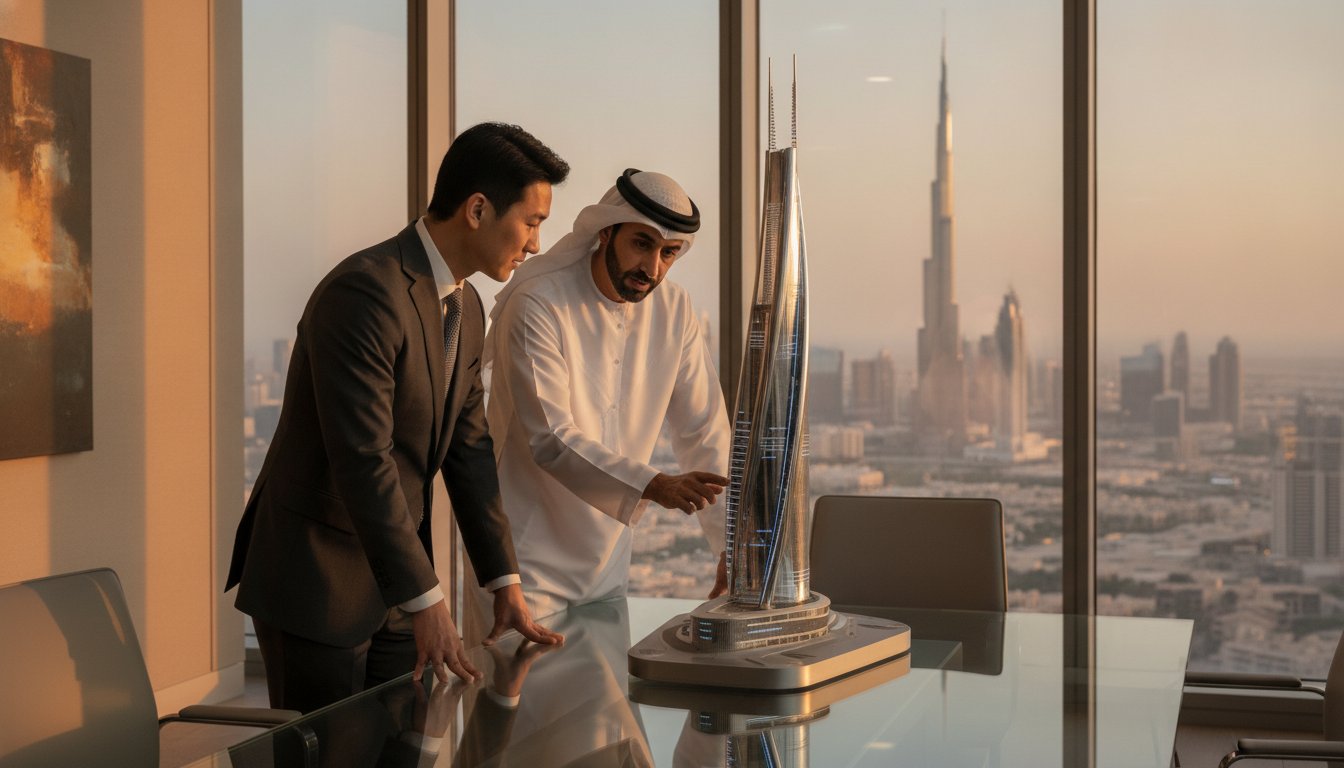
While traditional safe-havens like Tokyo and Hong Kong struggle with rental yields often dipping below 3%, a 2026 Arada index reveals that 56% of global investors now rank the UAE as the world’s most attractive real estate destination. You’ve likely noticed that once-reliable Asian hubs are no longer providing the returns or currency stability your portfolio requires. This shift isn’t just a temporary trend; it’s the fundamental security and yield story that is driving a new wave of Asian capital into the heart of the Middle East. As institutional and private investors look to escape the constraints of their home markets, Dubai and Abu Dhabi have emerged as the premier destinations for capital seeking a more lucrative home.
We understand that diversifying outside of East Asia requires more than just capital. It demands a clear understanding of tax-neutral advantages and reliable local expertise to ensure your assets are protected. In this article, you’ll discover why billions are flowing into UAE real estate and how you can capture gross rental yields of up to 8% while securing long-term residency through the Golden Visa program. We’ll explore the specific economic drivers behind this migration, the benefits of the UAE’s tax-free environment, and the strategic steps necessary to manage a high-performing remote portfolio with complete confidence.
Key Takeaways
- Understand the specific macroeconomic “push” factors, such as Japan’s low interest rates and China’s regulatory shifts, that are redirecting billions into the UAE.
- Learn how to compare net rental yields between traditional Asian hubs and the UAE to identify assets that consistently outperform saturated markets.
- Gain a deeper perspective on the unique security and Yield Story That Is Driving a New Wave of Asian Capital into Dubai and Abu Dhabi’s high-prestige sectors.
- Evaluate the strategic benefits of Off-plan Property Sales for capital appreciation versus the steady income generated by secondary market villas and townhouses.
- Discover a framework for remote portfolio management that ensures your international investments remain under expert, professional supervision without the need for constant travel.
The Great Migration: Why Asian Capital is Flowing into UAE Real Estate
The 2026 global investment landscape has witnessed a profound pivot as capital traditionally anchored in East Asia seeks more resilient horizons. According to the Arada UAE Real Estate Investment Index from April 2026, 56% of global investors now view the Emirates as the most attractive destination for property acquisition. This isn’t just a reaction to local growth but a fundamental part of the security and Yield Story That Is Driving a New Wave of Asian Capital” toward a region that balances risk and reward with professional precision. As institutional players and private family offices face diminishing returns at home, the UAE has become the primary destination for long-term wealth preservation.
Specific “push” factors in the APAC region are accelerating this movement. In Japan, the prolonged low-interest-rate environment has eroded domestic purchasing power, while regulatory adjustments in China have made geographical diversification a priority for high-net-worth individuals. Conversely, the UAE’s tax-neutral status and its commitment to world-class infrastructure act as powerful “pull” factors. By positioning assets in a market that doesn’t levy annual property taxes on residential units, investors can create a strategic hedge against the volatility currently impacting their home markets.
The Shift from Traditional APAC Hubs
Investors once satisfied with the prestige of Singapore or Hong Kong are now looking beyond their borders as domestic cooling measures and rising costs squeeze net returns. Japanese institutional appetite has grown significantly, driven by a need for assets that offer tangible yields in a stable currency environment. The UAE’s 2026 economic outlook attracts Asian family offices because it provides a clear path to capital growth within a highly regulated, investor-friendly framework. These offices are no longer just looking for safety; they’re looking for safety that works harder.
UAE as the Global Safe Haven for 2026
The UAE has perfected a “Safety-to-Yield” ratio that is increasingly difficult to find in other global financial centers. While entry into many Western markets is hindered by complex tax codes, the Emirates offer a streamlined experience for international wealth. The 10-year Golden Visa remains a significant draw, requiring a minimum property investment of AED 2 million which can now be applied to off-plan and mortgaged properties with greater ease. This residency benefit, combined with the removal of specific upfront payment hurdles for mortgaged assets in early 2026, ensures that Asian capital can be deployed quickly and securely into a market designed for international growth.
Decoding the Yield Story: Comparing Asian Hubs vs. UAE Returns
Investors across the APAC region are confronting a stark reality: capital preservation is no longer enough in an era of rising global costs. While owning a luxury asset in Hong Kong or Singapore carries significant prestige, the actual income generated by these properties has become negligible for many. This disparity is the foundation of the security and Yield Story That Is Driving a New Wave of Asian Capital” toward the Emirates. In the UAE, the investment philosophy shifts from speculative hope to sustainable, high-velocity cash flow that traditional Asian hubs can’t match.
The UAE’s growing status as a wealth hub is underpinned by tangible numbers that contrast sharply with the East. For individual foreign owners, the effective tax rate on rental earnings is 0%, as these are generally excluded from UAE corporate tax. This means the gross yield you see is much closer to the net profit you keep. While capital appreciation remains a welcome benefit, it’s the yield that acts as the primary engine for this new wave of capital, providing a reliable buffer against currency volatility in home markets like Japan or South Korea.
Rental Yield Benchmark: Tokyo, Singapore, and Hong Kong
The “Yield Trap” in cities like Singapore and Tokyo has effectively frozen the portfolios of many seasoned investors. With property values reaching record highs, rental growth hasn’t kept pace, leading to a sub-3% yield environment that barely covers maintenance and financing. The Yield Gap between Hong Kong and the UAE has widened significantly, as the former struggles with compressed returns while the latter offers double or triple the net cash flow. This stagnation in Asia makes the choice for geographical diversification a mathematical necessity rather than a mere preference.
The UAE Advantage: 6% to 9% Net Returns
By the end of 2025, Dubai’s average gross rental yields for apartments reached approximately 7%, while Abu Dhabi offered attractive ranges between 5% and 8%. Achieving these figures requires a strategic choice between property types. Apartments in high-density areas often provide the most consistent yields, whereas villas and townhouses, which saw a 5% gross yield in early 2026, offer a balance of steady income and long-term scarcity. Short-term rentals can push these returns even higher, though they require more intensive oversight. If you’re looking to optimize these returns from abroad, exploring professional Property Management Services can help bridge the distance while protecting your net ROI.
Investment Vehicles: Off-Plan Growth vs. Secondary Market Stability
Asian investors don’t view the UAE as a monolithic market. They distinguish clearly between wealth creation and immediate income generation. This sophisticated approach to capital allocation is the engine behind the and Yield Story That Is Driving a New Wave of Asian Capital. While some seek the rapid appreciation of emerging districts, others prioritize the established cash flow of “ready” assets. Unlike the often illiquid markets in parts of East Asia, the UAE offers a transparent, regulated environment where entry and exit strategies are supported by robust transaction volumes. This liquidity is a primary reason why institutional funds and family offices are shifting their focus toward the Middle East.
The Off-Plan Surge: Capturing Early-Stage Value
Off-plan Property Sales have seen a significant rise in interest from Chinese and Japanese investors who value structured payment plans. These plans allow for capital deployment over several years, often with a significant portion due only upon completion. By securing a unit during the launch phase, investors often capture the 5% to 8% price appreciation expected in Dubai throughout 2026. This strategy serves as a powerful hedge against currency volatility at home. To navigate this process safely, many rely on Your Guide to Off-Plan Properties in Dubai to understand escrow protections and developer track records. Risk mitigation is built into the system, as the Dubai Land Department mandates that all investor funds stay in project-specific escrow accounts until specific construction milestones are met.
Secondary Market: Immediate Cash Flow Solutions
For those prioritizing monthly revenue, the secondary market remains the gold standard. Ready properties, particularly villas and townhouses, provide the immediate utility that drives the and Yield Story That Is Driving a New Wave of Asian Capital. Investors are increasingly targeting high-end rental yields in established communities where occupancy rates remain consistently high. In late 2025, gross yields for apartments in Dubai averaged 7%, a figure that dwarfs the returns found in Tokyo or Hong Kong. Secondary market houses for sale offer a “plug-and-play” investment where the title deed transfer is the final step before the first rental check arrives. This immediate ROI is essential for investors who need to offset the low-yield environment of their domestic portfolios. Professional market analysis is vital here, as it helps identify “yield sweet spots” where supply remains limited despite the overall increase in residential units.
Navigating the UAE Investment Landscape: A Framework for Asian Investors
For an investor based in Tokyo, Singapore, or Hong Kong, the geographical distance to the Middle East can initially seem like a barrier to entry. However, the UAE has spent decades refining a regulatory framework specifically designed to welcome foreign wealth with transparency and efficiency. This structured environment is a cornerstone of the security and Yield Story That Is Driving a New Wave of Asian Capital” into the region’s most sought-after developments. Moving from an initial consultation to holding a title deed is a streamlined process, provided you have the right strategic partner to navigate the local requirements.
The journey typically begins with a detailed portfolio analysis to align your yield expectations with the right asset class, whether that involves Townhouses for Sale in established communities or high-growth apartments. Once a property is selected, the legal process moves through a Memorandum of Understanding (MOU) or a Sale and Purchase Agreement (SPA). It’s vital to account for standard transaction costs, such as the 4% Dubai Land Department registration fee or the 2% transfer fee in Abu Dhabi, alongside the standard 2% real estate agency fee. These costs are a one-time entry requirement for a market that offers long-term, tax-neutral returns.
Legal and Financial Due Diligence
Asian institutional and private investors must navigate specific compliance and KYC (Know Your Customer) protocols that have become more robust in 2026. Understanding the nuances of the SPA is critical, as this document outlines the developer’s obligations and your payment schedule. For a comprehensive breakdown of these requirements, you can refer to How to Buy Property in Dubai: The Ultimate Guide. While the UAE doesn’t offer direct mortgage lending itself, non-residents can access financing through local banks, typically with a mortgage arrangement fee of 1% of the loan amount plus 5% VAT.
Remote Ownership and Management
You don’t need to be physically present in the UAE to build a significant real estate portfolio. Many Asian buyers utilize a Power of Attorney (POA) to allow a trusted representative to handle the signing of documents and title deed registration on their behalf. Escrow accounts ensure that foreign capital is only released to developers as verified construction milestones are achieved, providing a robust layer of financial security. This system allows you to manage your capital from abroad while your assets appreciate in a stable, world-class economy. If you’re ready to explore these opportunities, you can view our latest listings to see how we can help you secure your position in this thriving market.
Strategic Consulting: How Chainex Maximizes Asian Portfolios
Choosing the right assets in a foreign market requires more than just access to listings. It demands a partner who understands the intricate and Yield Story That Is Driving a New Wave of Asian Capital into the UAE’s high-prestige sectors. At Chainex, we don’t just facilitate transactions. We act as strategic consultants, helping you identify “yield sweet spots” that align with your long-term wealth objectives. Whether you’re interested in high-end Villas for Sale or looking to diversify into Commercial Properties for Sale, our team provides the data-driven insights necessary to outperform traditional Asian benchmarks. We’ve seen firsthand how a well-timed move into the Middle East can transform a stagnant portfolio into a high-performance engine for growth.
Our expertise isn’t limited to residential units. We recognize that Asian institutional investors and family offices often seek the stability found in Commercial Properties for Rent or luxury Penthouses for Sale. By analyzing transaction volumes and supply-demand dynamics in real-time, we help you avoid areas of high supply and focus on scarce, high-demand assets. This precision is what allows our clients to secure the 7% to 9% net returns that have become the hallmark of the UAE’s current economic cycle.
Consulting Beyond the Transaction
Our approach goes beyond the initial purchase. We recognize that many Asian high-net-worth individuals are currently transitioning their capital from saturated markets like Hong Kong or Tokyo. For these clients, we offer ongoing market monitoring and asset reallocation strategies. If a particular district shows signs of oversupply, we guide you toward more lucrative opportunities in Off-plan Property Sales or established secondary markets. This level of professional oversight ensures your capital remains agile and productive, regardless of global economic shifts. We recently helped an investor reallocate from a low-yield Singaporean apartment into a portfolio of Dubai townhouses, nearly tripling their monthly cash flow.
The Chainex Property Management Edge
The biggest challenge for remote investors is the day-to-day oversight of their assets. Our Property Management Services are designed to bridge this gap completely. We handle everything from finding high-quality tenants to ensuring consistent rent collection and property maintenance. By maintaining high occupancy rates, we protect the core and Yield Story That Is Driving a New Wave of Asian Capital that brought you to the UAE in the first place. You can focus on your business at home while we ensure your Dubai or Abu Dhabi portfolio operates with professional precision. Our goal is to make your transition into the UAE market as seamless and profitable as possible.
Maximize your UAE investment with Chainex Real Estate and secure your position in the world’s most attractive real estate destination.
Securing Your Future in the Global Yield Capital
The shift of capital from East Asia to the UAE is a calculated response to domestic stagnation. With gross rental yields in Dubai reaching 7% for apartments by the end of 2025 and a tax-neutral environment that protects every dollar earned, the opportunity for diversification has never been clearer. This is the fundamental security and Yield Story That Is Driving a New Wave of Asian Capital” that continues to reshape international portfolios. Whether you’re escaping the sub-3% yields of Tokyo or seeking a stable hedge against currency volatility, the Emirates offer a level of resilience that is increasingly rare in traditional markets.
To navigate this landscape effectively, you need more than a broker; you need a strategic partner. Chainex provides expert investment consulting for international portfolios, specializing in high-yield secondary and off-plan properties. Our end-to-end property management ensures that remote owners can enjoy passive income without the operational burden. Taking the first step toward geographical diversification is a decision that secures long-term stability and growth. We invite you to Partner with Chainex Real Estate for Your UAE Investment Strategy and start building your high-yield portfolio today.
Frequently Asked Questions
Why is Asian capital shifting toward the UAE real estate market in 2026?
Asian capital is shifting toward the UAE primarily to escape the low-yield environment and currency volatility found in traditional hubs like Tokyo and Hong Kong. Investors are seeking the high rental returns and sovereign stability that the Emirates provide. This movement is the core security and Yield Story That Is Driving a New Wave of Asian Capital into the region. The UAE’s tax-neutral status and investor-friendly policies offer a reliable hedge against the economic cooling currently impacting many East Asian markets.
What is the average rental yield for property in the UAE compared to Singapore?
Average gross rental yields in Dubai reached approximately 7% for apartments and 5% for villas by the end of 2025. In contrast, major Asian hubs like Singapore often provide yields below 3%, which significantly limits cash flow for high-net-worth portfolios. Abu Dhabi remains equally competitive, with yields ranging from 5% to 8%. These figures represent a substantial premium over the compressed returns found in the APAC region, making the UAE a more lucrative destination for income-focused capital.
Can a non-resident Asian investor get a mortgage in the UAE?
Non-resident investors can access financing through UAE-based banks, although the terms typically differ from those offered to residents. A standard mortgage arrangement fee of 1% of the loan amount plus 5% VAT is common for these transactions. It’s important to note that the requirement for a AED 1 million upfront payment on mortgaged properties was removed in February 2026. This regulatory change makes it significantly easier for international buyers to leverage their investments and scale their property portfolios.
Are there taxes on rental income for foreign investors in the UAE?
The effective tax rate on rental earnings for individual foreign property owners is 0% in the UAE. Rental income is generally excluded from corporate tax as long as the owner doesn’t require a commercial license for their investment activities. This tax-neutral environment is a key component of the and Yield Story That Is Driving a New Wave of Asian Capital. It ensures that the gross yields generated by your assets translate directly into higher net profits compared to heavily taxed global markets.
How does the UAE Golden Visa benefit real estate investors from Asia?
Real estate investors can secure a 10-year Golden Visa by maintaining a property portfolio with a minimum value of AED 2 million. This residency status allows Asian investors to live and work in the UAE while providing long-term security for their families. The visa is eligible for both off-plan and mortgaged properties, with the previous AED 1 million upfront payment requirement for mortgages removed in early 2026. It provides a stable anchor in a safe jurisdiction, which is highly valued by those seeking geographical diversification.
Is it safe to buy off-plan property in the UAE from abroad?
Buying off-plan property from abroad is secure due to the UAE’s strict escrow regulations and transparent legal framework. All investor funds are held in project-specific escrow accounts that developers can only access once verified construction milestones are reached. The Dubai Land Department and Abu Dhabi authorities provide robust oversight to protect international capital throughout the development phase. This system ensures that your investment is safeguarded against project delays or developer insolvency, providing peace of mind for remote buyers.
What are the hidden costs of buying property in the UAE for foreigners?
Investors should account for the 4% Dubai Land Department registration fee or the 2% transfer fee in Abu Dhabi. A standard real estate agency fee of 2% of the purchase price, plus 5% VAT, is also a standard part of the transaction. For those using a mortgage, a fee of 1% of the loan amount plus 5% VAT applies. While there’s no annual property tax on residential units, owners should factor in service charges for building maintenance to calculate their precise net returns.
How does Chainex help international investors manage their properties?
Chainex provides comprehensive property management services designed specifically for the hands-off international investor. We handle every detail, from tenant sourcing and rent collection to maintenance and legal compliance. Our team acts as your strategic partner on the ground, ensuring your assets are maintained to the highest standards while maximizing occupancy rates. This professional oversight allows you to manage a high-yield portfolio in the UAE with complete confidence, regardless of your physical location.
