


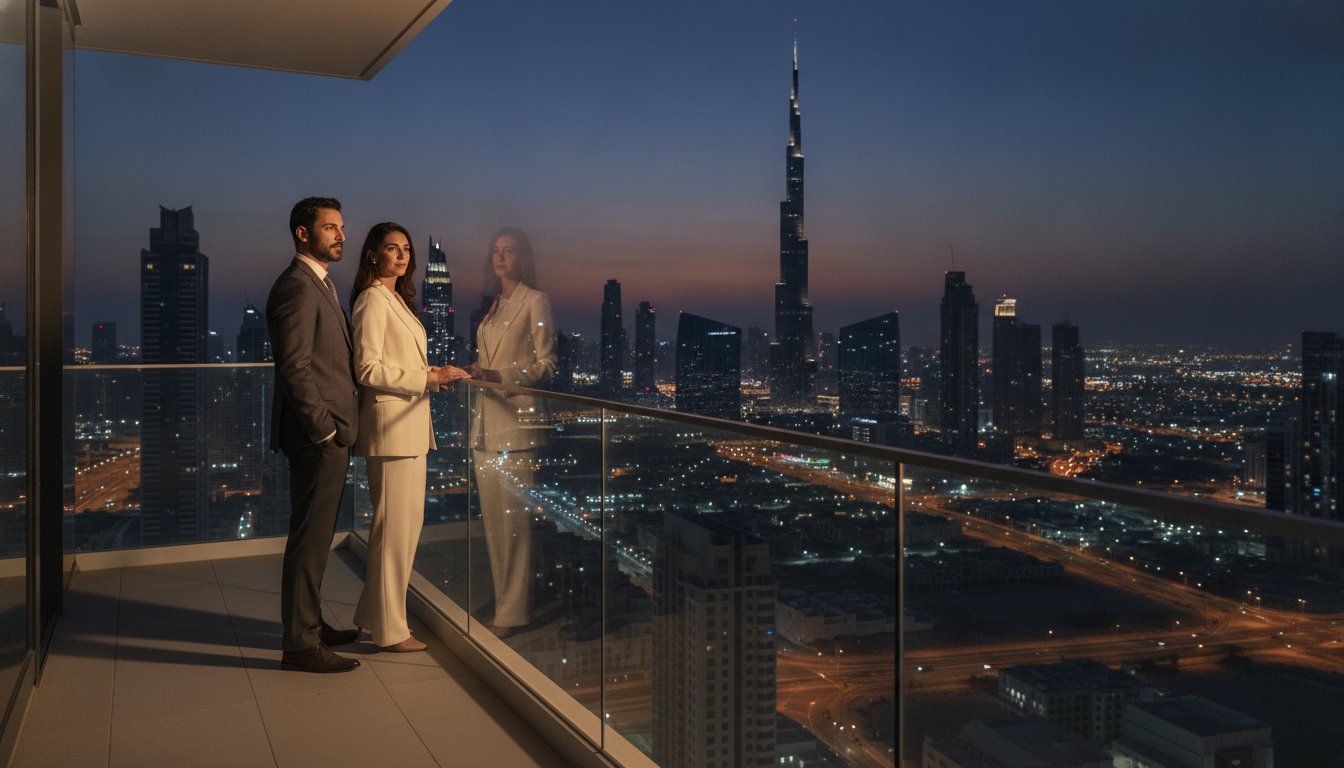
In 2026, an estimated 9,800 millionaires are expected to relocate to the UAE, marking the highest net inflow of wealth globally. This unprecedented shift explains why HNWIs are choosing Dubai over London & Singapore in 2026 as their primary residence and strategic investment base. You’ve likely noticed that traditional safe havens are no longer providing the same level of sanctuary they once did. Between London’s “non-dom” tax reforms and Singapore’s record-high stamp duties, the cost of simply holding assets in these legacy cities has become a significant burden on capital growth.
You’ll discover how Dubai has transformed into a sophisticated “partial safe haven” that offers both long-term residency security and superior returns. We will examine the specific regulatory shifts, tax advantages, and lifestyle autonomy that have cemented the city’s position as the world’s leading wealth hub this year. From the 10-year Golden Visa to rental yields reaching up to 8%, this article details the strategic moves driving global wealth to the Middle East.
Key Takeaways
- Understand why record-breaking numbers of millionaires are relocating their capital to Dubai as a permanent “Anchor Hub” for global asset protection.
- Compare the rising acquisition costs and regulatory burdens in legacy cities to understand why HNWIs are choosing Dubai over London & Singapore in 2026.
- Review the 2026 fiscal environment that allows for tax neutrality on personal income and capital gains while maintaining robust rental yields.
- Learn the specific 2026 thresholds and application steps for the 10-year Golden Visa to ensure long-term residency security for your household.
- Explore how strategic investment consulting can help you navigate the transition from traditional European markets to high-growth Dubai property portfolios.
The Great Wealth Migration of 2026: Why Dubai is the New Global Anchor
The global map of affluence is being redrawn at a pace we haven’t seen in decades. By the end of 2026, a record 165,000 millionaires will have relocated to new jurisdictions, seeking stability in an increasingly volatile regulatory environment. This movement represents more than just a search for lower taxes; it’s a fundamental transition toward “Anchor Hubs.” These are cities where high-net-worth families can find permanent safety for their capital and a high quality of life. Dubai has emerged as the premier choice in this category, transitioning from its former reputation as a seasonal luxury destination to a primary, year-round wealth anchor.
This structural shift is the core reason why HNWIs are choosing Dubai over London & Singapore in 2026. Investors are no longer content with cyclical wealth movement. They’re opting for structural relocation, moving their businesses, families, and primary assets to a jurisdiction that treats capital with respect. Dubai’s transition is particularly noteworthy because it now functions as a mature financial ecosystem. The rapid expansion of the Dubai International Financial Centre (DIFC) has provided the institutional backbone needed for multi-generational wealth planning, offering the same legal sophistication as its Western counterparts but with a far more favorable growth trajectory.
The Exodus from Traditional Financial Strongholds
The numbers tell a stark story of capital flight from once-unassailable markets. London is projected to lose 16,500 millionaires this year, driven largely by the abolition of the non-dom tax status and looming reforms to inheritance tax. Investors who once viewed the UK as a stable sanctuary now face a regulatory squeeze that erodes net returns. Similarly, Singapore’s decision to maintain a 60% Additional Buyer’s Stamp Duty (ABSD) for foreign property buyers has effectively cooled its appeal for international investors. These fiscal barriers make the entry price for wealth preservation in traditional hubs simply too high when compared to the open environment of the Middle East.
Defining the 2026 High-Net-Worth Profile
The modern investor has evolved into a “Global Nomad HNWI” who prioritizes jurisdiction-agnostic wealth management. These individuals don’t just want a house; they want a secure ecosystem with world-class digital infrastructure and political neutrality. In 2026, wealth mobility is defined by the strategic relocation of approximately 165,000 individuals toward markets that offer residency security without the erosion of tax efficiency. This is why HNWIs are choosing Dubai over London & Singapore in 2026; they’re looking for a strategic partner in wealth preservation rather than a landlord that imposes escalating compliance costs.
Comparing the Hubs: Why London and Singapore are Losing Their Edge
The decision to relocate capital is rarely based on a single factor. It’s a calculated response to the mounting friction in traditional markets. While London and Singapore have long been the default settings for global wealth, their current fiscal policies have created a regulatory ceiling that makes capital preservation increasingly difficult. This growing disparity is a primary reason why HNWIs are choosing Dubai over London & Singapore in 2026. Investors are moving away from jurisdictions that penalize success toward those that facilitate growth.
The Regulatory Ceiling in London
In the UK, the cost of being a landlord has shifted from a manageable expense to a significant barrier. New EPC (Energy Performance Certificate) compliance standards require substantial capital expenditure for older prime properties. When you combine this with the Stamp Duty Land Tax (SDLT), which can reach 15% for certain high-value corporate acquisitions, the entry cost is staggering. In contrast, Dubai maintains a flat 4% Dubai Land Department (DLD) fee. This lower entry threshold, paired with the fact that London’s prime yields have compressed to the 3-5% range, makes the UK capital less attractive for those seeking active cash flow.
Singapore’s Barriers to Entry for Foreign Capital
Singapore remains a bastion of stability, but its recent cooling measures have effectively locked out most international investors. The 60% Additional Buyer’s Stamp Duty (ABSD) for foreign nationals is a prohibitive tax that requires immediate, massive capital appreciation just to break even. Beyond these costs, the limited availability of freehold land in prime districts forces many into leasehold arrangements that don’t offer the same generational security as Dubai’s freehold zones. Many investors are prioritizing Residency stability and tax simplicity as discussions regarding a potential wealth tax in Singapore continue to circulate in financial circles.
Transparency and Currency Security
Safety isn’t just about physical security; it’s about the predictability of your assets. The UAE Dirham’s peg to the US Dollar provides a critical hedge against the currency volatility seen in European markets. This stability is bolstered by Dubai’s rising position in the Global Real Estate Transparency Index, where it now ranks as the most transparent market in the region. If you’re looking to protect your portfolio from these global fluctuations, exploring the current selection of villas for sale in Dubai’s prime districts offers a clear path to capital security. This combination of low transaction friction and high market clarity is exactly why HNWIs are choosing Dubai over London & Singapore in 2026.
The Dubai Advantage: Tax Neutrality, Yields, and Capital Growth
The fiscal landscape of 2026 has solidified Dubai’s position as a tax-neutral sanctuary. While European and Asian hubs struggle with fiscal deficits, the UAE has maintained a regime that prioritizes capital growth for the individual. This is a central component of why HNWIs are choosing Dubai over London & Singapore in 2026. By removing the friction of personal income and capital gains taxes, the city allows investors to reinvest their full returns, creating a compounding effect that simply isn’t possible in heavily taxed jurisdictions. Wealth isn’t just stored here; it’s given the space to multiply without the constant pressure of legislative erosion.
0% Tax Environment as a Portfolio Multiplier
The difference between gross and net income is where Dubai truly outshines its rivals. In London, a high-earning property investor might see nearly half of their rental income eroded by income tax, on top of rising council taxes and service charges. Recent UK tax changes driving HNWIs to Dubai have highlighted how quickly legislative shifts can compromise a portfolio’s viability. In Dubai, the lack of annual property taxes ensures that your 6-8% rental yield remains almost entirely intact. Over a 10-year horizon, the ability to reinvest 100% of your net profits without tax erosion creates a wealth trajectory that traditional hubs can’t match.
High-Yield Segments in 2026
Smart money is currently gravitating toward specific niches that offer both high liquidity and robust appreciation. While the broader market is projected to grow by a steady 3% this year, the luxury segment continues to show exceptional resilience. The demand for luxury property dubai remains high, particularly for branded residences and penthouses in areas like Palm Jumeirah and Dubai Marina. These assets aren’t just homes; they’re high-performance financial instruments designed for the global elite.
Investors looking for stable family assets are increasingly focusing on the secondary market for established dubai houses for sale. These villas provide immediate occupancy and proven rental histories, which is a priority for those relocating their entire lives. This shift toward ready-to-move-in luxury is another reason why HNWIs are choosing Dubai over London & Singapore in 2026. It minimizes the uncertainty often associated with off-plan developments. We’ve identified three key segments driving returns this year:
- Ultra-Prime Villas: Capturing the 500+ annual transactions in the $10 million+ category.
- Branded Penthouses: Offering hotel-grade amenities with 7% average net yields.
- Secondary Market Townhouses: Providing the highest liquidity for mid-term capital deployment.
While off-plan projects still offer attractive entry prices, the secondary market is where we see the most significant wealth deployment for capital preservation. The maturity of the 2026 market means that “smart money” is prioritizing finished assets that offer immediate utility and security.
Residency and Lifestyle: The 2026 Golden Visa Framework
Securing a future in a global hub requires more than just financial returns; it requires a sense of belonging and long-term legal certainty. The 10-year Golden Visa has fundamentally changed the equation for international investors, offering a level of residency security that was previously difficult to obtain in the region. This shift toward permanent residency is a primary reason why HNWIs are choosing Dubai over London & Singapore in 2026. While other nations are tightening their borders or complicating residency paths, Dubai has streamlined the process to welcome global talent and capital with open arms.
The 2026 requirements for the Golden Visa are remarkably straightforward. An investment of AED 2 million (approximately USD 545,000) in real estate grants eligibility for the 10-year residency. This property can be off-plan, completed, or even mortgaged, and there’s no longer a minimum down payment requirement for mortgaged assets. This flexibility allows you to maintain liquidity while securing a foothold in the city. The visa doesn’t just benefit the investor; it extends to spouses, children, and even parents, providing a comprehensive solution for multi-generational relocation.
Securing Long-Term Stability for Families
For many, the decision to move is driven by the safety and well-being of their household. Dubai’s reputation for safety is backed by consistently low crime rates, which remains a top priority for those leaving increasingly unsettled European cities. The “Authentic Dubai” lifestyle offers a sophisticated blend of world-class dining and leisure infrastructure that rivals London’s West End or Singapore’s Orchard Road. Families also benefit from an elite network of international schools and healthcare facilities that have seen significant investment over the last three years, ensuring that the transition doesn’t require a compromise on quality of life.
Infrastructure for the Modern Professional
The city has evolved into a high-tech sanctuary for the modern professional. By 2026, the integration of 6G connectivity and AI-driven government services has made administrative tasks almost friction-less. This digital-first approach extends to the business-friendly environment, where setting up corporate entities is a streamlined digital process. Dubai now serves as the ultimate bridge between East and West, situated perfectly for those managing global interests across multiple time zones. If you’re ready to secure your family’s future in this thriving ecosystem, you can view our exclusive villas for sale to find a residence that meets your standard of excellence.
This combination of residency stability and a future-proof lifestyle is exactly why HNWIs are choosing Dubai over London & Singapore in 2026. The city isn’t just a place to do business; it’s a place to build a legacy with the peace of mind that your residency is secure and your family is safe.
Strategic Execution: How Chainex Real Estate Facilitates Wealth Relocation
Relocating a global wealth base requires more than a simple property transaction. It demands a strategic alignment of assets with long-term residency goals and fiscal optimization. This complexity is a significant reason why HNWIs are choosing Dubai over London & Singapore in 2026. They require a partner who understands that a villa is not just a residence; it’s a cornerstone of a wider financial strategy. Chainex Real Estate L.L.C operates as that strategic partner, offering a level of consultancy that transcends traditional brokerage. We focus on portfolio maximization, ensuring your entry into the Dubai market is both seamless and protected from the start.
Our role involves acting as a strategic bridge between international investors, the city’s most reputable developers, and essential financial institutions. By providing a single point of contact for complex requirements, we remove the administrative burden that often accompanies cross-border wealth migration. Whether you’re looking for off-plan property sales with high growth potential or established villas for sale in prime districts, our team provides the market intelligence needed to make an informed decision without the pressure of a standard sales pitch.
Maximizing Your UAE Real Estate Portfolio
Our approach is rooted in rigorous, data-driven market analysis. While many look at surface-level trends, we identify undervalued secondary market opportunities in prime districts like Dubai Marina and Palm Jumeirah. We also provide a vital service in vetting off-plan project selection. We don’t just look at the renderings; we analyze developer track records, project viability, and escrow security to protect your capital. For our clients who maintain global interests and travel frequently, our professional property management services ensure that assets are maintained and yields are optimized even when the owner is abroad. This end-to-end support is essential for those transitioning from the high-maintenance regulatory environments of Europe or Asia.
Your Journey with Chainex
The relocation process is handled with the discretion and elegance expected by the global elite. From the initial strategic consultation to the final signing of the Sale and Purchase Agreement, we manage the intricacies so you don’t have to. Our team provides the calm, expert presence needed to navigate the 2026 Golden Visa requirements and the transition into the UAE’s financial ecosystem. We believe in building a professional partnership that lasts long after the keys are handed over. If you’re ready to secure your capital in the world’s premier wealth hub, you can maximize your investment portfolio with Chainex Real Estate today.
This commitment to high-standard service and data-driven consulting is exactly why HNWIs are choosing Dubai over London & Singapore in 2026. We take the burden of relocation off your shoulders, allowing you to focus on the high-quality lifestyle and capital preservation that this city uniquely provides. Your success in this market is our primary metric, and we’re here to ensure your transition to Dubai is as rewarding as the investment itself.
Securing Your Legacy in the Global Capital of 2026
The global financial landscape has fundamentally shifted. Wealth is no longer just seeking a place to sit; it’s seeking a jurisdiction that facilitates growth without the friction of excessive taxation or regulatory uncertainty. With rental yields consistently outperforming traditional hubs and the 10-year Golden Visa providing a secure foundation for families, the UAE has redefined the modern safe haven. This structural evolution is exactly Why HNWIs are choosing Dubai over London & Singapore in 2026.
Navigating this transition requires more than a standard broker; it requires a strategic partner who understands the weight of your decisions. Chainex Real Estate L.L.C provides specialized investment consulting for global HNWIs, focusing on portfolio maximization in the prime villa and penthouse markets. Our comprehensive property management ensures your assets remain high-performing, even while you’re abroad. Partner with Chainex Real Estate for your Dubai investment strategy to ensure your capital finds its most profitable and secure home yet. Your future in this vibrant city is waiting to be built on a foundation of expertise and trust.
Frequently Asked Questions
Why is Dubai attracting more millionaires than Singapore in 2026?
Dubai offers a more accessible entry point for global capital compared to Singapore’s high regulatory barriers and cooling measures. While Singapore remains the most expensive city for HNWIs for the fourth consecutive year, Dubai provides a lower cost of living and a more flexible 0% personal income tax regime. This fiscal openness is a key factor in why HNWIs are choosing Dubai over London & Singapore in 2026, as they seek markets with higher liquidity and fewer acquisition taxes.
What are the tax implications for UK residents buying property in Dubai?
UK residents benefit from Dubai’s tax-neutral environment, which includes 0% tax on personal income and capital gains within the UAE. While rental income generated in Dubai may be subject to UK tax depending on your specific residency status and the current Double Taxation Agreement, the absence of UAE-side income tax maximizes your gross returns. It’s essential to consult with a tax professional to understand how these returns integrate with your UK tax liabilities following recent non-dom reforms.
Can foreigners own freehold land in Dubai in 2026?
Foreigners can exercise full freehold ownership in designated areas across Dubai, including prime locations like Palm Jumeirah and Dubai Marina. This allows international investors to own the land and the structure in perpetuity, providing the same level of security as property ownership in Europe. These freehold zones are specifically designed to attract global capital and offer a transparent legal framework for long-term asset protection and generational wealth transfer.
What is the minimum investment required for a 10-year Golden Visa?
The minimum investment for a 10-year Golden Visa is AED 2 million, which is approximately USD 545,000. This investment can be made in properties that are completed, off-plan, or even mortgaged. One of the most significant 2026 updates is that there is no longer a minimum down payment requirement for mortgaged properties to qualify for the visa, making residency more accessible for investors who prefer to leverage their capital.
How do rental yields in Dubai compare to London’s prime market?
Dubai typically offers significantly higher rental yields, with prime areas commonly generating returns between 6% and 9%. In contrast, London’s prime residential market has seen yields compress to the 3% to 5% range due to high acquisition costs and rising regulatory compliance fees. This yield gap is a primary driver for why HNWIs are choosing Dubai over London & Singapore in 2026 as they prioritize cash-flow-positive assets over stagnating European markets.
Is it better to buy off-plan or ready property in Dubai right now?
The choice depends on your investment horizon, though “smart money” in 2026 is increasingly prioritizing ready properties for immediate utility and residency. Off-plan projects offer attractive payment plans and the potential for capital appreciation during construction, but ready villas and penthouses provide immediate rental income and eligibility for the Golden Visa. We often recommend a balanced approach that includes finished assets in established prime locations to ensure immediate portfolio stability.
What are the hidden costs of buying property in Dubai in 2026?
Beyond the property price, the primary cost is the 4% Dubai Land Department (DLD) fee, which is a one-time registration tax. Buyers should also account for a 2% brokerage fee and standard administrative charges for the Title Deed issuance. Annual service charges for building maintenance and communal facilities vary by area and property type; it’s vital to review these recurring costs during the due diligence phase to calculate your net ROI accurately.
How does Chainex Real Estate assist international investors with property management?
Chainex Real Estate provides end-to-end property management services designed to remove the administrative burden of ownership for international investors. We handle everything from tenant screening and lease renewals to maintenance coordination and financial reporting. Our goal is to ensure your portfolio remains optimized and compliant with local regulations, allowing you to enjoy the benefits of your investment without the complexities of daily management or the need for a local presence.
