


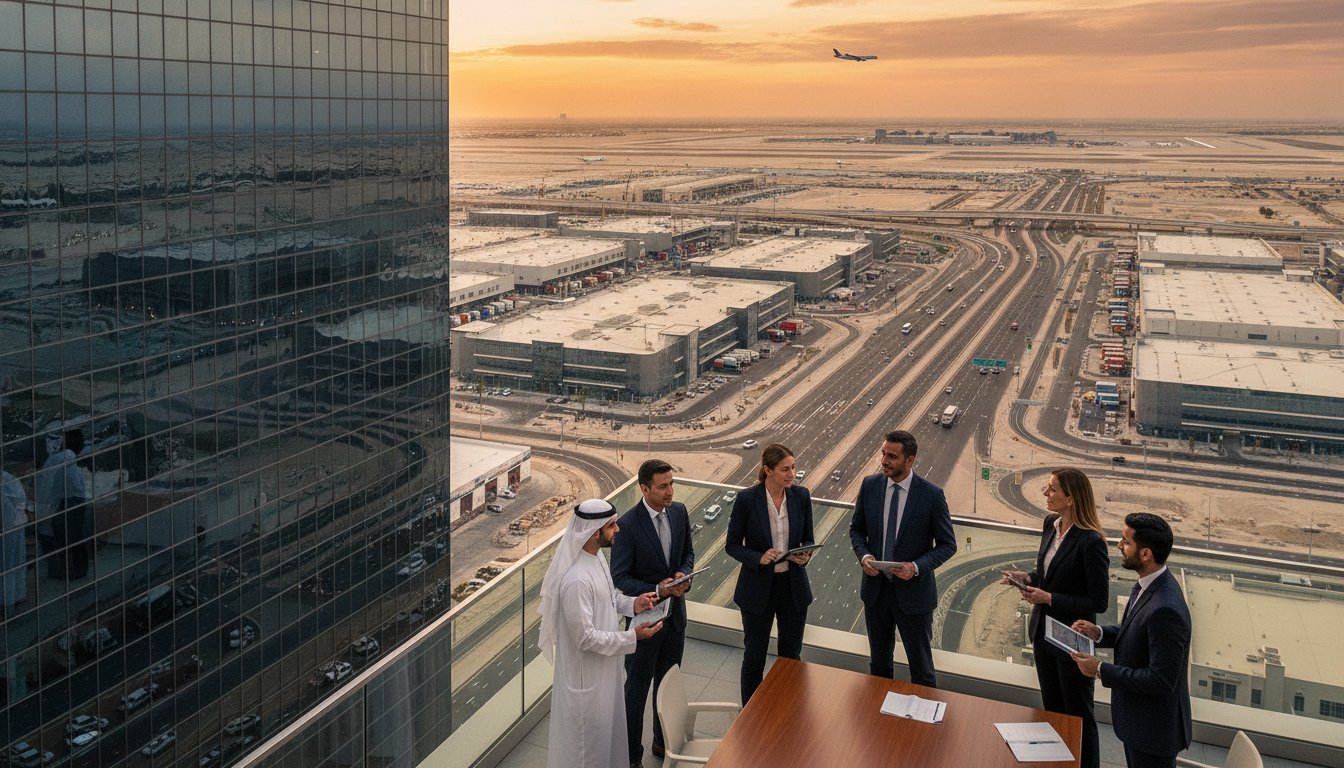
In June 2026, real estate transaction volumes in Dubai South surged by 111% in a single month; this marked the area’s fourth consecutive month as Dubai’s top performer. You’ve likely noticed that traditional business districts are becoming increasingly crowded and difficult to navigate. It’s a common challenge to find verified, high-quality inventory while trying to decipher the legal nuances of free zone versus mainland ownership. A strategic Dubai South commercial property investment provides a solution for those looking to escape oversaturated markets and secure a foothold in the UAE’s most significant economic hub.
This strategic guide will help you master the complexities of commercial investment through expert analysis and 2026 market projections. You’ll learn how to secure a high-yield asset and gain a clear understanding of the legal framework for 100% ownership. We’ll preview how the expansion of Al Maktoum International Airport is driving demand and show you how to align your goals with the 2026 economic masterplan. This overview ensures your capital is positioned for growth in a location where transaction values recently rose by 106% in just thirty days.
Key Takeaways
- Understand why Dubai South has transitioned from an emerging zone to an established global trade ecosystem in 2026, offering a mature environment for capital preservation.
- Identify high-yield opportunities across logistics, office, and retail sectors to optimize your Dubai South commercial property investment portfolio for the current economic cycle.
- Leverage the 2026 expansion of Al Maktoum International Airport to benefit from multimodal connectivity that directly enhances commercial asset valuations.
- Navigate the legal landscape with clarity by mastering the regulations for 100% foreign ownership and selecting the most efficient Free Zone or Mainland structures.
- Discover how specialized investment consulting provides a strategic advantage in securing verified off-plan and secondary market inventory before market saturation.
The Strategic Evolution of Economic Hubs: Why Dubai South Commercial Property Investment is Peaking in 2026
For years, the southern corridor was viewed as a future-oriented project with a long horizon. By July 2026, that narrative has fundamentally changed. Dubai South is no longer an emerging community; it’s a mature, global trade ecosystem that anchors the city’s economic expansion. Investors who once hesitated now find a district that is fully operational and deeply integrated into the world’s supply chains. This shift from a developmental phase to an established commercial territory has created a unique window where infrastructure is ready, but the market hasn’t yet reached its full valuation ceiling.
The scarcity of prime commercial plots in traditional districts like DIFC or Business Bay has accelerated this transition. Global corporations are increasingly looking toward the Dubai South master plan to find the space and modern facilities required for large-scale operations. This migration has turned Dubai South commercial property investment into a primary target for institutional capital. When traditional hubs reach capacity, the surrounding strategic zones become the new center of gravity for high-value transactions.
The 2026 Market Outlook for Commercial Assets
The current demand for Grade A office space in the district is reaching unprecedented levels. Institutional capital is shifting toward southern strategic zones because these assets are backed by the UAE’s national economic vision. We’re seeing a trend where large-scale funds move away from speculative residential flips and toward properties that offer long-term stability. The expansion of the Aviation and Logistics districts has created a massive requirement for supporting office infrastructure. These aren’t just workspaces; they’re operational nerve centers for multinational firms that require proximity to the world’s largest airport hub.
Why Yields Outperform Traditional Business Districts
Yields in strategic hubs often surpass those in established districts due to a combination of lower entry costs and rapidly rising tenant demand. In the context of UAE commercial hubs, Rental Yield is defined as the annual rental income generated by a property expressed as a percentage of its total acquisition cost. In Dubai South, this figure is bolstered by the long-term lease structures typical of the area. Logistics firms and corporate tenants often sign multi-year agreements, providing investors with a level of cash flow security that is rarely found in more volatile sectors. As of mid-2026, the district has recorded a 9.8% increase in median annual rent, proving that the appetite for commercial space is outstripping new supply.
Diversifying Your Portfolio: Core Commercial Asset Classes in the Southern District
Diversifying a portfolio within this district requires a nuanced understanding of its three primary pillars: Logistics, Office, and Retail. While residential growth is visible, the true strength of a Dubai South commercial property investment lies in its industrial and corporate infrastructure. The Logistics District, for instance, represents a high-barrier-to-entry asset class. It’s not merely about square footage; it’s about the specialized infrastructure that global supply chains demand. In 2026, we see a significant rise in Business Centres designed specifically for the expanding SME sector, which now accounts for a substantial portion of the district’s operational footprint. For these businesses, the ability to explore Direct Product Sales and Marketplace Commissions through platforms like CLICKSY provides a vital digital channel to complement their physical operations.
Logistics and Warehousing: The Backbone of the Hub
Logistics and warehousing serve as the backbone of this hub. The demand is currently driven by a permanent shift in global supply chains and the maturity of regional e-commerce. Investors are finding high-margin opportunities in the Cold Storage niche, where technical requirements create a natural filter for competition. This industrial strength often complements high-end residential sectors. For instance, those looking at luxury property dubai often find that the proximity to such a robust economic engine stabilizes their broader asset holdings. The synergy between high-performance logistics and luxury living spaces is a hallmark of the district’s 2026 urban layout.
Grade A Office Spaces and Business Centres
Grade A office spaces in 2026 are defined by more than just a prestigious address. They must now feature ESG-compliant building certifications and modular floor plates that accommodate flexible workspace trends. Modern corporations prioritize environmental impact and employee well-being as much as connectivity. An Arab Urban Development Institute analysis suggests that this urban planning approach is central to job creation and long-term economic resilience. We’ve observed that businesses are no longer looking for static desks; they’re seeking environments that foster collaboration. Future-proofing your investment means selecting buildings that can adapt to these evolving workplace requirements. If you’re exploring how these assets fit into your wider strategy, viewing our curated commercial properties for sale can help you identify the highest quality inventory currently available.
The Infrastructure Multiplier: How Connectivity Drives Commercial Valuation
Infrastructure determines the ceiling of any real estate market. In Dubai South, the 2026 landscape is defined by a massive infrastructure multiplier that directly elevates asset pricing. For any serious Dubai South commercial property investment, understanding the synergy between air, sea, and rail is essential. We aren’t just looking at proximity to an airport. We’re analyzing the integration of a global logistics engine that has reached its most critical phase of maturity. This connectivity is the primary reason why transaction values in the district rose by 106% in June 2026 compared to the previous month.
The expansion of Al Maktoum International Airport acts as the definitive catalyst for this growth. With a future capacity expected to reach 260 million passengers per year, the scale of the surrounding commercial ecosystem is unprecedented. This isn’t a pending plan; it’s an active transformation that is already drawing in multinational corporations that require immediate access to global markets.
Al Maktoum International: The 2026 Capacity Surge
The latest expansion phase has fundamentally altered warehouse rental dynamics. As cargo capacity increases, the immediate result is a spike in demand for supporting storage facilities. The ‘Aerotropolis’ concept is now a reality here. Commercial properties located within this airport-centric urban core appreciate faster because they offer reduced lead times for global distribution. It’s a strategic advantage that traditional business districts cannot replicate. This high demand is reflected in the current market, where the median rent has stabilized at AED 816.90 per square foot, providing a clear benchmark for asset valuation.
Connectivity and Global Trade Corridors
The integration of the Etihad Rail has bridged the final gap in multimodal logistics. By connecting Jebel Ali Port directly to the Logistics District via rail and road, the area has become the most efficient trade corridor in the region. This connectivity directly influences the bottom line for commercial tenants by reducing operational costs. This makes ‘Last-Mile’ delivery hubs the most sought-after assets for 2026 investors. These facilities are the final link in the supply chain. They command premium rents due to their strategic location and the Dh1 billion economic incentive package recently rolled out to support businesses in these zones.
These hubs serve as the nerve centers for regional e-commerce and trade. If your goal is to buy property in dubai that serves a functional, high-demand purpose, these logistics assets offer a level of resilience that pure retail projects often lack. The synergy of sea, land, and air connectivity ensures that the commercial valuation of these assets remains on an upward trajectory despite broader market fluctuations.
Navigating the Investment Landscape: Regulations, Free Zone Benefits, and Ownership
The regulatory framework of this district is designed to provide international capital with the highest level of security and operational flexibility. At the heart of a Dubai South commercial property investment is the provision for 100% foreign ownership. This allows global entities to maintain full control over their assets without the requirement for a local partner. This legal autonomy is paired with a fiscal environment that remains exceptionally attractive in 2026. Investors benefit from 0% corporate and personal income tax, alongside the unrestricted repatriation of both capital and profits. These factors create a stable foundation for long-term wealth preservation.
Choosing between a Free Zone and a Mainland strategy depends on your specific operational goals. While Free Zone entities enjoy specialized customs benefits and simplified labor regulations, Mainland setups allow for direct trade within the wider UAE market. A sophisticated solution we often recommend is the ‘Dual Licensing’ framework. This allows companies registered in the Free Zone to obtain a secondary license from the Department of Economy and Tourism. It enables them to operate across the mainland without the overhead of a separate physical office, effectively bridging the gap between two distinct regulatory environments.
The Step-by-Step Commercial Acquisition Process
Securing a commercial asset involves a structured legal progression. It begins with a formal Letter of Intent (LOI) that outlines the primary terms of the transaction. Once accepted, the parties move to the Sale and Purchase Agreement (SPA). This document is then registered with the Dubai Land Department (DLD) to ensure the title is legally recognized. Rigorous due diligence is essential during this window. We advise investors to verify plot usage rights, infrastructure connection status, and any specific district-level encumbrances before committing capital. Registration fees and bank account setup costs typically range from AED 5,000 to AED 15,000, depending on the complexity of the corporate structure.
Licensing and Operational Synergies
Your choice of license significantly impacts the utility of your property. Commercial and service licenses start at AED 13,500, while industrial and logistics licenses begin at AED 18,000. Aligning your property type with an Aviation, Logistics, or Trading license ensures you can leverage the specialized infrastructure of your specific district. These operational synergies are further supported by government initiatives. In April 2026, the Dubai government rolled out a Dh1 billion economic incentives package. This includes exemptions from late renewal fees and support for new company formations, directly reducing the cost of doing business. If you’re ready to explore specific opportunities within this regulatory framework, you can view our current commercial properties for sale to find an asset that aligns with your licensing requirements.
Maximizing Your Returns with a Strategic National Partner
Entering a market of this magnitude requires more than just capital; it demands a partnership based on data and local precision. As the 2026 economic cycle progresses, the window for securing high-yield assets is narrowing. Chainex Real Estate acts as the essential bridge between international capital and the most lucrative UAE opportunities. We don’t simply facilitate transactions. We provide a professional framework where your Dubai South commercial property investment is treated as a core component of a broader wealth maximization strategy. This approach ensures that your portfolio isn’t just growing, but is also protected against market shifts.
Our role as a strategic partner involves taking the weight of complexity off your shoulders. We understand that international investors often face challenges with local regulations or finding verified inventory. By providing specialized consulting and deep market analysis, we help you navigate these hurdles with confidence. Our team focuses on the long-term potential of your assets, ensuring they align perfectly with the UAE’s 2026 economic masterplan and the continued expansion of the southern trade corridor.
Beyond Transactions: Specialized Investment Consulting
Chainex uses proprietary market data to identify undervalued commercial units that others might overlook. In a market where 96.6% of transactions are currently for off-plan properties, having a partner that understands the nuances of both off-plan and secondary markets is vital. We analyze vacancy rates and rental trends to ensure your entry point is timed for maximum appreciation. For our overseas clients, our Property Management Services offer a completely hands-off solution. We handle the operational details, from tenant relations to maintenance, allowing you to enjoy the yields of your investment without the daily administrative burden.
Securing Your 2026 Commercial Asset
The 2026 window represents a critical entry point for commercial assets before the next major valuation jump. Waiting until 2027 could mean missing the current yield curve, as infrastructure projects like the Al Maktoum airport expansion continue to drive prices upward. The 9.8% increase in median annual rents we’ve seen over the last year is a clear indicator of the district’s trajectory. If you’re looking to secure a high-yield asset in this high-prestige zone, now is the time for a megawatt-scale decision. We invite you to contact us for a confidential consultation with our investment team. Let’s discuss how we can maximize your returns and secure your place in Dubai’s future. Explore our current Commercial Properties for Sale to begin your journey with a partner you can trust.
Positioning Your Portfolio for the Next Decade of Growth
The transformation of the southern corridor into a mature global trade hub is no longer a future prospect; it’s a current reality. By leveraging the multimodal connectivity of Al Maktoum International and the Jebel Ali corridor, investors can capture yields that traditional districts simply can’t match. A well-timed Dubai South commercial property investment allows you to benefit from 100% foreign ownership and specialized economic incentives specifically designed to foster long-term corporate stability.
Success in this sophisticated market requires more than just a transaction. It requires the vision of a National UAE Strategic Partner. Chainex Real Estate provides the Expert Investment Consulting and Specialized Commercial Portfolio Management necessary to navigate the 2026 landscape with absolute precision. We invite you to Secure your strategic commercial consultation with Chainex Real Estate today to ensure your capital is placed within the district’s most resilient assets. The opportunity to enter at the current yield curve is finite. We look forward to helping you master these complexities and securing your legacy in the UAE’s most significant economic hub.
Frequently Asked Questions
What are the typical rental yields for commercial property in Dubai South in 2026?
Typical rental yields for a Dubai South commercial property investment in 2026 generally range between 7% and 9% depending on the specific asset class. Logistics and warehousing units currently command the highest premiums because the median annual rent trend has shown an increase of 9.8% over the last year. These figures reflect the district’s maturation into a global trade hub with high tenant retention rates.
Can international companies own 100% of their commercial space in this district?
International companies can maintain 100% foreign ownership of their commercial assets within this district. Since Dubai South operates as a designated free zone, investors don’t need a local partner to hold the title to their property. This regulation provides full operational autonomy and allows for the total repatriation of capital and profits back to the home country.
What is the minimum investment required for a commercial unit in the Logistics District?
Entry points for commercial units vary significantly based on the facility’s technical specifications and infrastructure. While license fees for industrial and logistics operations begin at AED 18,000, the capital required for property acquisition depends on whether you’re targeting off-plan developments or secondary market assets. Investors should evaluate the long-term appreciation potential driven by the district’s multi-decade infrastructure expansion.
How does the Al Maktoum Airport expansion affect commercial property prices?
The Al Maktoum International Airport expansion is the primary catalyst for rising commercial property prices in the surrounding area. With a future capacity of 260 million passengers per year, the airport creates a massive demand for supporting logistics and corporate infrastructure. This growth led to a 106% increase in transaction values in June 2026 as businesses scrambled to secure strategic positions.
Are there any specific taxes on commercial property income for foreign investors in the UAE?
There are no personal income taxes or corporate taxes on commercial property income for foreign investors within the Dubai South Free Zone. The UAE maintains a 0% tax environment for these entities to encourage international investment and trade. This fiscal advantage is paired with exemptions from import and export duties, which significantly lowers the cost of doing business for commercial tenants.
What is the difference between a shell-and-core and a fitted office investment?
A shell-and-core investment provides the basic building structure, whereas a fitted office is delivered with flooring, ceilings, and utilities already installed. Shell-and-core units offer a lower entry price and allow tenants to customize the space to their exact operational requirements. Fitted offices appeal to businesses that need to relocate quickly and are willing to pay a premium for a move-in-ready environment.
How long does the commercial property transfer process take at the Dubai Land Department?
The commercial property transfer process at the Dubai Land Department is highly streamlined and typically concludes within one to five working days. Once the Sale and Purchase Agreement is signed and the necessary NOCs are obtained, the digital registration system ensures a rapid change of title. This efficiency is vital for investors who need to finalize their Dubai South commercial property investment within tight deadlines.
Does commercial property investment qualify for the UAE Golden Visa in 2026?
Commercial property investment does qualify for the UAE Golden Visa in 2026 if the total value of the asset meets the AED 2 million threshold. Meeting this requirement allows the investor to apply for a 10-year residency permit, which can also be extended to family members and senior management. It’s an excellent way for international entrepreneurs to secure their residency while building a robust commercial portfolio.
