


What if the profitability of your next acquisition depended less on the price per square foot and more on the specific regulatory framework of its plot? Many investors evaluating industrial warehouses for sale across the country focus primarily on shell condition; yet the real value often hides within the complex interplay of free zone versus mainland ownership structures. It is completely natural to exercise caution when navigating the technical nuances of specialized storage requirements and the evolving landscape of national commercial regulations.
At Chainex Real Estate, we recognize that securing a high-yield commercial asset requires more than just a simple transaction; it demands a strategic partnership built on precision and forward-thinking analysis. This 2026 investment guide provides the authoritative insights you need to evaluate total cost of ownership while identifying future-ready facilities tailored for advanced logistics and distribution. You will gain clarity on nationwide property registration protocols and technical assessment benchmarks, ensuring your acquisition serves as an enduring, high-performing foundation for your commercial portfolio.
Key Takeaways
- Learn why industrial assets in the Emirates often provide superior rental stability compared to residential properties due to Dubai’s role as a global logistics bridge.
- Master the technical evaluation of industrial warehouses for sale in Dubai UAE, focusing on critical metrics like floor load capacity and heavy vehicle turning circles.
- Understand the financial impact of choosing between Mainland and Freezone structures, specifically regarding customs duties and non-GCC ownership regulations.
- Identify high-yield opportunities by prioritizing future-proof features such as solar-ready roofs and AI-driven inventory tracking systems for 2026.
- Discover how a strategic consultancy approach simplifies complex commercial transactions and helps you secure undervalued industrial assets through institutional partnerships.
The Strategic Value of Industrial Real Estate in the UAE
The Emirates has successfully transformed into a vital bridge between global markets, making the industrial sector a cornerstone of regional wealth. While residential portfolios often capture the headlines, seasoned investors recognize that industrial assets provide a level of rental stability that apartments or villas rarely match. The sheer volume of trade passing through the region ensures that demand for storage and distribution remains constant, even during broader economic shifts. This makes the sector particularly attractive for those seeking to diversify away from the volatility of the retail or hospitality segments.
Looking at industrial warehouses for sale in Dubai UAE reveals a market defined by long-term leases and triple-net structures. These arrangements often shift maintenance and operational burdens to the tenant, which creates a predictable cash flow for the landlord. In the 2026 economic environment, this predictability is invaluable. National projects, such as the expansion of the Etihad Rail network, have further cemented the value of strategically located plots by reducing transit times across the seven emirates. The industrial market’s resilience isn’t just about storage; it’s about being an active participant in the country’s logistical backbone.
Why Investors are Pivoting to Industrial Assets
The shift toward industrial real estate isn’t accidental. It’s driven by the explosive growth of e-commerce and the regional push for food security. Unlike residential tenants who might move every year, industrial occupiers often invest heavily in their own internal fit-outs. This makes them far less likely to vacate, leading to significantly lower turnover rates. For institutional investors, the ability to scale a portfolio through large-scale industrial warehouses for sale in Dubai UAE offers a streamlined path to capital preservation and steady yield growth.
Economic Drivers of the UAE Industrial Sector
Government initiatives like Operation 300bn aim to significantly increase the industrial sector’s contribution to the national GDP. This isn’t just a policy goal; it’s a catalyst for massive infrastructure development. Assets located near the massive port facilities in Jebel Ali or Al Maktoum International Airport benefit from world-class connectivity that few other global cities can offer. We’re also seeing a rising demand for specialized facilities. Cold chain logistics and climate-controlled storage are no longer niche requirements. They’re essential components of the modern supply chain. This evolution ensures that well-chosen industrial properties remain resilient assets in any sophisticated investment strategy.
Key Factors to Evaluate Before Buying a Warehouse
Investing in the industrial sector requires a shift in perspective. You aren’t just looking for floor space; you’re acquiring a machine that facilitates commerce. When browsing industrial warehouses for sale in Dubai UAE, the technical specifications often determine the asset’s long-term yield more than its aesthetic appeal. A warehouse with a low ceiling or insufficient power supply quickly becomes a liability if it can’t accommodate modern logistics tenants. Finding the right industrial warehouses for sale in Dubai UAE involves more than just a site visit; it requires a deep dive into the building’s utility.
The Technical Inspection Checklist
Structural integrity is the first priority. You should examine the steel frame for signs of corrosion and the roofing for thermal insulation quality. In Dubai’s climate, insulation isn’t a luxury; it’s a cost-saving necessity for any tenant running HVAC systems. You must also verify the electrical load in kilowatts (kW). Many older units lack the power required for heavy machinery or large-scale cold storage conversions. Ensuring the facility meets the latest Civil Defense standards for fire safety is non-negotiable for securing occupancy permits.
Floor Load Capacity refers to the maximum weight a concrete slab can support per square meter, which is critical for ensuring that high-density racking systems don’t cause structural cracking or subsidence.
Operational Efficiency and Accessibility
Logistical flow is the heartbeat of any industrial site. It’s vital to check the turning circles for heavy vehicles; a warehouse that can’t accommodate 15-meter articulated trailers will struggle to attract top-tier logistics firms. Loading dock efficiency is equally important. Look for recessed docks with levelers rather than simple ground-level shutters. These features reduce turnaround times and minimize labor costs for your future tenants.
Zoning laws in Dubai are strict. You must ensure the land use permit matches your intended activity, whether it’s light manufacturing or hazardous material storage. If you’re navigating these complexities for the first time, it’s wise to consult with experts who understand Commercial Properties for Sale and the specific regulations governing them. Proximity to staff accommodation and arterial highways like Sheikh Mohammed Bin Zayed Road will also dictate your warehouse’s eventual occupancy rate and market value.
Mainland vs. Freezone: Choosing the Right Ownership Structure
Jurisdiction is as vital as the physical structure of the building itself. When you look at industrial warehouses for sale in Dubai UAE, you’re choosing between two distinct legal environments. One offers direct access to the local market, while the other serves as a tax-efficient springboard for global re-export. Understanding these differences ensures your asset aligns with your tenant’s business model and long-term operational goals.
Mainland Industrial Benefits
Establishing a presence on the Mainland allows a business to trade directly with the local UAE market without the need for a local distributor. This is particularly valuable for FMCG and manufacturing firms focusing on domestic consumption. Since the regulatory shifts in 2021, many industrial sectors now allow 100% foreign ownership on the Mainland, removing the previous requirement for a local Emirati partner. These sites are regulated by the Department of Economy and Tourism (DET), offering greater flexibility in terms of location and proximity to the city’s urban core and major transport arteries.
Freezone Industrial Advantages
Freezones are specifically designed for companies with an international focus. They offer a unique ecosystem where goods can be imported, processed, and re-exported without incurring the standard 5% customs duties. This creates a significant competitive advantage for logistics and assembly businesses. Beyond tax exemptions, Freezones provide a simplified administrative framework for visa processing and specialized labor recruitment. If your investment strategy targets global supply chain players, identifying high-quality industrial warehouses for sale in Dubai UAE within these zones is often the superior choice for capital preservation.
Understanding Leasehold and Freehold Structures
The concept of ownership in the industrial sector often involves leasehold structures rather than outright freehold. Most industrial land in Dubai is held on a 99-year leasehold basis. While this differs from the outright ownership common in residential sectors, it provides long-term security and is fully recognized by the Dubai Land Department (DLD). Outright freehold industrial plots are available in specific designated areas, but they are rarer and often carry a significant price premium. It’s essential to verify the remaining lease term and any renewal clauses during your due diligence. A strategic partner can help you assess how the remaining lease duration impacts the asset’s overall valuation and your eventual exit strategy.
Future-Proofing Your Warehouse: 2026 Trends and Technology
The definition of a high-yield asset is shifting as we move through 2026. It’s no longer enough for a building to simply offer four walls and a roof; it must function as a data-driven node within a global network. When evaluating industrial warehouses for sale in Dubai UAE, you’re now looking for digital readiness. Smart warehouses equipped with IoT sensors and AI-driven inventory tracking are becoming the standard for international tenants. These technologies allow for real-time monitoring of stock levels and environmental conditions, which is vital for the growing pharmaceutical and specialized electronics sectors.
Modern e-commerce has also fundamentally changed the physical requirements of industrial shells. The focus has moved toward ‘Last Mile’ delivery hubs, which require high-speed automated sorting systems and multiple loading points for smaller delivery fleets. This shift means that older, conventional units may require significant retrofitting to remain competitive. Investors who prioritize assets with high ceilings for vertical racking and flexible floor plans will find themselves better positioned to capture the premium rents associated with the rapid delivery economy.
Sustainable Industrial Investments
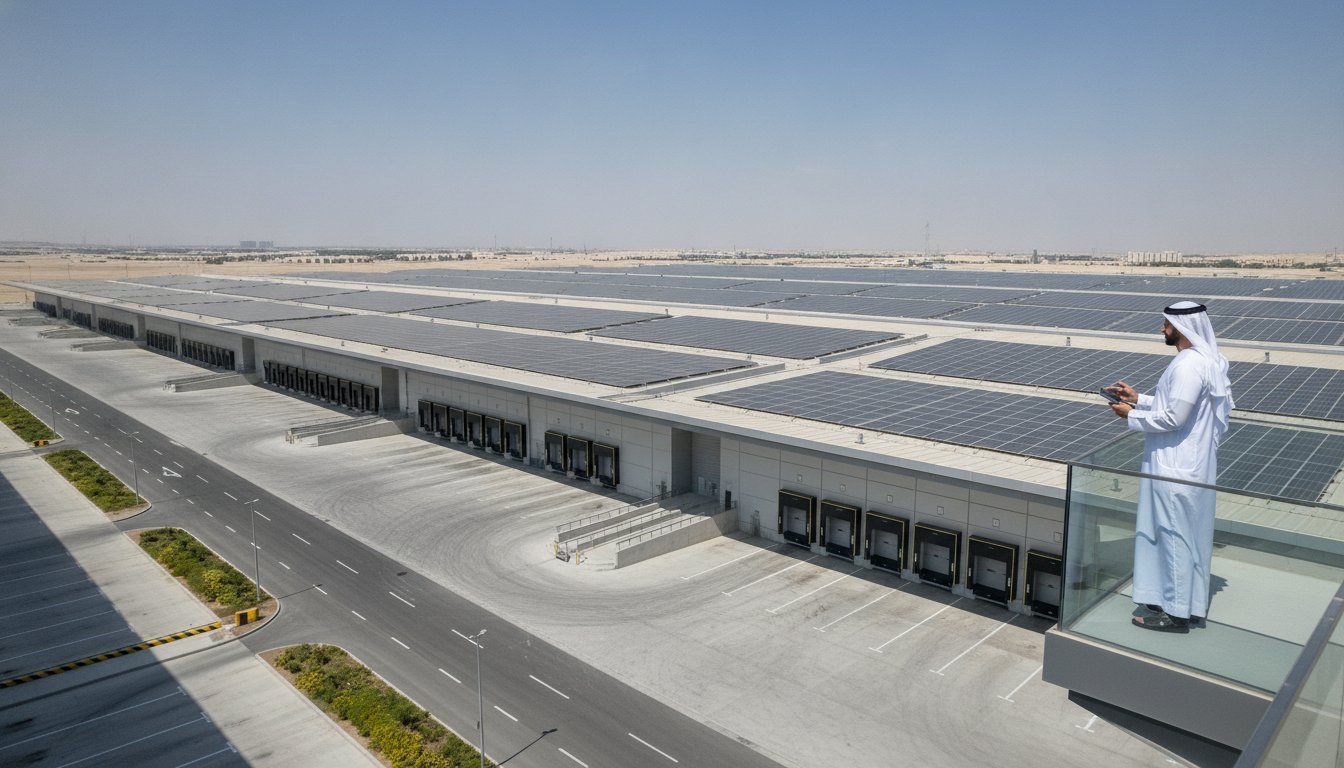
Solar integration is becoming a standard expectation rather than a luxury. With the UAE’s abundant sunlight, solar-ready roofs allow tenants to significantly reduce their operational overheads, making your property more attractive in a competitive market. Energy-efficient insulation and LED lighting systems aren’t just about environmental responsibility; they’re about asset preservation and meeting LEED certification standards. Many institutional occupiers now have strict corporate mandates to only lease buildings that meet specific sustainability criteria.
Green Logistics in the UAE context represents the integration of environmentally responsible practices into the supply chain to meet the nation’s Net Zero 2050 targets through reduced carbon footprints and optimized resource management.
Digital Infrastructure and Connectivity
Connectivity is the new location. A warehouse’s value is increasingly tied to its high-speed fiber infrastructure, which supports the real-time supply chain management systems that modern businesses rely on. Security has also evolved beyond simple fencing. We’re seeing a high demand for biometric access controls and 24/7 remote monitoring systems that can be integrated into a tenant’s global security operations center.
Preparing for the future also means considering robotic integration. Units that feature reinforced flooring and specialized power grids for Automated Guided Vehicles (AGVs) are seeing higher valuation growth. If you’re looking to acquire an asset that remains competitive through the next decade, explore our Commercial Properties for Sale to find tech-ready industrial units that align with these 2026 trends. Investing in digital infrastructure today ensures your portfolio remains resilient against the rapid pace of technological change.
Why Chainex Real Estate is Your Strategic Partner for Industrial Acquisitions
Choosing a partner for a high-value commercial acquisition is a decision that dictates the future security of your capital. At Chainex Real Estate, we don’t view ourselves as mere intermediaries. We act as strategic consultants who provide the analytical depth required to identify high-yield industrial warehouses for sale in Dubai UAE. Our approach combines exhaustive market analysis with a focus on portfolio maximization, ensuring that every asset you acquire serves a specific purpose in your broader investment strategy. We understand that the industrial sector is driven by technical specifications and regulatory nuances that require a specialized eye, especially as the market matures into 2026.
Our role involves bridging the gap between developers, institutional sellers, and international investors. We leverage our strategic partnerships with financial institutions to facilitate complex transactions that might otherwise be inaccessible to individual buyers. By focusing on undervalued assets and high-prestige industrial sectors, we help our clients build resilient portfolios that outperform standard market averages. This commitment to excellence ensures that you aren’t just buying a property; you’re entering into a professional partnership designed for long-term growth.
Expert Investment Consulting
Success in the current market depends on a clear understanding of the evolving legal framework. Whether you’re an international investor entering the region for the first time or a local entity expanding your footprint, we provide customized portfolio strategies that align with your specific risk profile. Our team maintains a deep understanding of the latest DLD transaction fees for industrial assets and the updated Freezone ownership percentages for non-GCC nationals. For those seeking a broader perspective on the acquisition process, we recommend reviewing our comprehensive resource on How to Buy Property in Dubai: The Ultimate Guide for Investors (2026). This expertise ensures that you’re never making decisions in a vacuum.
Seamless Transaction Management
The complexity of industrial transactions often involves multi-layered negotiations between multiple stakeholders. We manage this process from end to end, coordinating with legal and financial partners to ensure a smooth closing. This is particularly vital when dealing with secondary market acquisitions or off-plan commercial projects where technical due diligence is paramount. Our focus remains on maximizing your ROI by securing terms that protect your interests over the long term. If you’re ready to explore the most promising industrial warehouses for sale in Dubai UAE, you can Contact Chainex Real Estate for a consultation on industrial investments. We’ll take the weight of the transaction off your shoulders, allowing you to focus on your strategic goals while we handle the operational and regulatory intricacies.
Securing Your Future in Dubai’s Industrial Landscape
Dubai’s industrial sector represents a sophisticated opportunity where technical precision meets regulatory foresight. We’ve explored how the shift toward green logistics and smart infrastructure is redefining the value of industrial warehouses for sale in Dubai UAE. Successful acquisitions now require a deep understanding of plot-specific zoning and the long-term implications of your chosen ownership structure. It’s clear that the right facility isn’t just a storage shell; it’s a strategic asset in a global supply chain.
At Chainex Real Estate, we pride ourselves on being more than just brokers. We act as a strategic partner for international investors, offering specialized commercial investment consulting alongside expert market analysis and portfolio management. Our goal is to take the complexity out of the acquisition process, allowing you to focus on the returns while we handle the technical and regulatory intricacies. The 2026 market offers significant potential for those who move with confidence and clarity.
Secure your next industrial investment with Chainex Real Estate and ensure your assets are positioned for maximum ROI in this global logistics hub. We look forward to helping you navigate this high-prestige sector with the professionalism and discretion you deserve.
Frequently Asked Questions
Can foreigners own industrial warehouses in Dubai UAE?
Foreign nationals can own industrial warehouses for sale in Dubai UAE through two primary legal structures. In designated freehold areas, you can have outright ownership of the property. Alternatively, many industrial plots are available on a 99-year leasehold basis, which is a secure and fully registered form of long-term interest. Recent regulatory updates also allow 100% foreign ownership of Mainland companies in specific industrial sectors, simplifying the acquisition process for international investors.
What is the difference between a Freezone and Mainland warehouse?
The primary distinction lies in the trade jurisdiction and tax treatment. Mainland warehouses allow you to trade directly with the local market without a distributor, while being regulated by the Department of Economy and Tourism. Freezone facilities are optimized for international trade, offering exemptions from customs duties on imported goods intended for re-export. Choosing between them depends on whether your business model focuses on domestic UAE distribution or global supply chain logistics.
What are the official registration and transfer fees for commercial property?
The standard statutory transfer fee for commercial property transactions across the emirate is 4% of the total purchase price. This government registration fee is typically split equally between the buyer and the seller, though the exact division can be negotiated during the contract stage. Buyers should also account for nominal administrative processing expenses and title deed issuance costs. At Chainex Real Estate, we advise investors to factor these mandatory closing costs into their initial budget to accurately determine the total cost of acquisition.
Are industrial warehouses a good investment compared to apartments?
Industrial assets often offer superior long-term stability and higher rental yields than residential apartments. While apartments are subject to higher tenant turnover and seasonal market fluctuations, industrial warehouses for sale in Dubai UAE usually involve multi-year contracts with corporate entities. These tenants often invest in their own fit-outs, which increases their likelihood of renewal. This creates a predictable income stream that is highly attractive for institutional portfolios seeking capital preservation.
What are the typical maintenance costs for a warehouse in the UAE?
Maintenance costs for industrial units are generally lower for landlords because many agreements are structured as triple-net leases. In these cases, the tenant is responsible for operational expenses, insurance, and routine repairs. However, you should still budget for structural maintenance, such as roofing inspections and fire safety system certifications required by Civil Defense. Keeping these systems updated ensures the building remains compliant and retains its market value for future resale or refinancing.
Do I need a specific trade license to buy a warehouse?
You don’t necessarily need a specific trade license to purchase a warehouse as a personal investment or through a holding company. However, the entity occupying the space must hold a valid license that matches the specific activity permitted on that plot. For example, a warehouse zoned for light manufacturing cannot be used for chemical storage without the correct approvals. We recommend aligning your corporate structure with your intended land use before finalizing any commercial acquisition.
What is the average rental yield for industrial properties in 2026?
While yields vary based on location and facility type, industrial properties in the Emirates typically generate net returns ranging from 8% to 10%. This outperforms many global markets due to the high demand for modern logistics space and the tax-efficient environment. Specialized facilities like cold storage or pharmaceutical-grade units often command even higher premiums. We suggest conducting a detailed market analysis to identify specific assets that offer the best balance of risk and reward.
Is it possible to convert a standard warehouse into a cold storage facility?
Converting a standard industrial shell into a cold storage facility is possible but requires significant technical upgrades and regulatory approvals. You’ll need to assess the floor load capacity to support heavy refrigeration equipment and ensure the electrical load is sufficient for continuous cooling. Approvals from the local municipality and Civil Defense are mandatory to ensure the conversion meets safety and health standards. This type of value-add strategy can significantly increase an asset’s rental potential.
